Derive cleared more option exposure in Q3 than in all of 2025, and each dollar of it cost buyers 25.6% less. Notional on the largest onchain options exchange rose 89.6% from Q2 to $7.45B. Its share of the premium paid for onchain options reached 90.4%, the highest of any quarter since December 2023.
Takeaways
Buyers took on more exposure for less. Option notional on Derive reached a record $7.45B in Q3. Buyers paid 2.35 cents of premium per dollar of it, down from 3.16 cents in Q2.
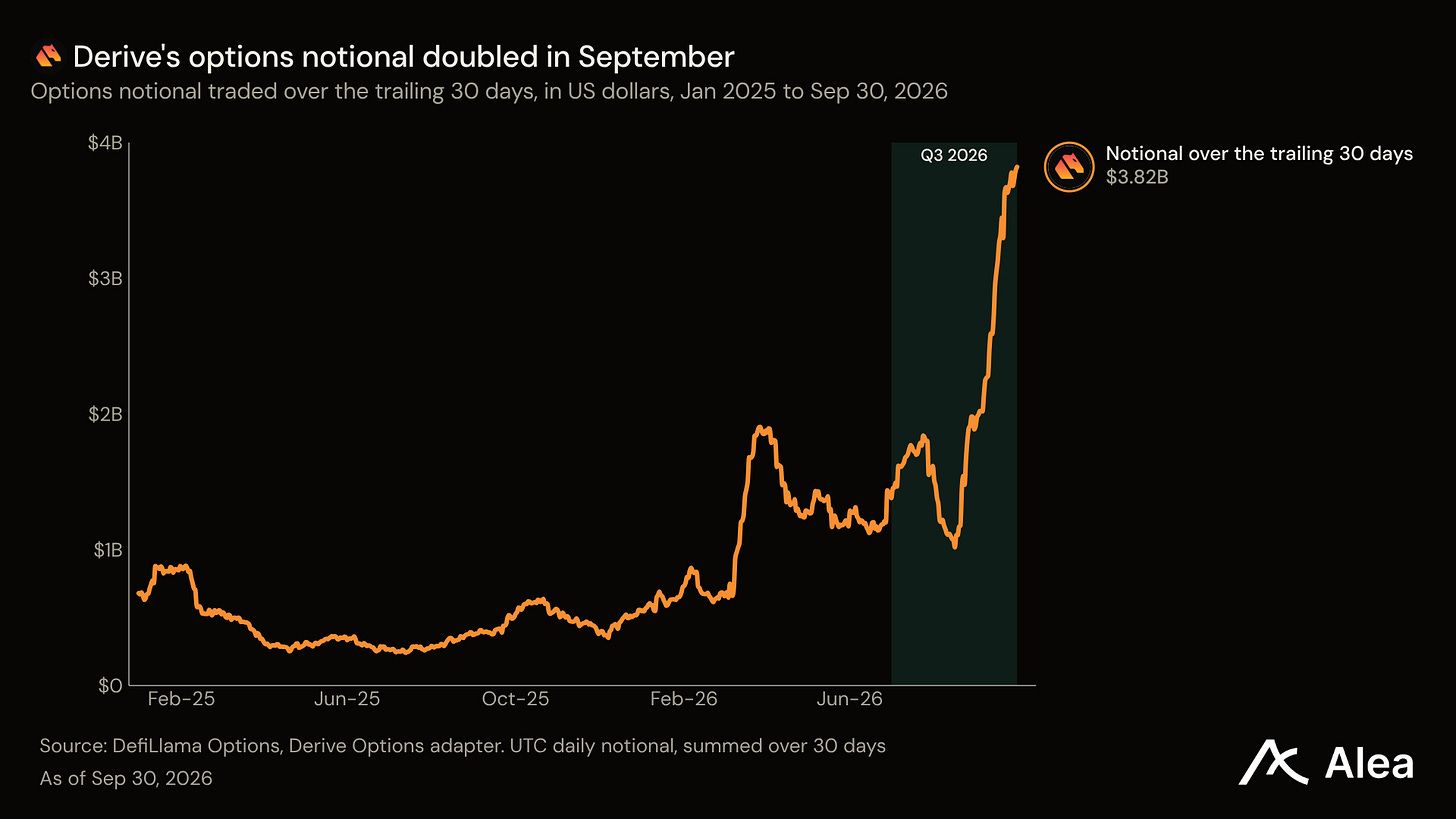
September set a monthly record. It carried $3.82B of option notional, twice the August total, and Derive reported its biggest week on Sep 27.
ETH now earns Derive as much premium as BTC. ETH notional rose 243.9% to $2.57B in Q3, and long-dated ETH calls led the September build.
Fees rose with the book. Derive's Q3 fees reached $1.35M, up 35.7% quarter over quarter, and September was the largest month of the year.
The Quarter: Bigger Tickets, a Record Book
Derive runs a self-custodial exchange for crypto options and perpetual futures, also offering Earn yield vaults. Q3 was its largest options quarter in a daily record that starts in December 2023. Buyers paid a record amount of premium (the price of an option) and Q3 alone traded 1.4 times the $5.43B of notional that all of 2025 carried.
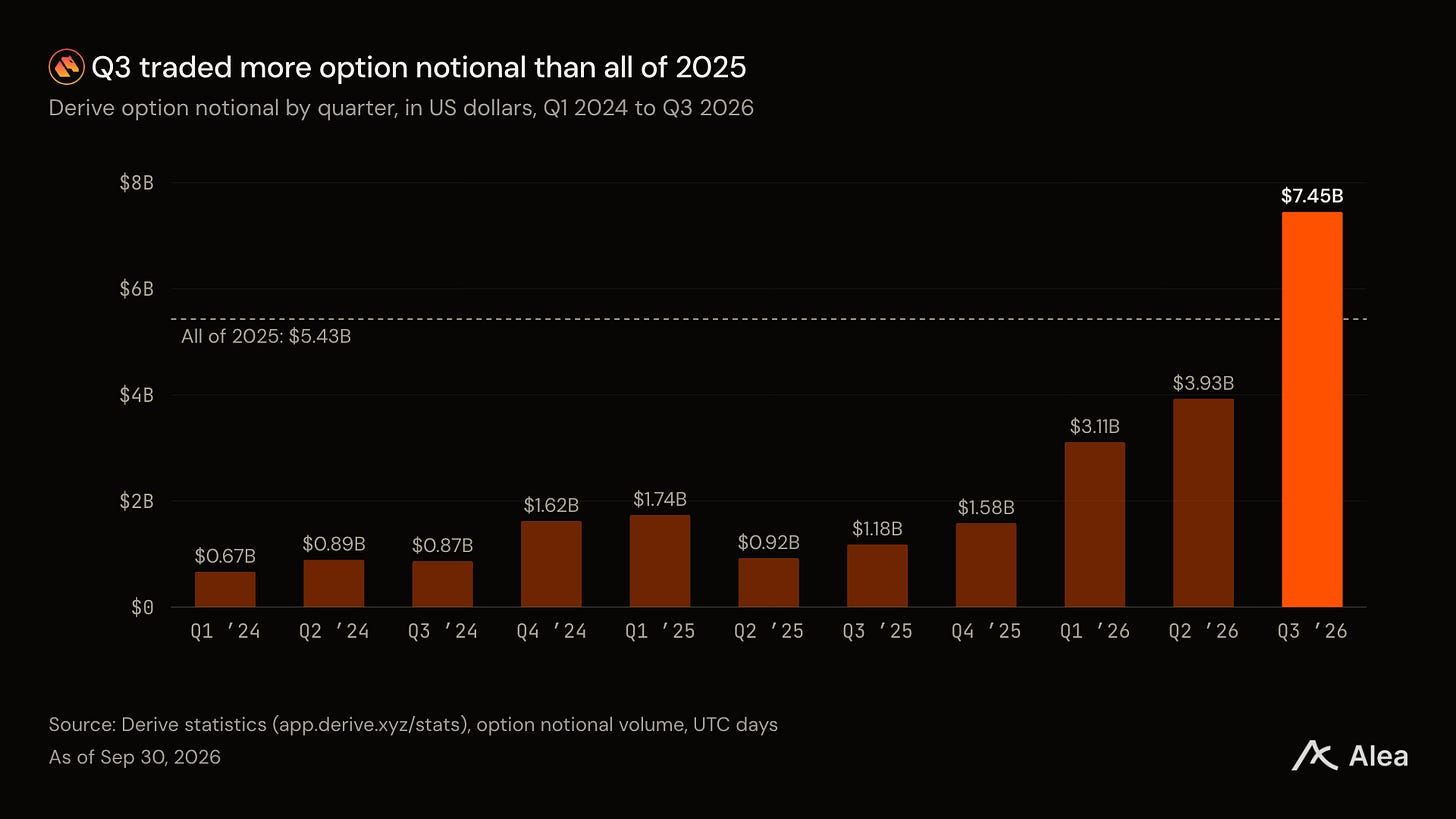
The growth came from bigger tickets more than from more trades. Option trades rose 6.2% from Q2. The average trade grew to $84K of notional, from $47K. Derive also widened what it lists. It launched options on XAUT, Tether's gold token, on Jul 23, its first options on a real-world asset. XRP options launched on Aug 13, with Flare's FXRP as collateral. With Zcash's ZEC, which Derive launched on Jun 26, the newer markets earned 5.7% of Q3 premium.
The Field: Nine of Every Ten Premium Dollars
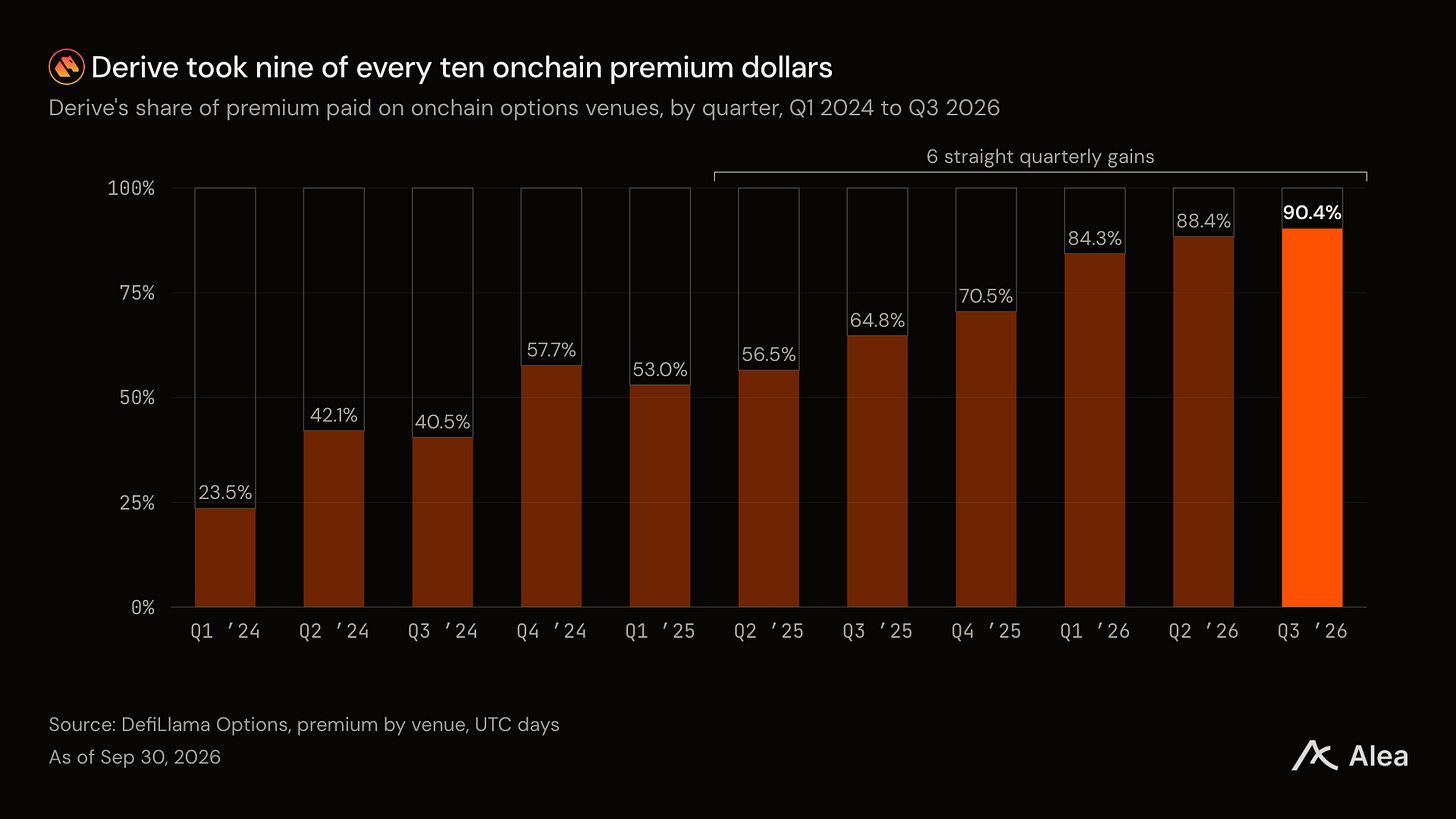
Onchain options buyers paid $194.1M of premium in Q3, up 37.9% from Q2. Derive took 90.4% of it, its sixth straight quarter of share gains. Of the $53.3M the field added, Derive added $51.0M.
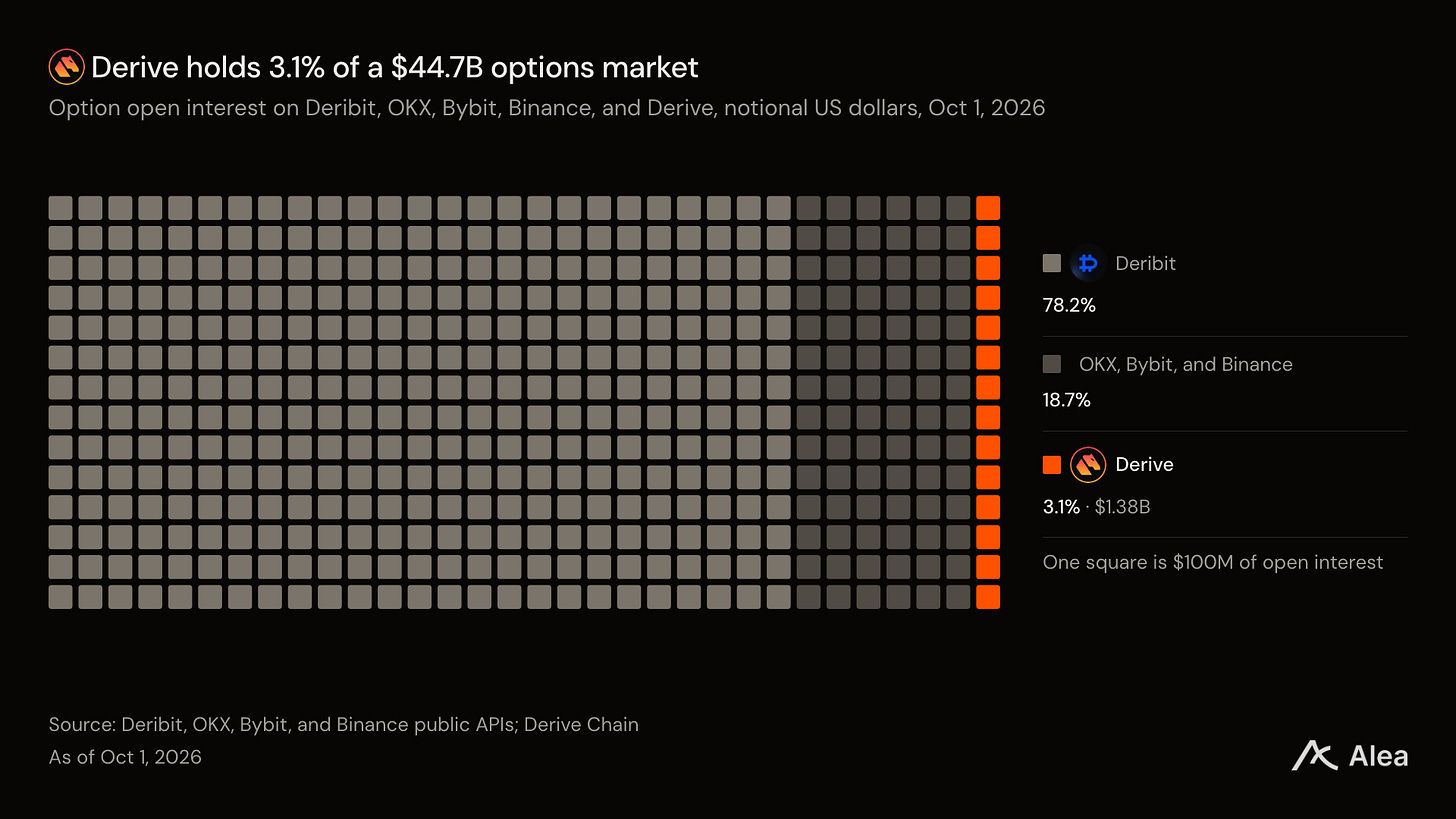
The whole options market is far larger. Deribit, OKX, Bybit, Binance, and Derive publish $44.7B of option open interest, the dollar value of positions still open, and Derive holds 3.1% of it. Deribit's book is 25.3 times the size of Derive's. Derive's own V3 proposal stated the global total at roughly $40B, a market that dwarfs the onchain one Derive already leads.
The Price of Risk: The Range Broke, Exposure Got Cheaper
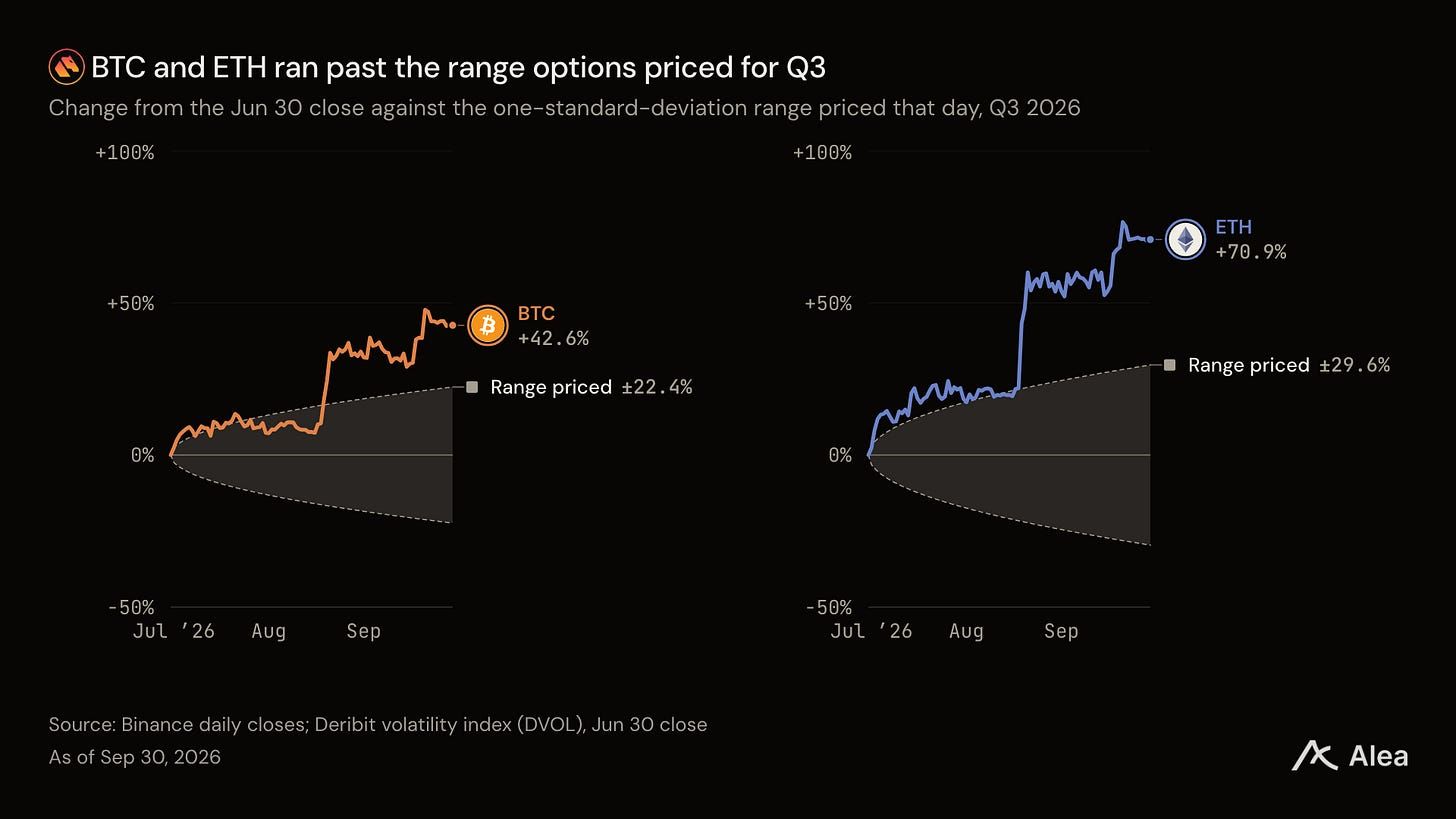
Derive's record came in a quarter that broke the range options priced. On Jun 30, the BTC volatility index closed at 44.5, a price for a move of about 22.4% either way by Sep 30, with about a two-in-three chance of holding. BTC rose 42.6%, nearly twice that. ETH rose 70.9%, where options priced a 29.6% range. Most of BTC's gain came in seven days: Aug 19 to 21 and Sep 18 to 21 accounted for about nine tenths of it.
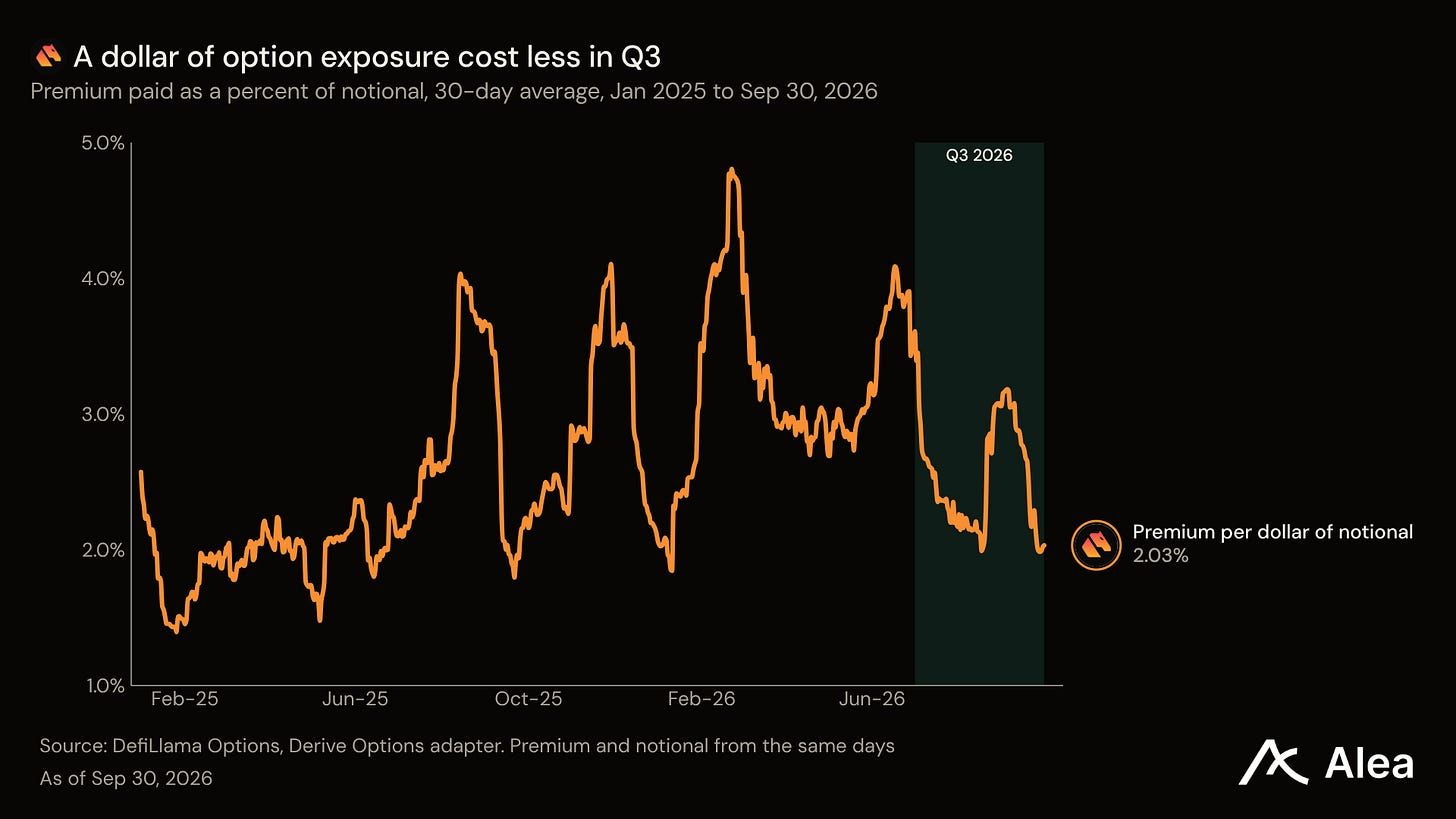
Buyers also paid less for each dollar of exposure. Premium per dollar of notional fell to 2.35 cents in Q3, from 3.16 cents in Q2. Part of the drop is mix, because flow moved from HYPE options, which cost 5.64 cents per dollar in Q2, toward ETH. Hold Q2's mix fixed and Q3 still comes to 2.64 cents. Inside each market the cost fell too: BTC options went to 1.59 cents per dollar from 2.02, as the BTC volatility index averaged 37.3 against 41.8 in Q2.
The Book: ETH Caught Up With BTC
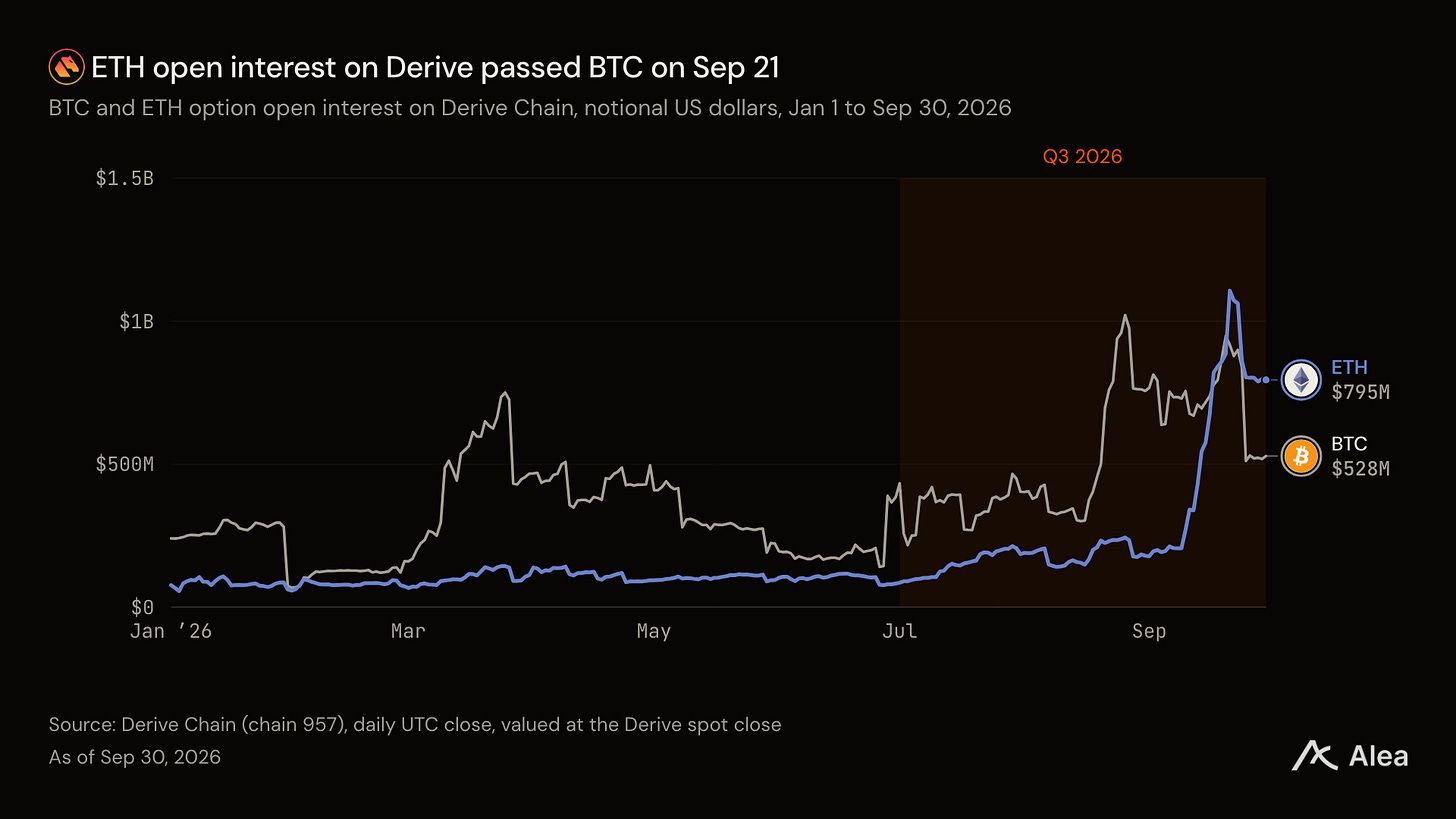
ETH notional rose 243.9% in Q3, from $746M to $2.57B. ETH premium matched BTC, at 34.2% of the quarter each. In Q2, ETH earned 19.1% of premium and HYPE 44.1%. HYPE still earned 24.6% of Q3 premium, the third-largest market on the venue.
Buyers kept those positions open. BTC and ETH open interest on Derive Chain, the venue's own network, averaged $836.0M across Q3, up 99.2% quarter over quarter. ETH led, with its average contract count up 142.6%. On Sep 15, Derive reported 89,100 ETH calls open at two March 2027 strikes, $5,000 and $7,000. ETH traded near $2,400 that day, and Derive held 96% of those calls.
Perpetuals: The Busiest Month Came Last
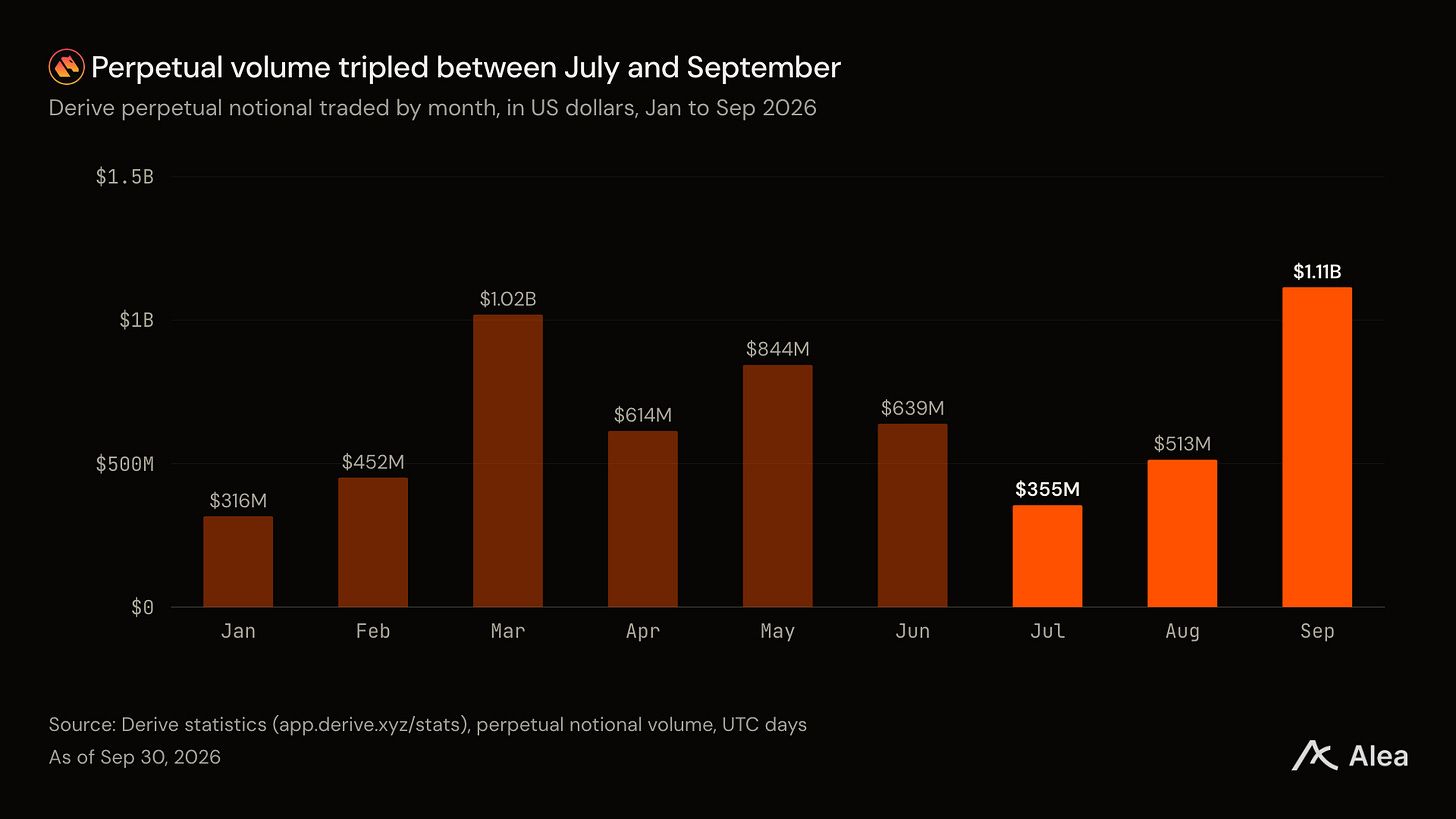
The perpetual book ended the quarter at its 2026 high. Volume rose from $355M in July to $1.11B in September. Open interest averaged $58.1M across Q3, up 78.3% from Q2. Notional traded for the whole quarter came to $1.98B, 5.4% below a busier Q2.
Deposits: Collateral Rose by Two Thirds
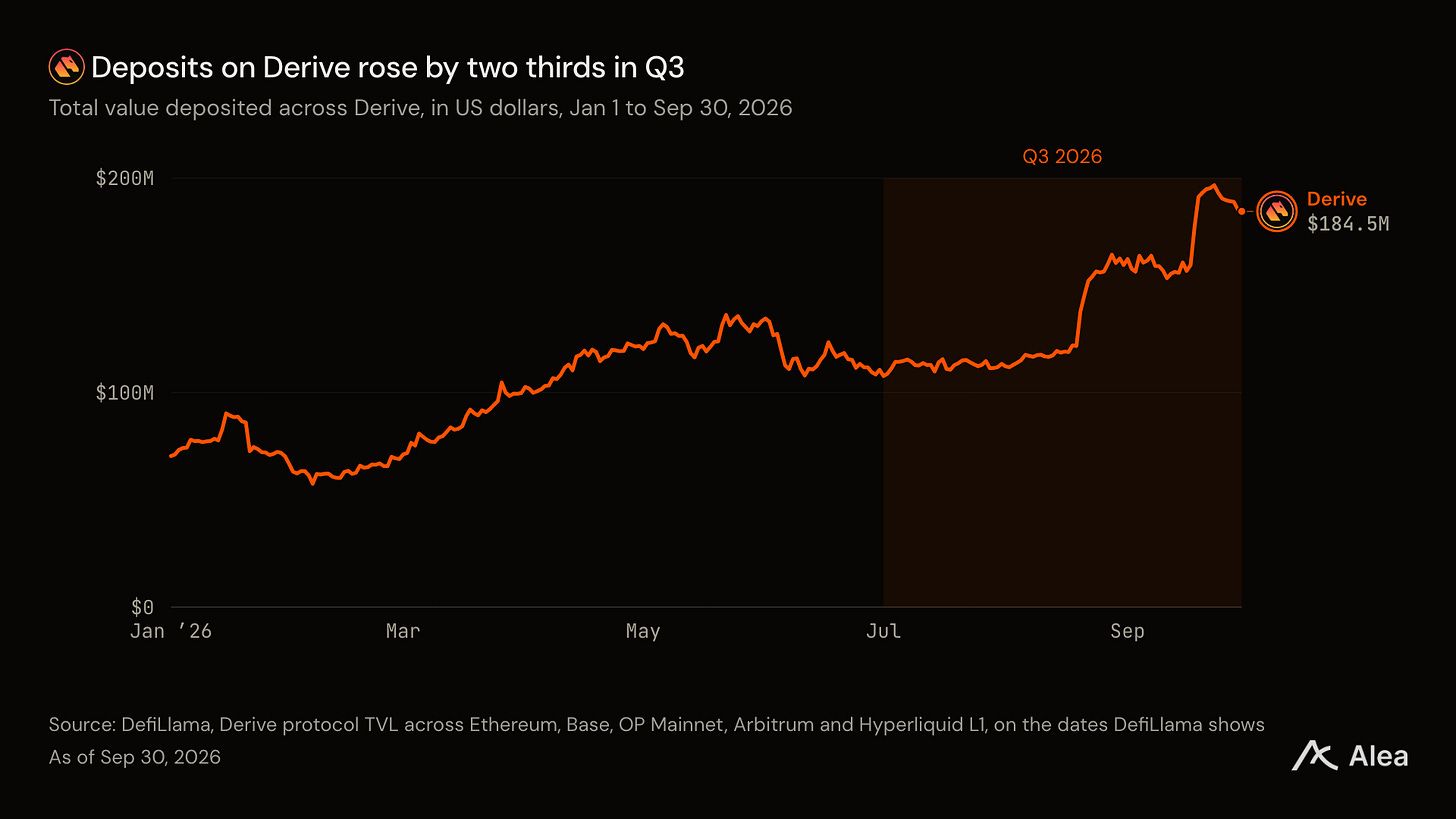
Deposits on Derive grew 66.7% in Q3, to $184.5M, and most of the gain arrived from mid-August. Measured at June token prices, the balance grew 23.8%, and higher prices for ETH, BTC, and HYPE collateral added the rest. Base, Coinbase's Ethereum network, recorded the largest balance on Sep 30, $54.5M, up from $19.1M in June. Derive announced BitGo access on Aug 4, which lets BitGo clients post collateral through a 1:1 token from Strands without moving assets out of custody.
The Business: Fees Rose With the Book
Derive earns a fee on each trade. Under its published schedule, the taker, the side that hits a posted quote, pays $0.50 plus 0.03% of notional on an option. That 0.03% charge never exceeds 12.5% of the premium, and a negotiated two-leg spread pays nothing on its second leg. Take $100K of ETH calls at Q3's average ETH cost of 2.33 cents per dollar. The buyer pays $2,330 of premium and a $30.50 fee. That's 1.3% of the premium.
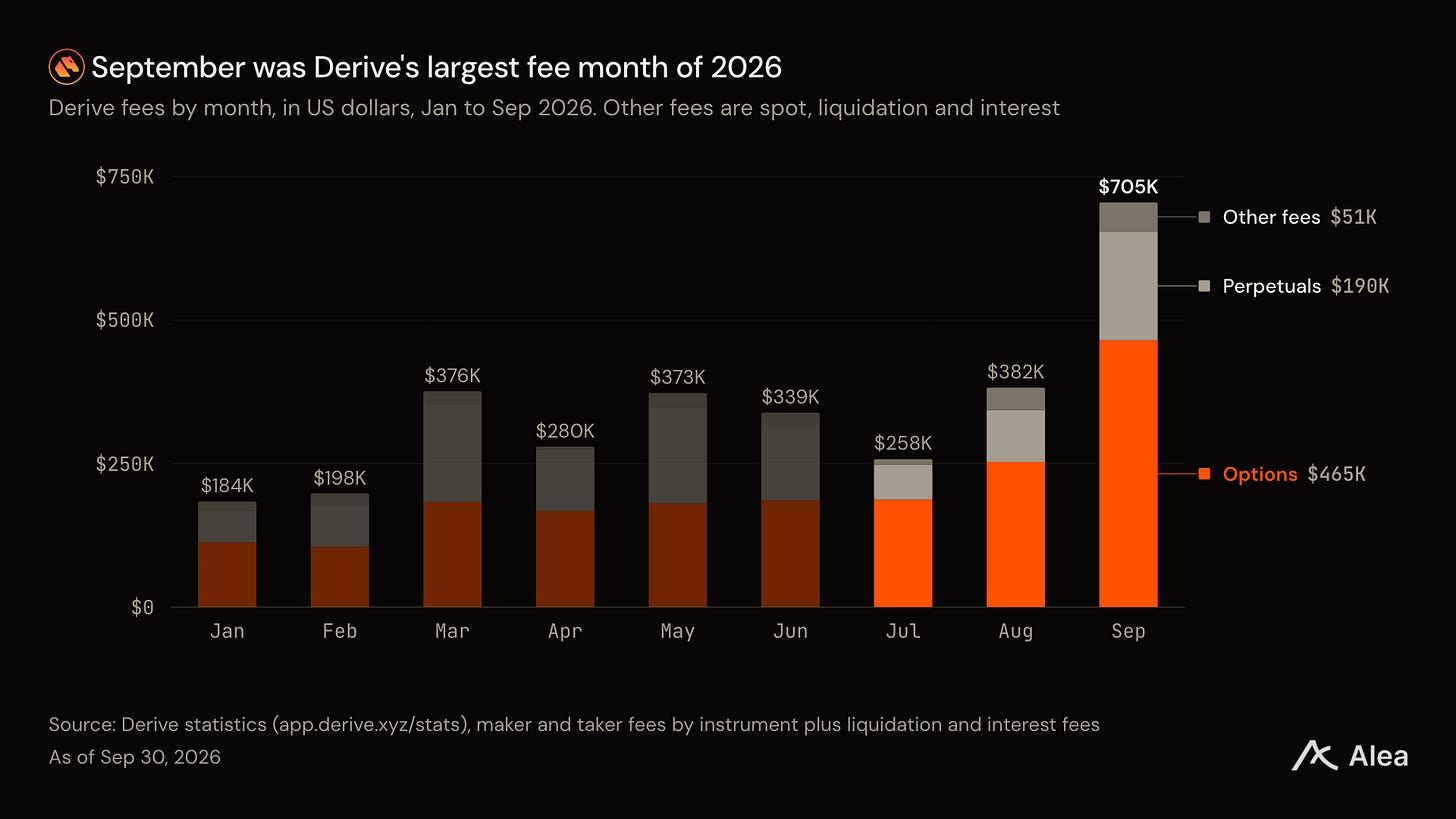
Derive recorded $1.35M of fees in Q3, up 35.7% quarter over quarter. Option fees grew 69.5% in Q3, to $905.3K. Perpetual fees fell 15.8% in Q3, to $340.8K. Spot, liquidation, and interest fees added the remaining $99.3K. Options earned 67.3% of all fees, up from 53.9% in Q2. September alone brought in $705.2K, the largest month of the year. Option fees came to 1.22 basis points, hundredths of a percent, per dollar of option notional, against 1.36 in Q2.
The Token: The Market Priced the Growth
Traders pay Derive fees on options and perpetuals, and the venue also earns matching fees, liquidation fees, and an interest spread. Since DRV stakers approved the current rule in April, 35% of protocol fees fund weekly DRV purchases, and the rest funds market-maker rebates and the onchain insurance fund. The DRV the DAO buys goes to its treasury and no fee is paid out to holders as cash.
Derive announced 14 purchases in Q3, 2.57M DRV in total, about twice the 1.3M DRV stakers received in emissions. DIP 324, which Derive published on Sep 24, asks to raise the share to 50%. Voting ends on Oct 5.
DRV gained 243.4% in Q3 and closed the quarter at $0.389. Most of the move came in four days, from the Sep 15 close to the Sep 19 close, the week after Derive published the V3 proposal. DRV also launched on Upbit on Jul 14 and on Bitvavo on Sep 29.
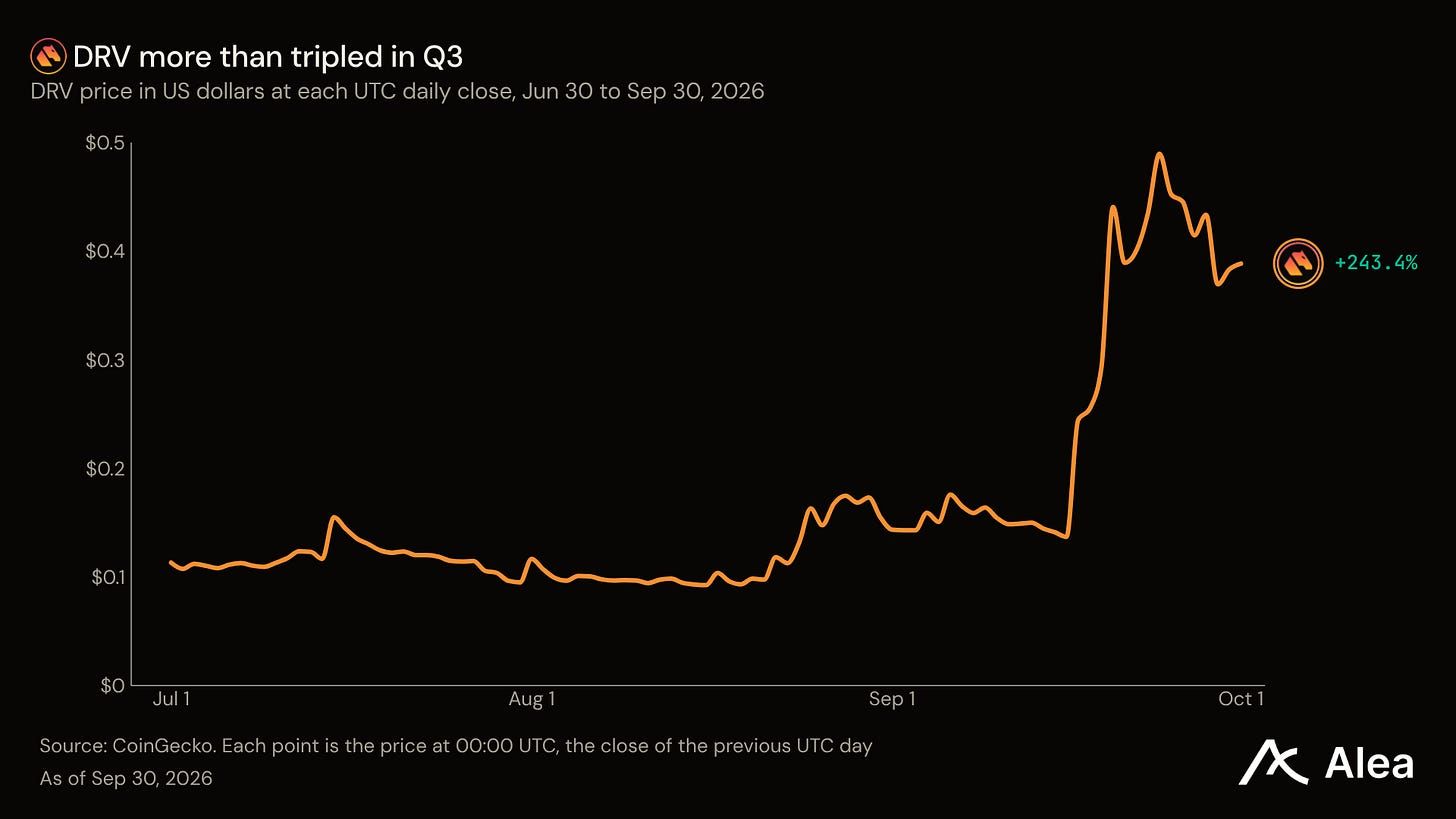
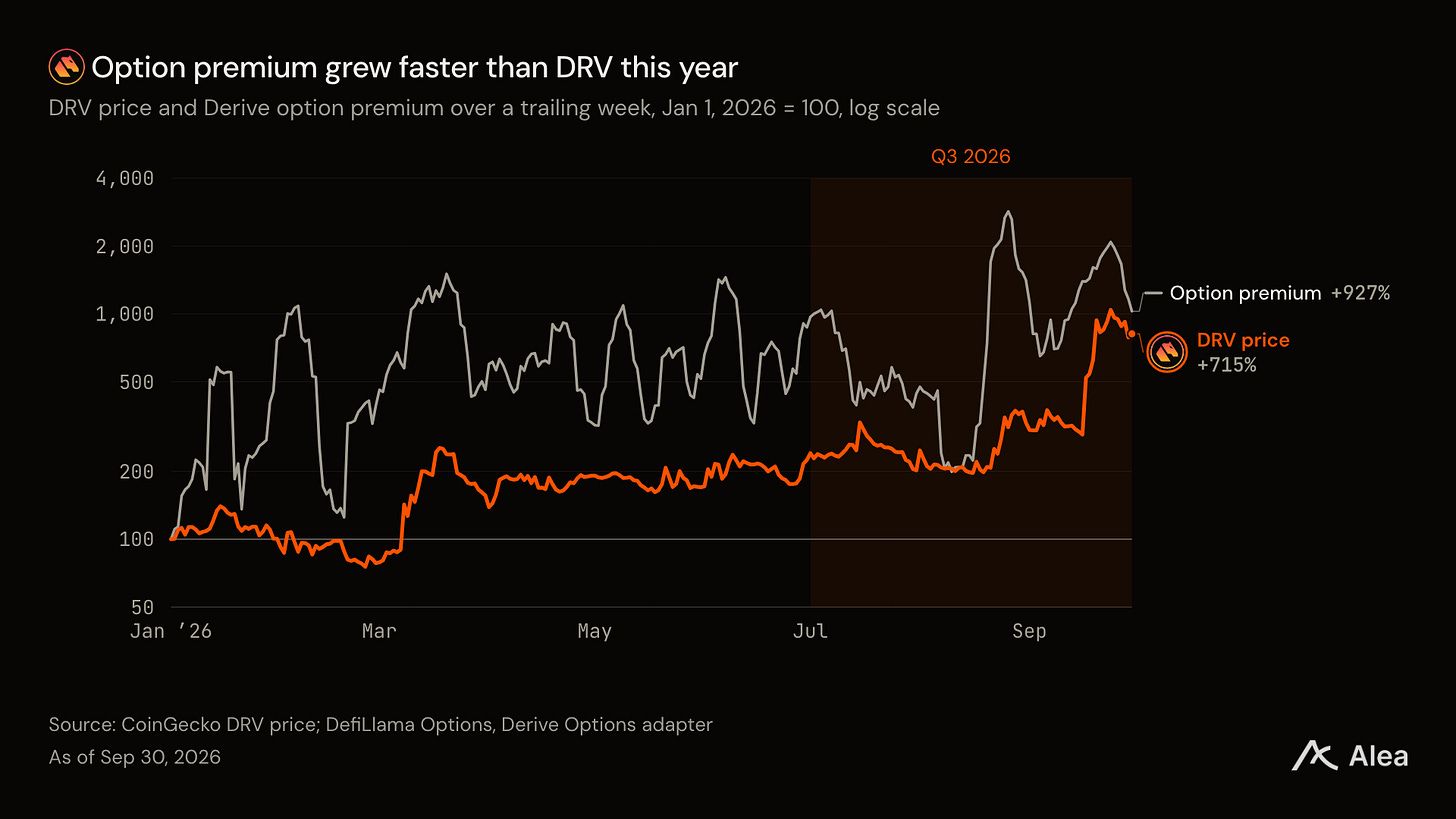
DRV closed Q3 with a market value of $388.4M, $582.8M fully diluted. Still, option premium has grown faster than the token this year. It rose 927.3% from Jan 1 on a trailing-week basis, and DRV rose 715.4%.
Ahead: V3 Moves the Exchange to Ethereum
Holders voted to move Derive to V3, an application that settles on Ethereum and replaces Derive Chain. The in-app notice states these steps for the proposed migration:
Oct 6, 14:00 UTC. Bridges pause.
Oct 6, 17:55 UTC. Trading pauses, and positions and balances move to V3 at 18:00 with no redeposit.
After reopening. Traders place trigger and TWAP orders again, and most withdrawals return by Oct 8.
Nov 3. Admin keys carried over from V2 expire.
Feb 1, 2027. Holders lose the right to claim pending V2 rewards on Optimism after this date.
Options on Derive price BTC between $77.13K and $92.82K a month out, a band with about a two-in-three chance of holding. The Dec 25 quarterly expiry is the next large settlement date.
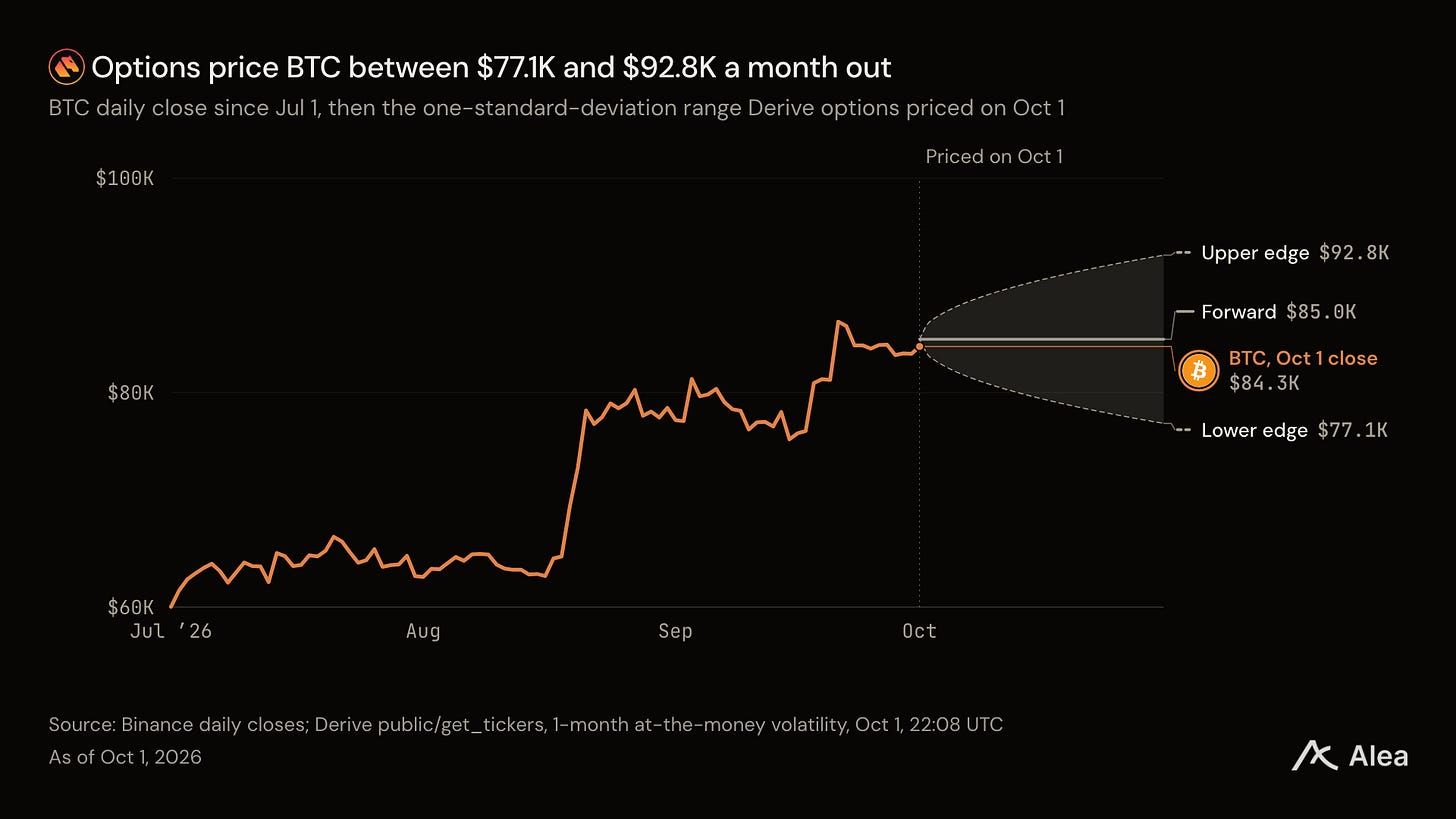
Derive spent Q3 clearing more option exposure at a lower cost per dollar, and its share of the onchain field rose to 90.4%. It now takes nine of every ten onchain premium dollars into V3 on Ethereum.
Important Links
Disclosure: Alea maintains Derive's Data Room.

Derive's Data Room tracks the venue through the V3 migration. Analytics holds Derive's options book, fee, and market-share history, and Intel follows each governance step.
Research reports. Deep Dives and Blueprints explain protocols and their economics. Theses and Memos examine investment cases and catalysts. Benchmarks compare performance, while Perspectives assess specific developments.
Weekly Pulse. Read a weekly assessment of macro and the major liquid markets.
Protocol Data Rooms. Research each protocol in one place, with Analytics for historical comparisons and Intel for news and governance developments where available. Open Derive Analytics. Open Derive Intel.
Podcast Digest and Summit Digest. Read summaries of industry conversations and events. Find Alea shows and their episodes through Podcast Digest.
Governance Tracker. Follow proposals and voting activity across protocols.
For protocol teams preparing institutional conversations, discuss research for your protocol with Alea.