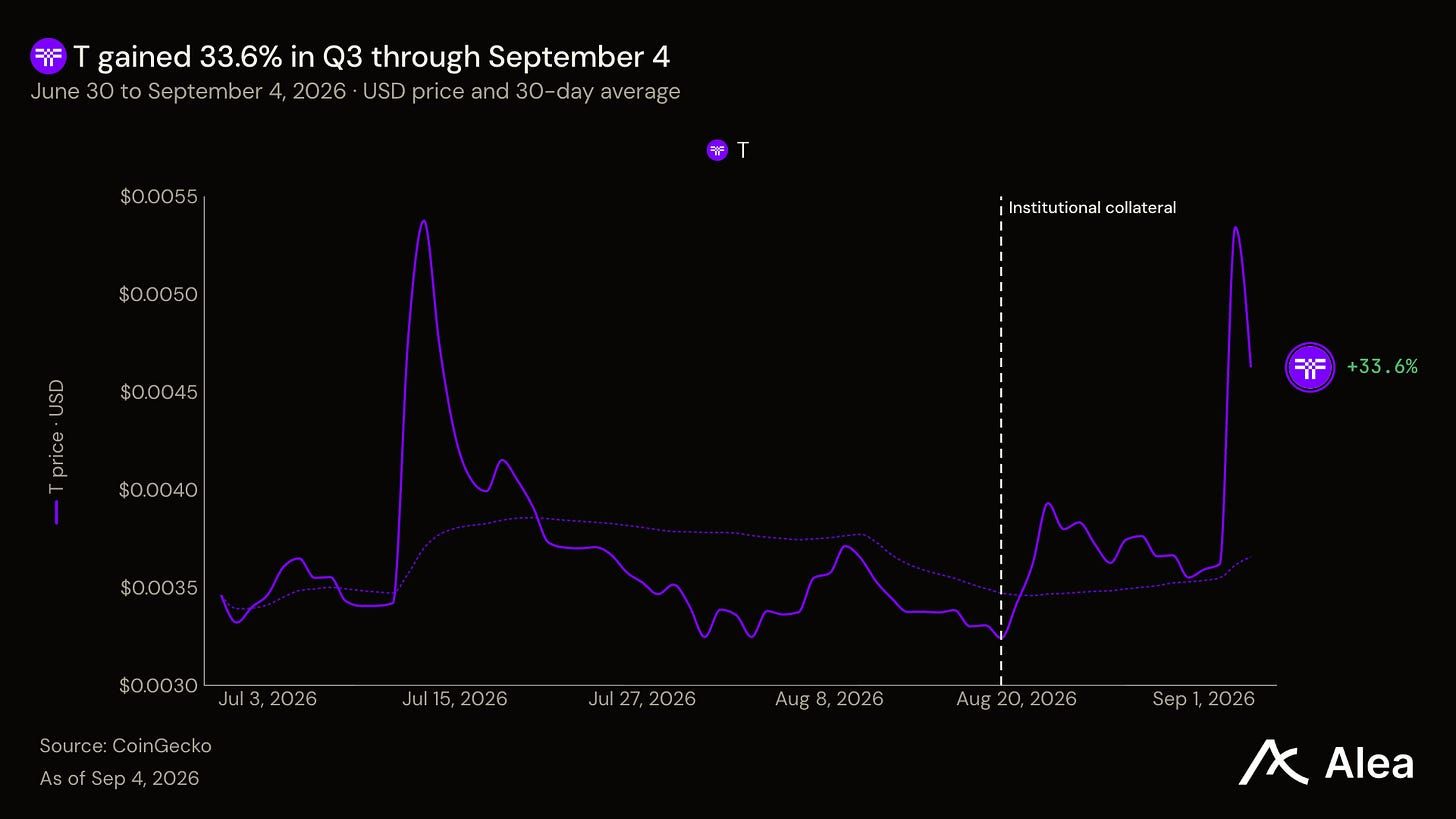
Threshold gives Bitcoin holders a way to borrow without selling their BTC. Its institutional accounts bring agreed custody controls to a lending market where tBTC already has a foothold. Threshold earns fees when users enter or leave, minting and redeeming. Frequent users can stake T to reduce those costs, connecting the token to that growth opportunity.
Takeaways
Bitcoin holders can borrow through tBTC while keeping their BTC exposure. Institutional accounts add custody and recovery terms agreed in advance.
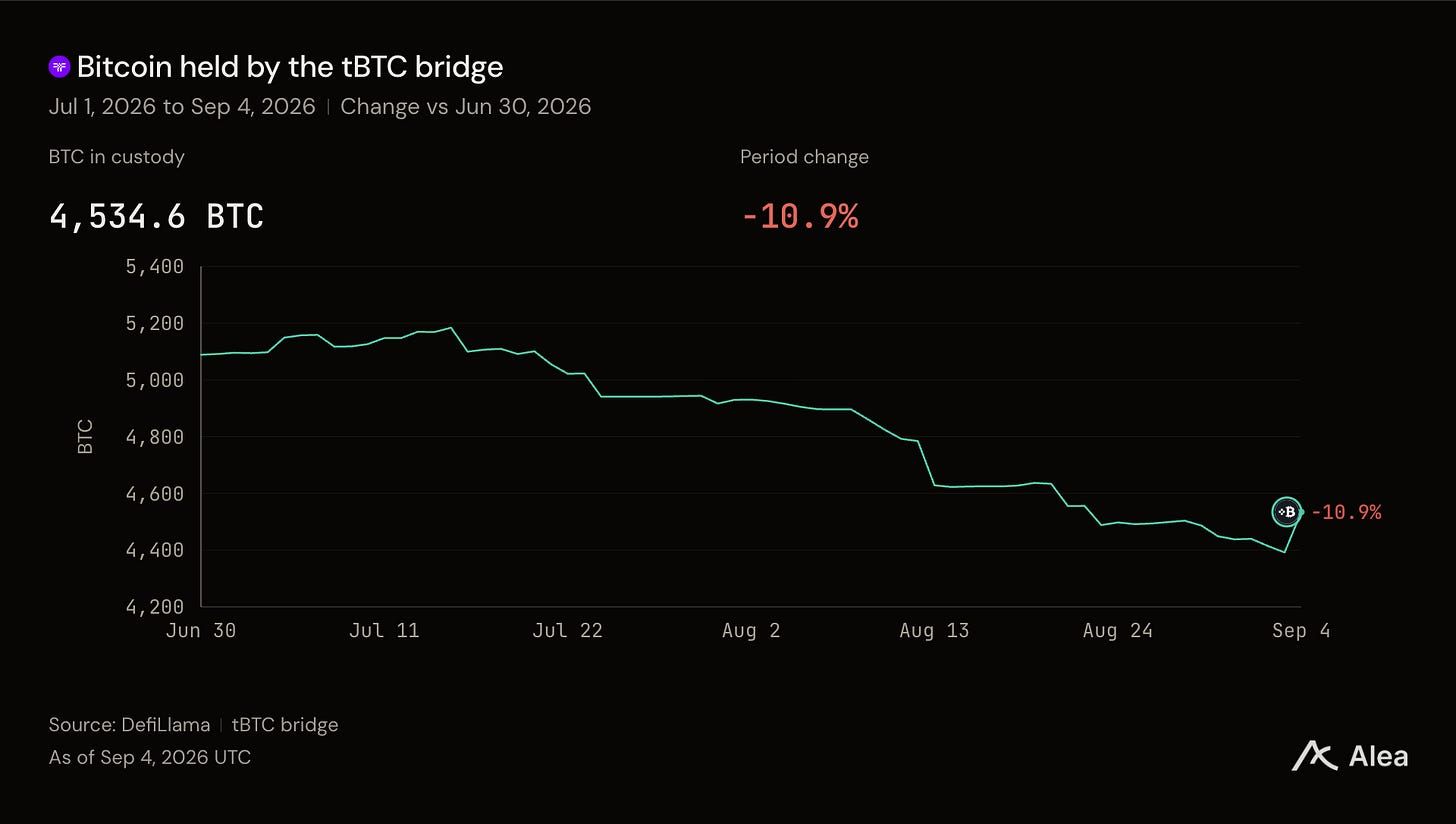
Custody value rose +20.4% to $368.6M. Bitcoin’s price gain outweighed a -10.9% change in the BTC balance.
Aave and Curve give tBTC users established places to borrow and trade. Four vaults held $24.6M in July, adding ways to earn on their Bitcoin.
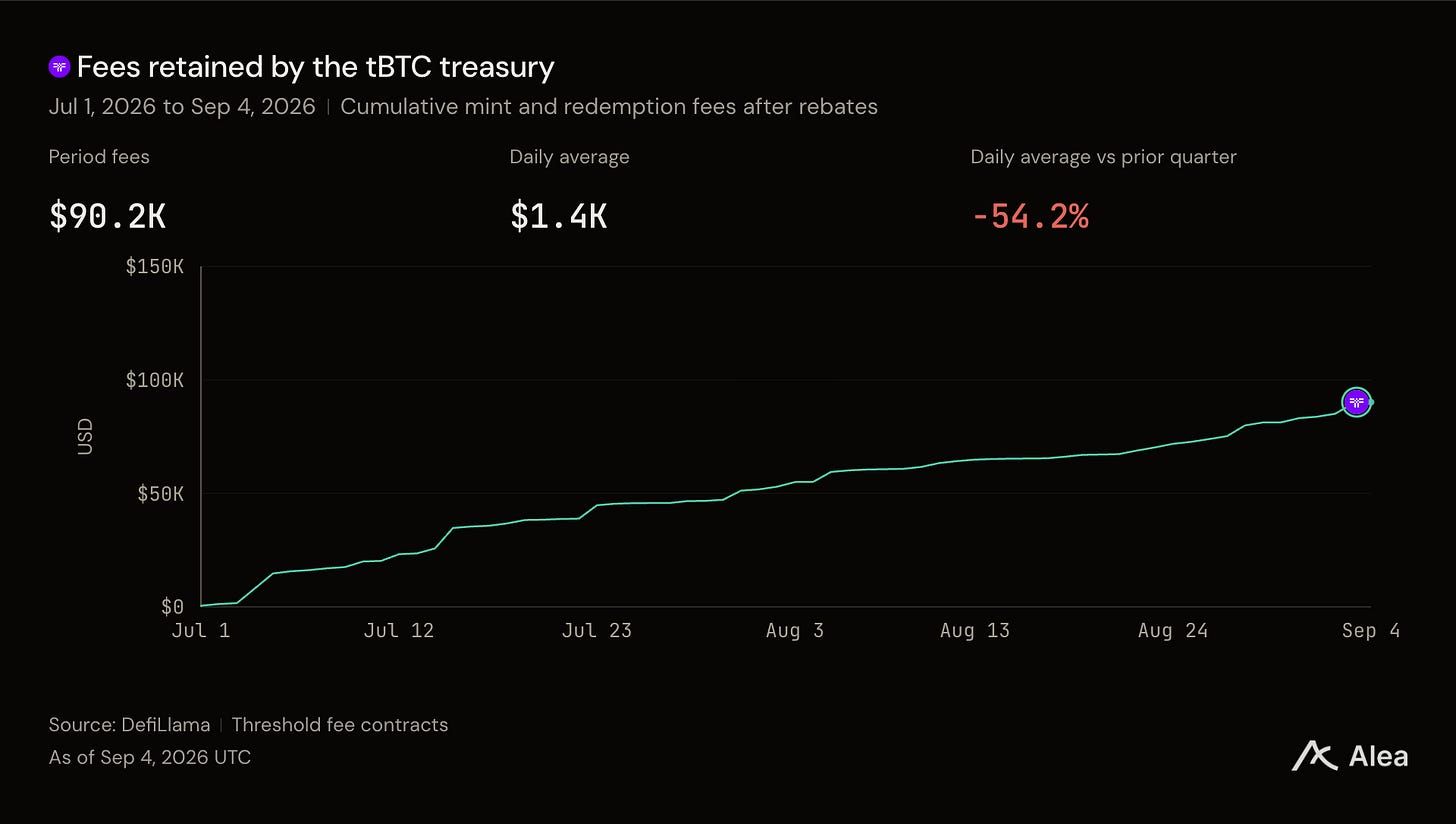
Threshold retained $90.2K in Q3 fees through September 4. More regular mint/redeem activity is the route to higher income.
Staking 100,000 T offsets up to 0.001 tBTC in eligible fees per rolling 30 days. That gives active users a direct financial reason to hold T.
How Threshold earns money
tBTC is a token backed by Bitcoin held in the Threshold signer set. Holders use it in apps such as Aave, where it serves as collateral for a loan. They retain exposure to Bitcoin’s price and pay interest to the lending market. If their collateral falls too far in value, the lender can liquidate it.
Users pay mint/redeem fees when Bitcoin enters or leaves Threshold. Minting creates tBTC against deposited BTC. Redeeming exchanges tBTC back into BTC. Each direction costs 0.20% before staking waivers, or $2,000 on a $1M transaction. Fees retained after rebates go to the treasury and help fund the protocol.
For larger holders, Threshold offers Verifiable Bitcoin Accounts. These keep BTC in segregated custody with agreed spending permissions and recovery paths. An asset manager can arrange financing around those controls and use tBTC as collateral.
A $368.6M base for Bitcoin finance
The Bitcoin held by the protocol fell from 5,088.7 BTC to 4,534.6 BTC, a -10.9% change since June 30.
Its dollar value rose from $306.2M to $368.6M, or +20.4%, as Bitcoin appreciated.
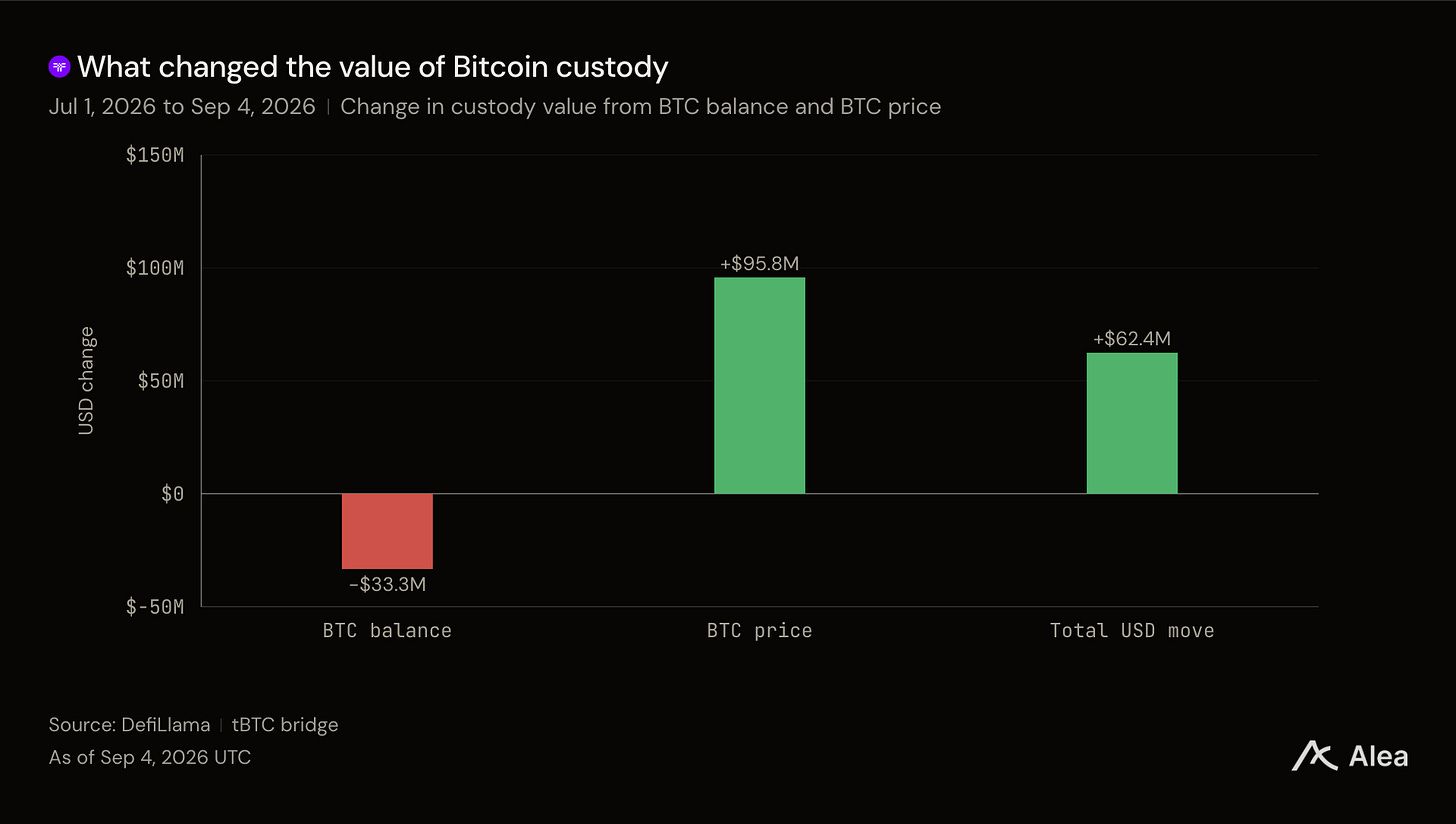
Bitcoin appreciation added +$95.8M to custody value. The smaller BTC balance contributed -$33.3M, leaving a net +$62.4M increase. A stronger Bitcoin price helped the dollar total. Attracting new deposits is the next opportunity for institutional accounts and lending products.
Give Bitcoin holders a reason to stay
Aave users supplied more than 2,000 tBTC in July, up from roughly 1,900 in early June. Deposits later eased to 1,752 tBTC on August 18. Users deposit tBTC as collateral and borrow against it while keeping exposure to Bitcoin.
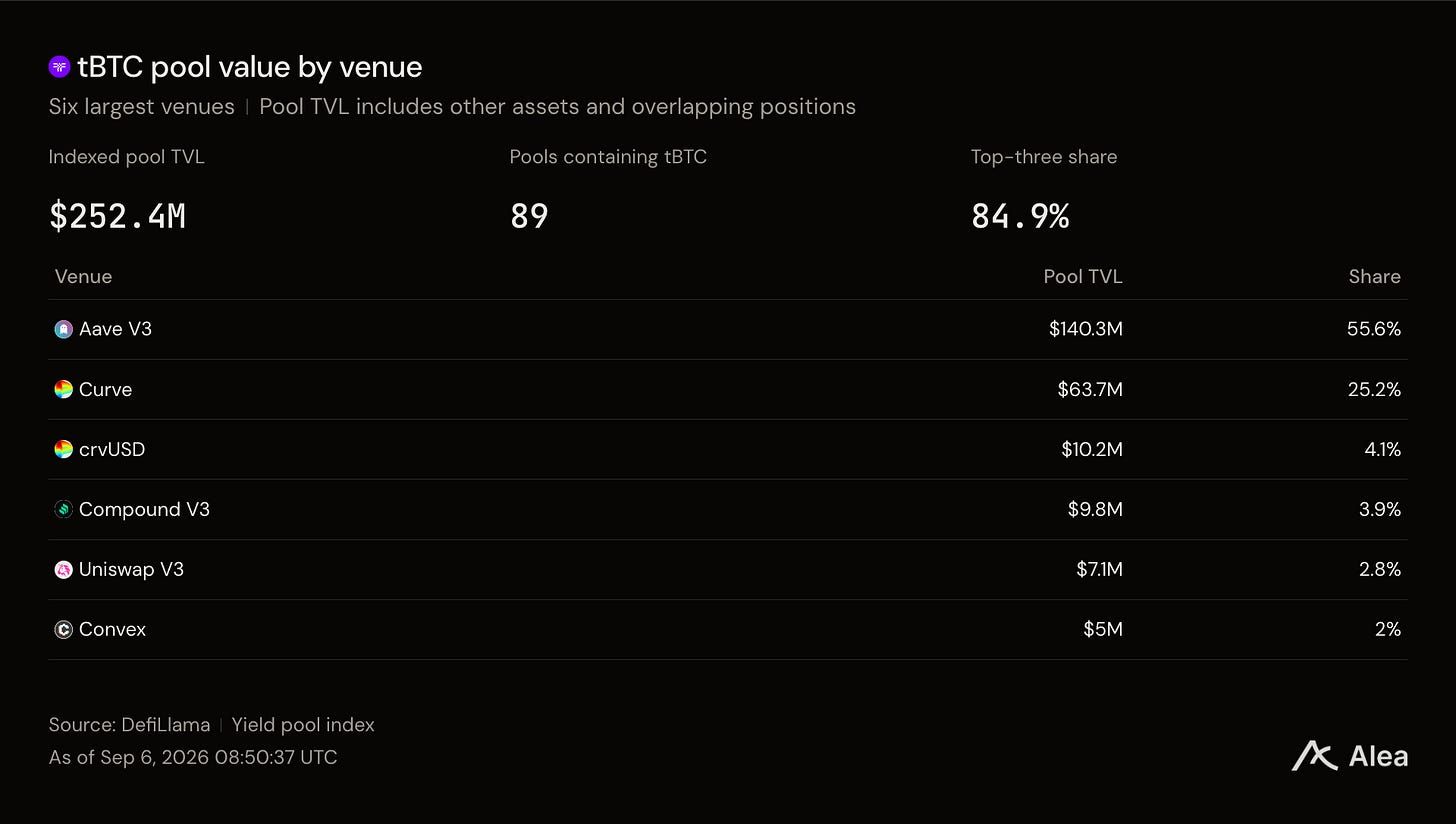
Aave and Curve account for most of the value in DeFi pools containing tBTC. Borrowers use Aave, while traders use Curve to exchange assets. Compound and Uniswap extend that reach.
Yield vaults add another option. In July, four vaults across Ethereum, Starknet, and Sui held $24.6M. Yield Basis accounted for $22.8M, about 93% of that total. Each vault has its own strategy and risks. Broader vault adoption gives holders more ways to earn on their Bitcoin.
More mint/redeem activity means more fee opportunities
The protocol retained $90.2K from July 1 through September 4. That averaged $1.37K a day, compared with $2.99K in Q2, a -54.2% change. Fees come from minting and redemption, after eligible rebates.
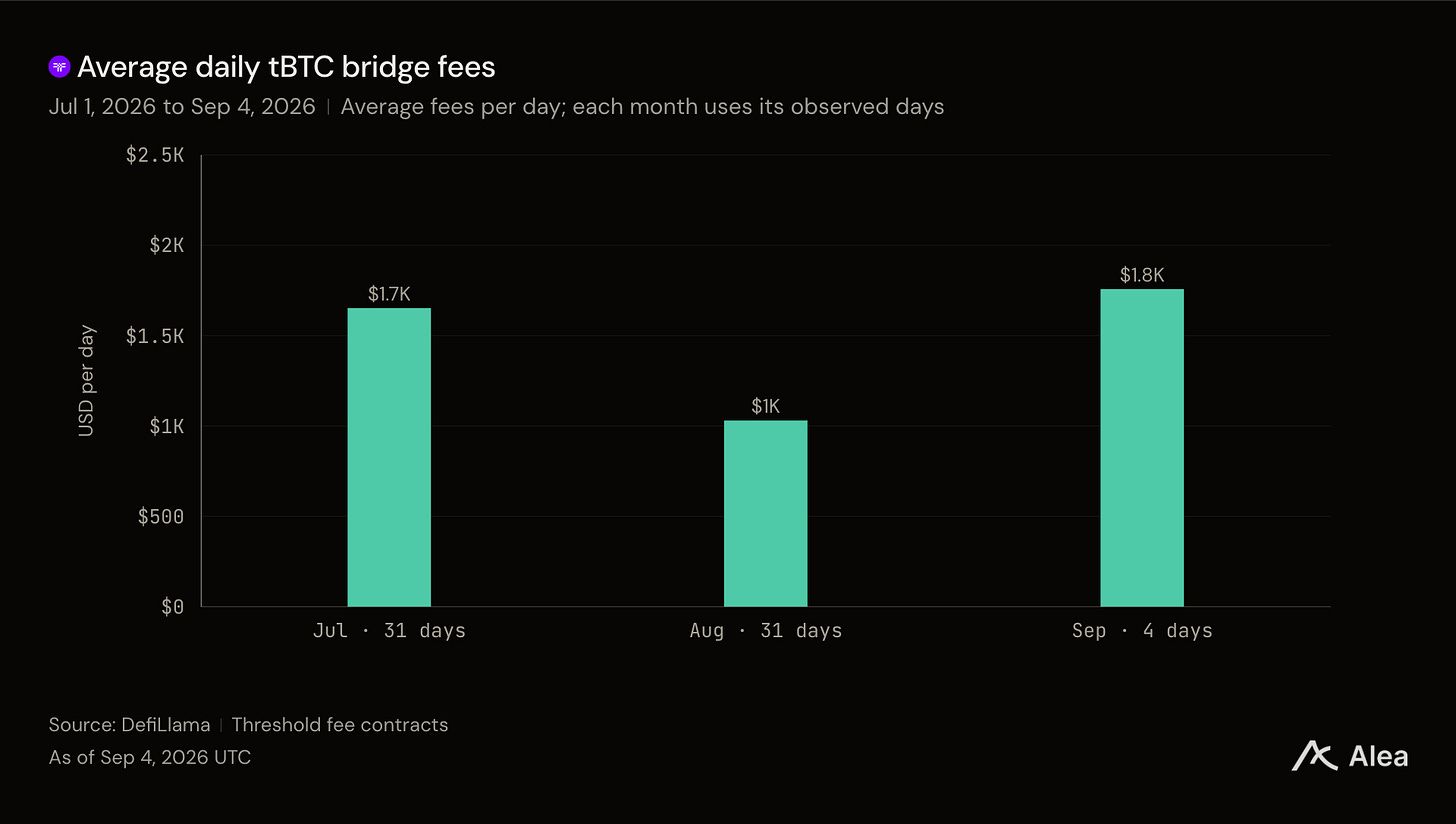
July generated $51.2K, followed by $31.9K in August, a -37.6% change. Both months had the same published mint and redemption fee rates. Institutional borrowing expands the potential customer base for that activity.
Why stake T
If you move Bitcoin in and out of DeFi often, expenses add up. Staking T reduces that cost. For every 100,000 T staked, users receive capacity to offset 0.001 tBTC in eligible fees over a rolling 30-day window.
At a 0.20% fee, that allowance covers the fee on 0.5 BTC of activity. Staking 1M T gives ten times the allowance, enough for the fee on 5 BTC. Savings depend on eligible use, so these are fee allowances rather than a passive annual yield. Unstaking takes 30 days.
T holders also vote on fees and treasury spending. The staking benefit comes from rebates on mint/redeem activity, with no newly issued T rewards. Lower costs give frequent users a reason to buy and keep T staked.
Protocol revenue also funds discretionary purchases of T on the market. Those buybacks depend on treasury decisions and available funds after costs. They are separate from staking fee savings and do not establish a fixed distribution to every holder.
Looking forward, institutional borrowing gives Threshold a concrete market to pursue. More mint/redeem activity creates fee income and more opportunities for users to save by staking T.
Important Links
Review through September 4, 2026. Custody changes compare with June 30. Venue totals are a separate current snapshot. Alea built the analytics used in this review.

Alea brings Threshold’s research, operating data, and news into one workspace for traders and investors.
Open the Threshold Data Room to understand the protocol, its risks, and the investment case.
Use Threshold Analytics to compare activity, fees, and valuation through time.
Follow Threshold Intel for protocol news and governance developments.