In the fallout of this mini $LIBRA crisis, there might be some things to look forward to in the markets. Today, the $KAITO TGE will take place, a massive airdrop in its own right. Kaito actually operates its own Bittensor subnet, Open Kaito, which has drawn some attention to the greater $TAO ecosystem, with the dynamic TAO upgrade having just taken place last week.
It is looking like a low volatility period of time for crypto right now for the time being. However, there is currently a flurry of new chains launching or progressing through their rollout stages. For most of last year, new chain launches were more sparse, with the focus being mostly just on Solana and then Base. Right now, teams are pushing for their chains to gain adoption.
In this edition, we’ll focus on Monad, which has just launched its testnet yesterday. We’ll discuss the chain’s architecture, differentiating factors, and more…
Stay informed in the markets ⬇

Background on Monad
Of the new generation of chains launching this cycle, Monad has raised the most; $253M in total. Its Series A raise ($225M) saw the highest total raised by a crypto project last year.
Besides the current class of chains that have recently launched or about to, we’ve seen chains with a similar focus on scalability raise massive VC funding. Both Sui and Aptos have raised $300M+. While the developer experience of these chains receives high praise, the emergence of a sovereign move-based ecosystem that can rival the largest L1s or L2s has yet to emerge.
Monad looks to differentiate itself in 2 key ways: tech and ecosystem.
Tech
From a design standpoint, Monad is a high-performance EVM-compatible layer-1 blockchain. It has a general-purpose approach to adoption, looking to leverage its scalability to host DeFi and consumer apps of all kinds (more on this below). Specifically, it brings parallel execution to the EVM, enabling the chain to be as scalable as the likes of Solana while still leveraging the substantial network effects and developer tooling of the EVM ecosystem.
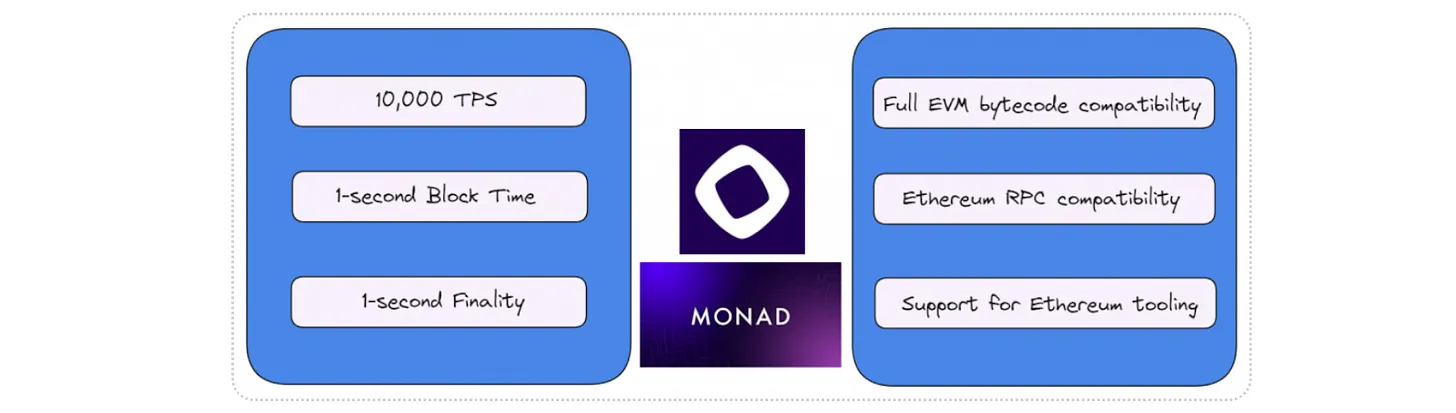
Monad has four core optimizations: parallel execution, a parallel database, asynchronous execution, and Monad BFT. Parallel execution alone isn’t sufficient, but combined with a parallel database, asynchronous execution, and a high-performance consensus mechanism (Monad BFT), it significantly enhances performance.
Without spending too much time on these, these features enable Monad to open the design space for EVM, enabling applications that require high scalability and large concurrent users. Monad’s custom consensus mechanism can scale to thousands of nodes, ensuring decentralization while being able to scale beyond the limits of L2s…
Ecosystem
Monad’s prioritization of ecosystem is evident in its inherent design structure, bringing pipelining to the EVM. This is important due to the EVM’s existing developer tooling and community. Full EVM compatibility also opens up doors for collaboration with other projects.
Even though Ethereum has been a laggard this cycle, there are still reasons why it could pay off to be somewhat Ethereum-aligned. A big reason is just the sheer amount of capital on the chain. While Ethereum might lack users and activity, it still leads in total TVL, with Ethereum mainnet having nearly $60B in TVL. This figure is almost 6x that of Solana, though this gap has shrunk considerably.

There are a whole host of new and emerging apps that have already gone live on Monad’s testnet, as well as established names like MagicEden, Hyperlane, Uniswap, LayerZero, Orderly, INFINIT, and others. Users can request $MON tokens from the testnet and begin playing around with these protocols. Having wallet providers with existing users like Backpack Wallet and Phantom Wallet is also a big plus to have from day one; Sui only saw a Phantom wallet integration recently.
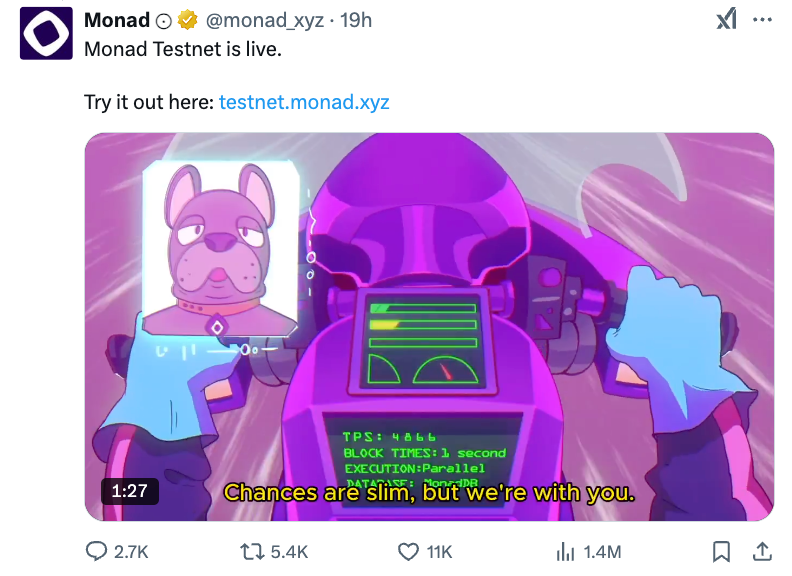
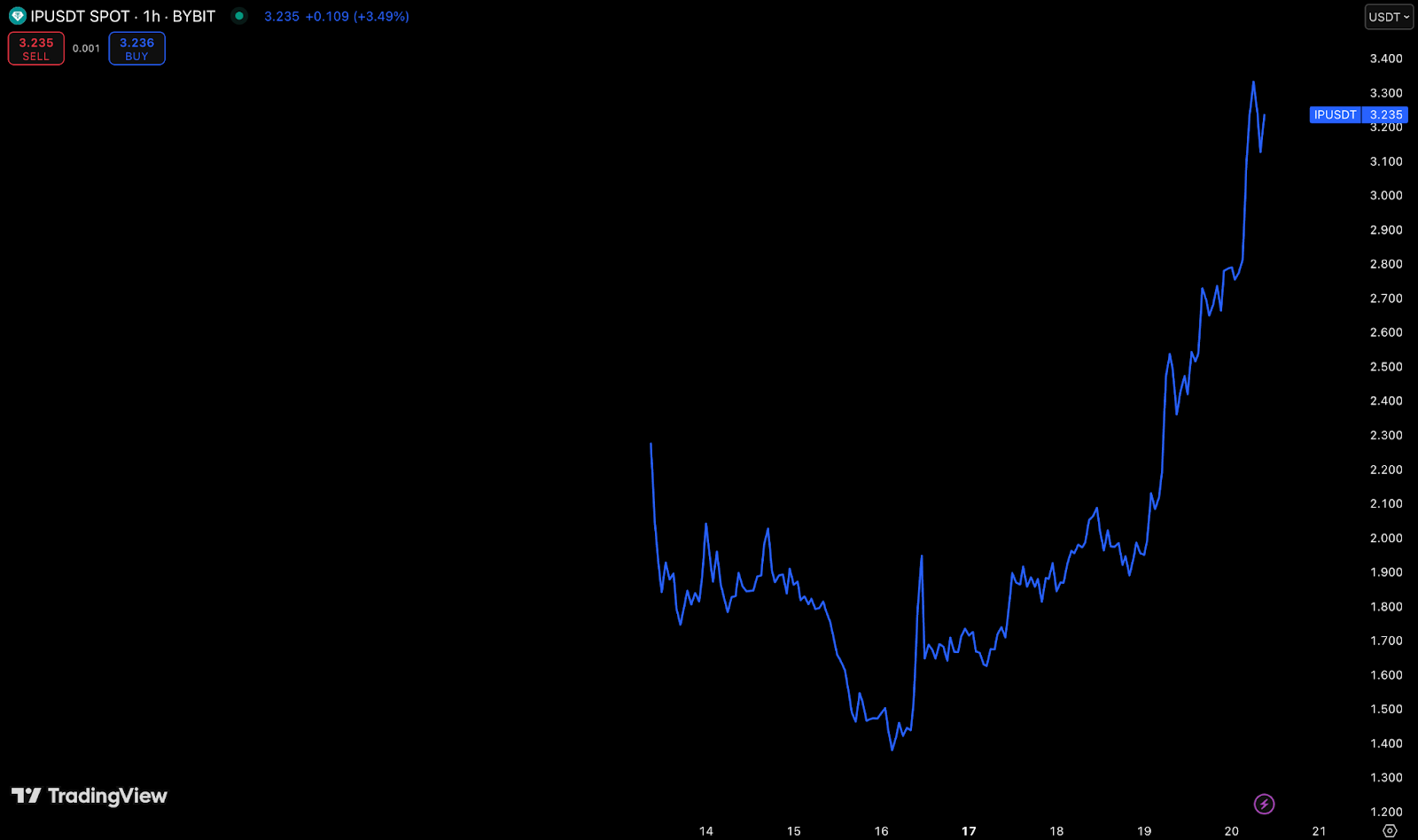
Time is ticking for Monad to launch, as the landscape of chains is only growing. BNB Chain is seeing some reinvigoration, fueled by CZ and a push for memecoin and AI agents activity on the chain. Berachain has recently launched, and Story’s $IP token has actually seen positive price action since TGE, something worth noting for what it could mean for the broader market and new chain launches.
Sonic (formerly Fantom) has also seen its TVL move up and to the right since its re-launch. Still, there’s only room for so many chains if they all do more or less the same thing, with similar DeFi primitives available on most chains. Whether it be Tron’s focus on $USDT transfers, Solana’s acceptance of memecoins and speculation, or Hyperliquid’s focus on its perps exchange, chains that have a narrow focus seem to be faring better than those that might be too general. It’s more important than ever for teams to build a hospitable environment, not just for existing apps to deploy on, but for the future pump funs and other hit projects to build on top of.