Ethena enters neobanking as the issuer of the dollar in the account and the manager of its backing assets. That gives Pay an economic advantage. Backing income funds rewards, and payments give customers another reason to hold USDe. The passed ENA fee-switch vote adds a defined buyback schedule as the dollar base grows.
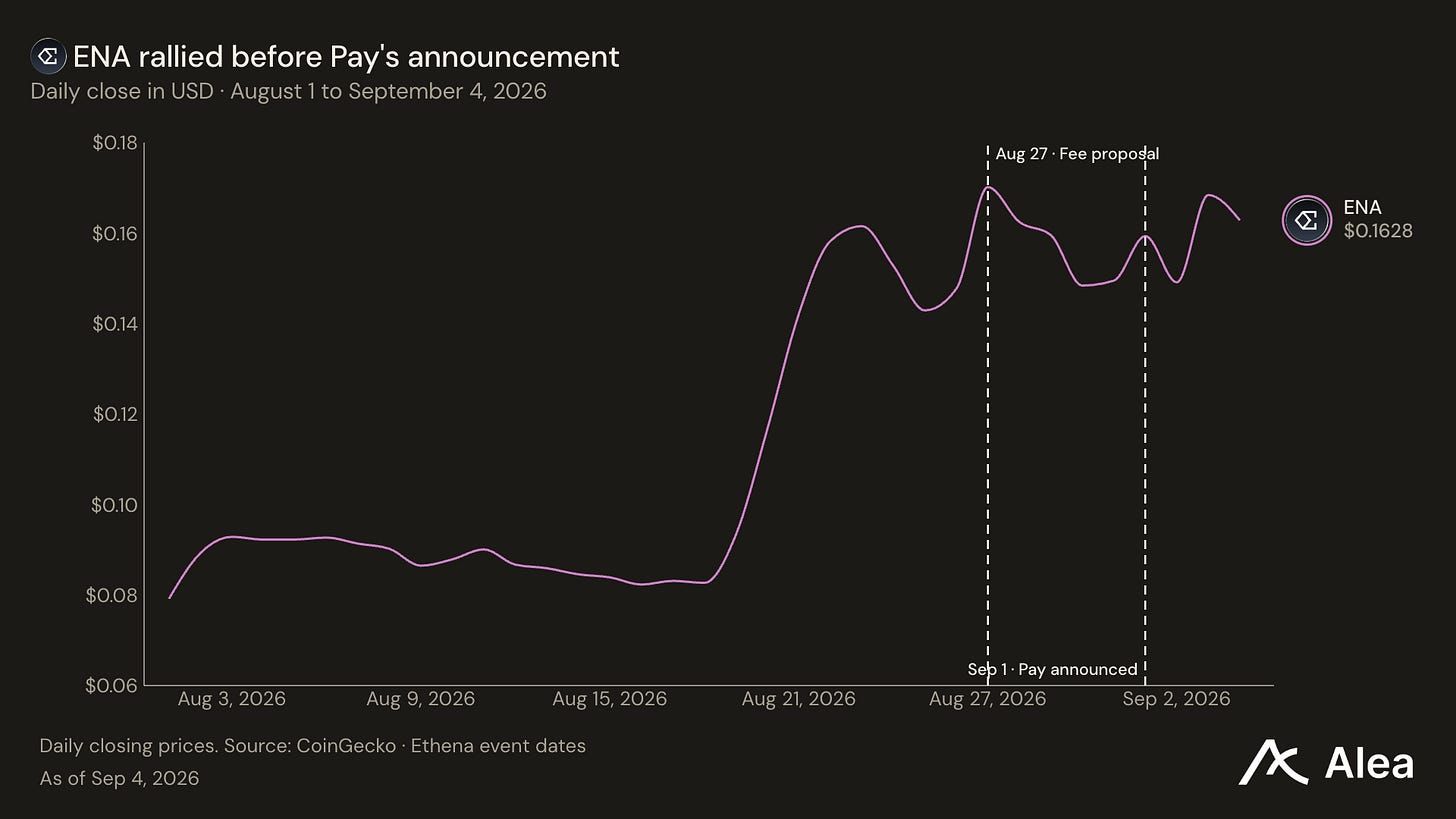
Takeaways
Pay gives an established dollar issuer a direct customer relationship, reducing its reliance on partners to distribute USDe.
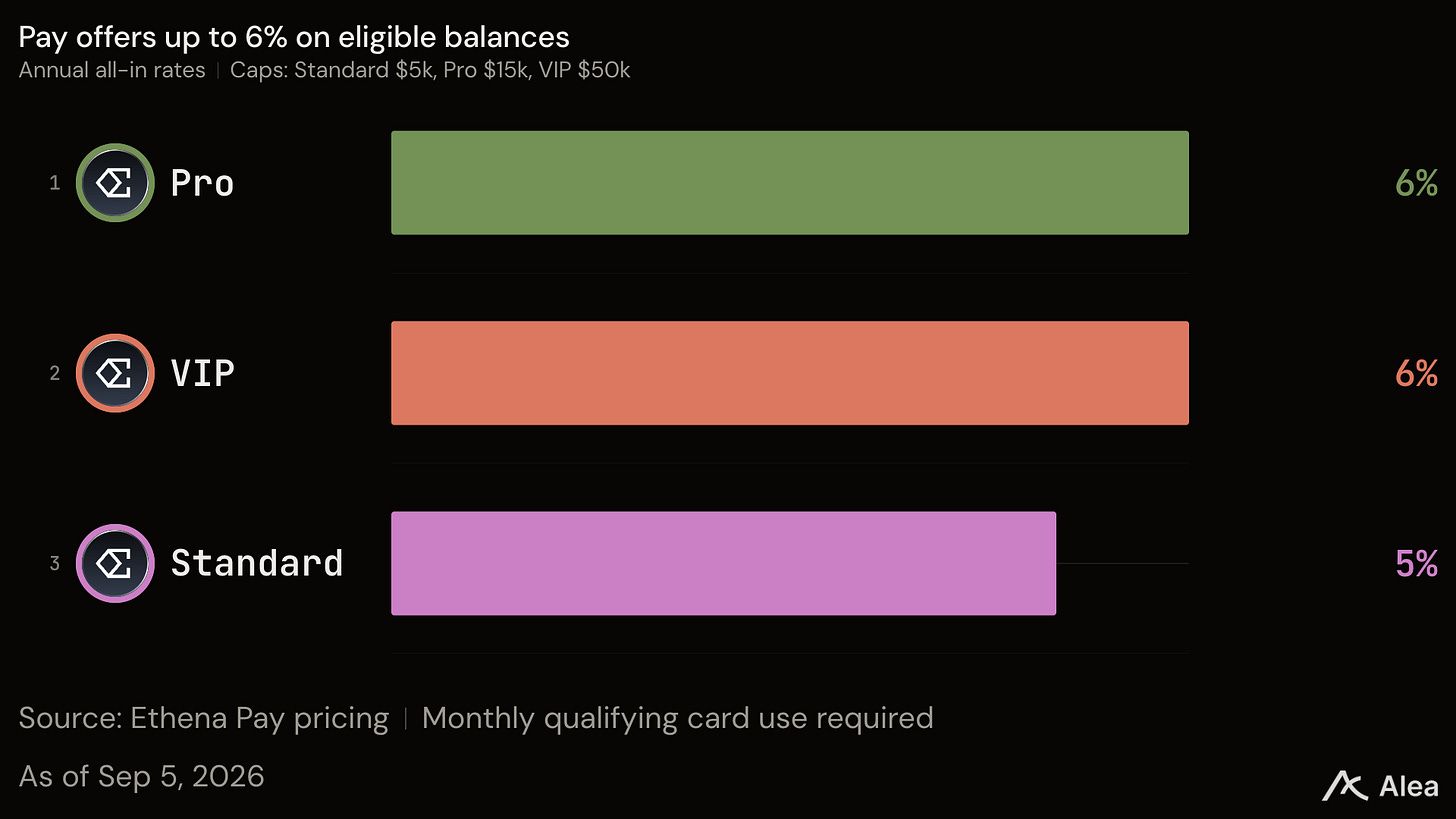
Users get a self-custodial account, a virtual IBAN, and card access, with promotional balance rewards up to 6% and cashback up to 5%. Tier caps and qualifying transactions apply.
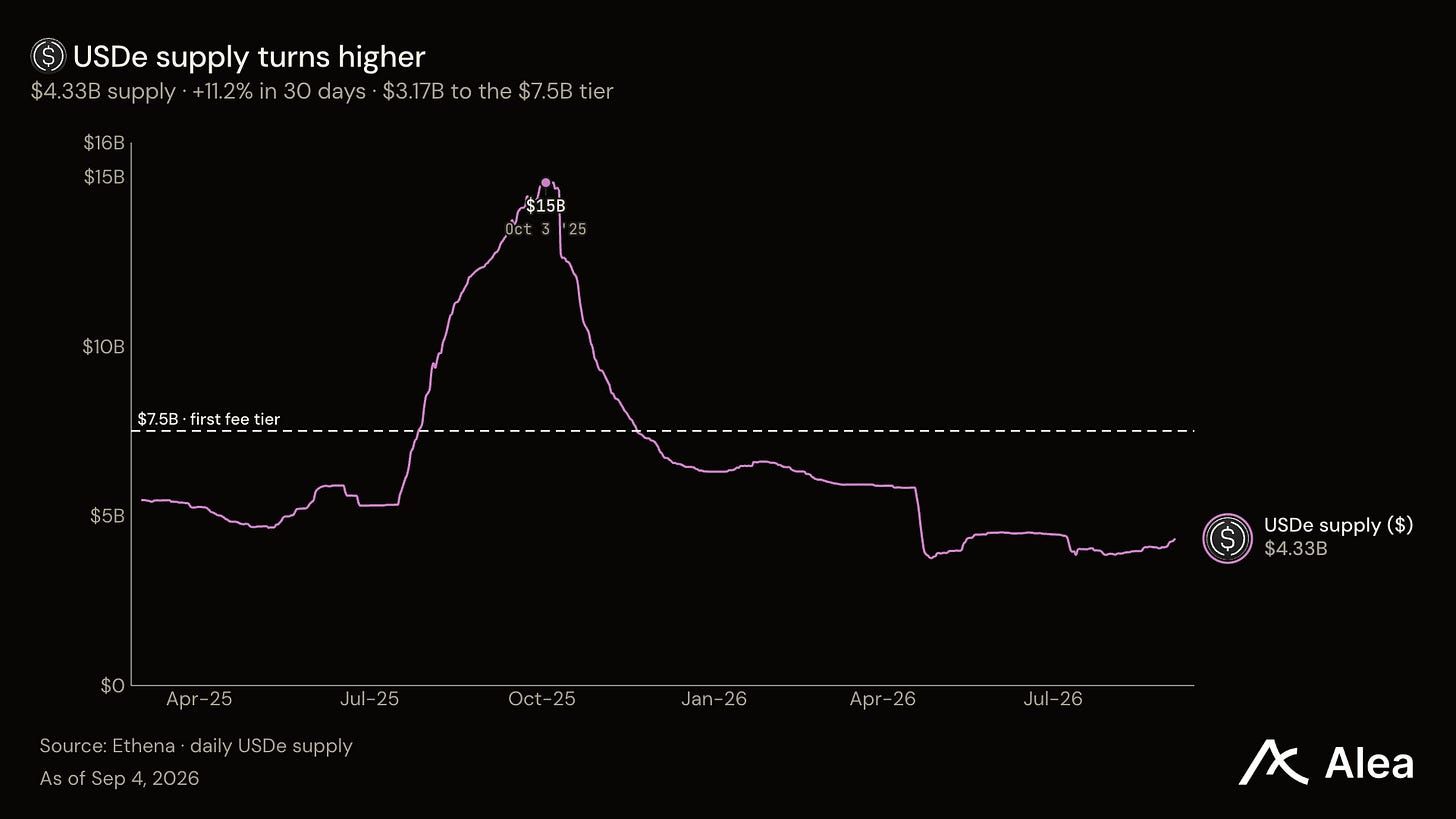
USDe supply reached $4.33B on September 4, adding $436M, or +11.2%, in 30 days. Pay adds a consumer channel to that recovering dollar base.
ENA’s fee-switch vote passed with 17.79M voting power in favor and none against. The first revenue tier starts at $7.5B of USDe supply.
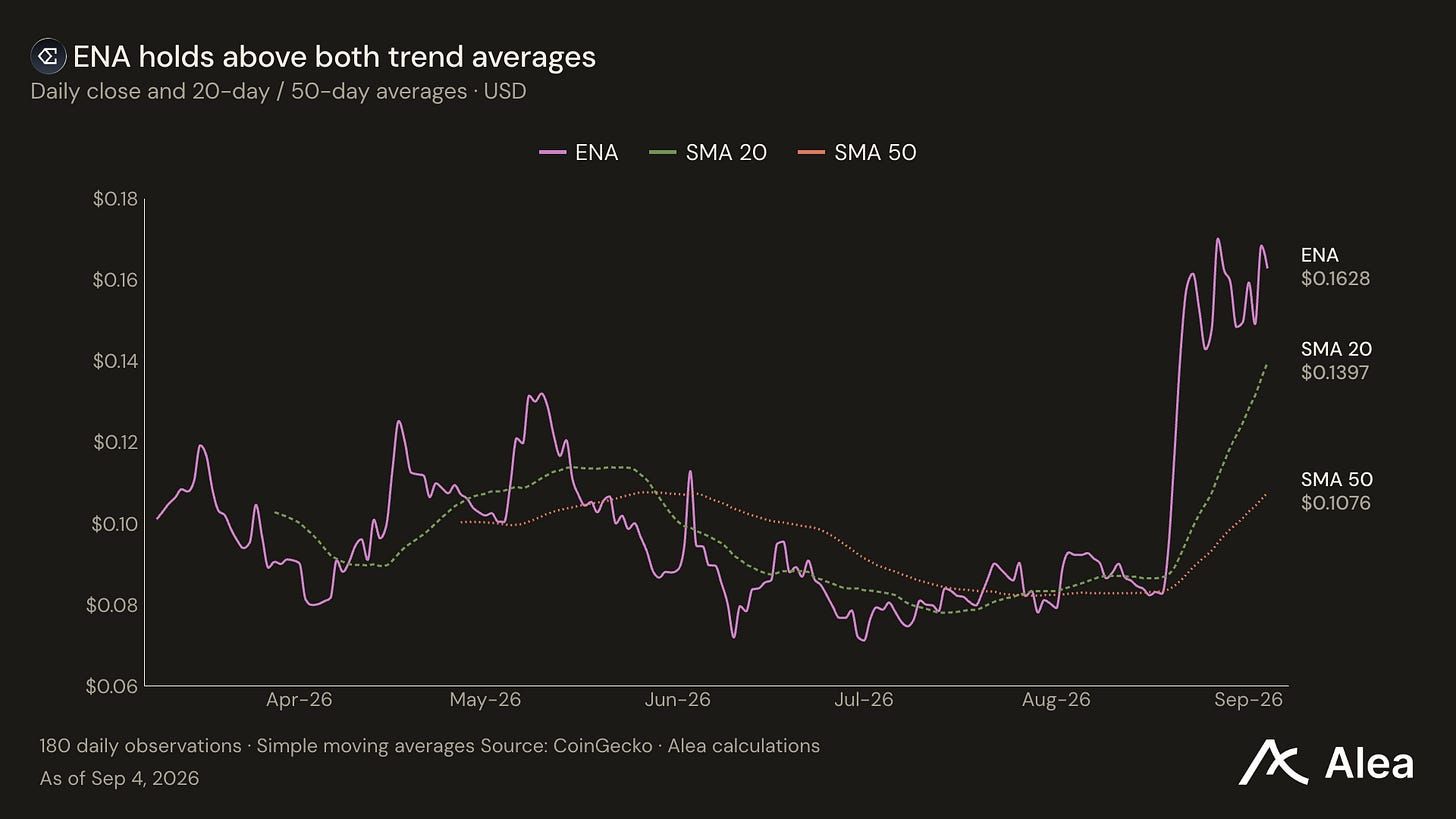
Ethena owns the economics behind the account
Ethena Pay launched on iOS in almost 50 countries. It combines a self-custodial wallet, virtual IBAN, card access, and instant transfers between users. Ethena plans Android, US, EU, and multicurrency expansion for September.
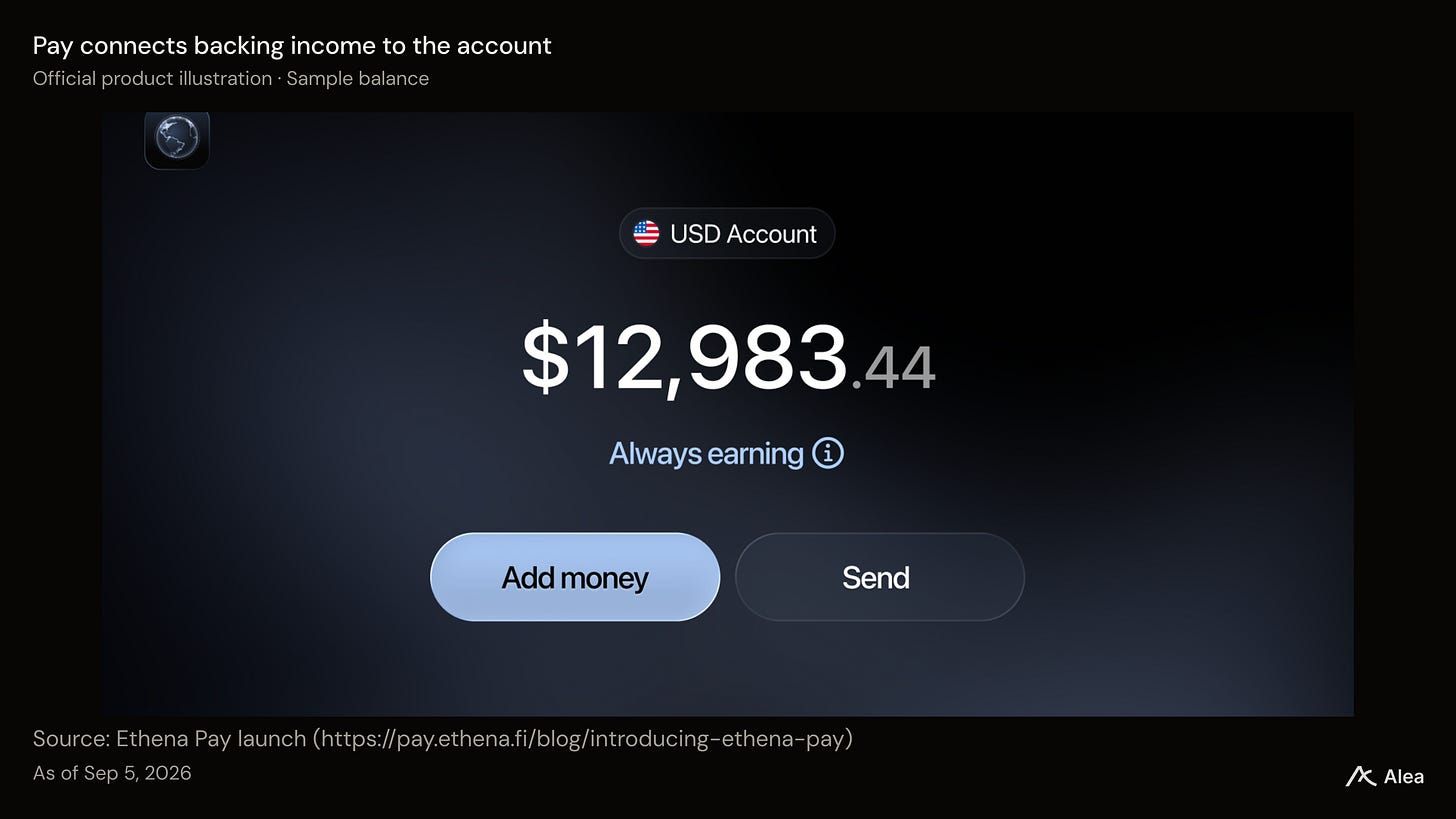
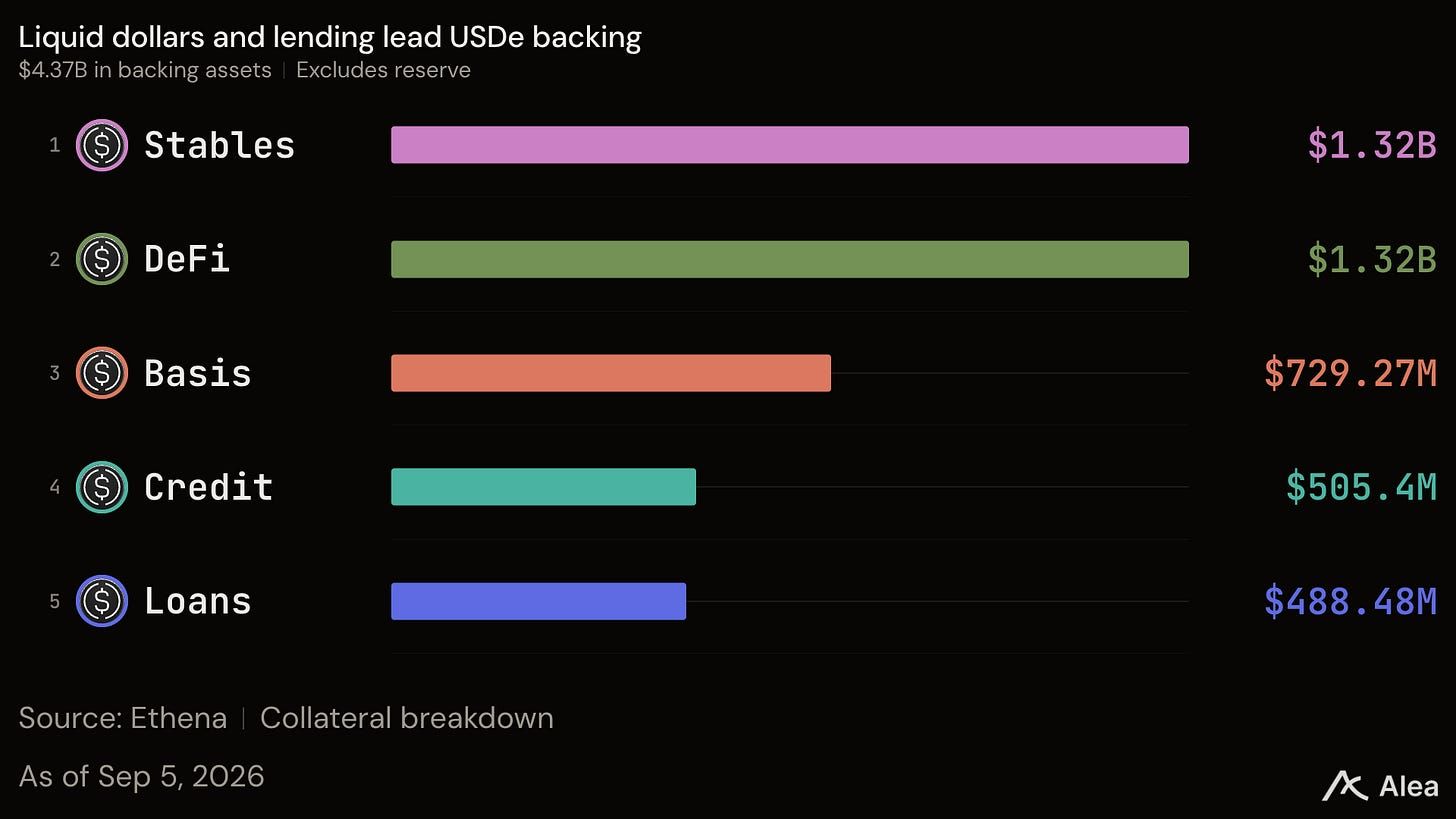
Every funded Pay balance converts into USDe. Ethena manages its backing across stablecoin liquidity, DeFi loans, hedged crypto positions, institutional lending, and tokenized credit. On September 5, Ethena reported $4.37B of backing plus a $62.1M reserve, covering 101.97% of USDe supply.
No competitor in the crypto neobanking space issues the underlying stablecoin. Most rely on USDC or USDT, as well as third-party protocols for yield sources. Ethena, however, retains the backing revenue associated with its own dollar and decides how much to direct toward customer rewards and acquisition.
Ethena has already published its promotional tiers. Balance rewards include the underlying return and promotional boost. AVAX cashback starts at 4% on Standard’s first $2,500 in monthly spending, 4.5% on Pro’s first $8,000, and 5% on VIP’s first $20,000. Later spending bands earn less.
Pay gives USDe a spending use case
The +11.2% monthly supply recovery follows a much larger contraction. USDe remains -65.6% below a year earlier and -70.8% below its $14.82B October 2025 peak. Pay adds a spending use case as circulation turns higher.
A dollar received, held, and spent in Pay serves a different purpose from a balance moved between yield campaigns. The opportunity is recurring transactional balances alongside investment demand. Transfers of existing USDe change its distribution; net-new funding expands issuance.
Equity perps extend the earning engine
Ethena’s Risk Committee published an equity-basis framework on August 28: hold a tokenized stock and short its matching perpetual contract. That extends the hedge model beyond crypto prices and funding. HIP-3’s equity markets expand the venue set to investigate as liquidity develops.
The framework counted $2.9B of one-sided equity-perp open interest across four venues as of August 26. Its initial screen qualified 17 Binance names and 3 OKX names. Actual position limits depend on the tightest of open interest, trading volume, token float, and executable depth on both legs.
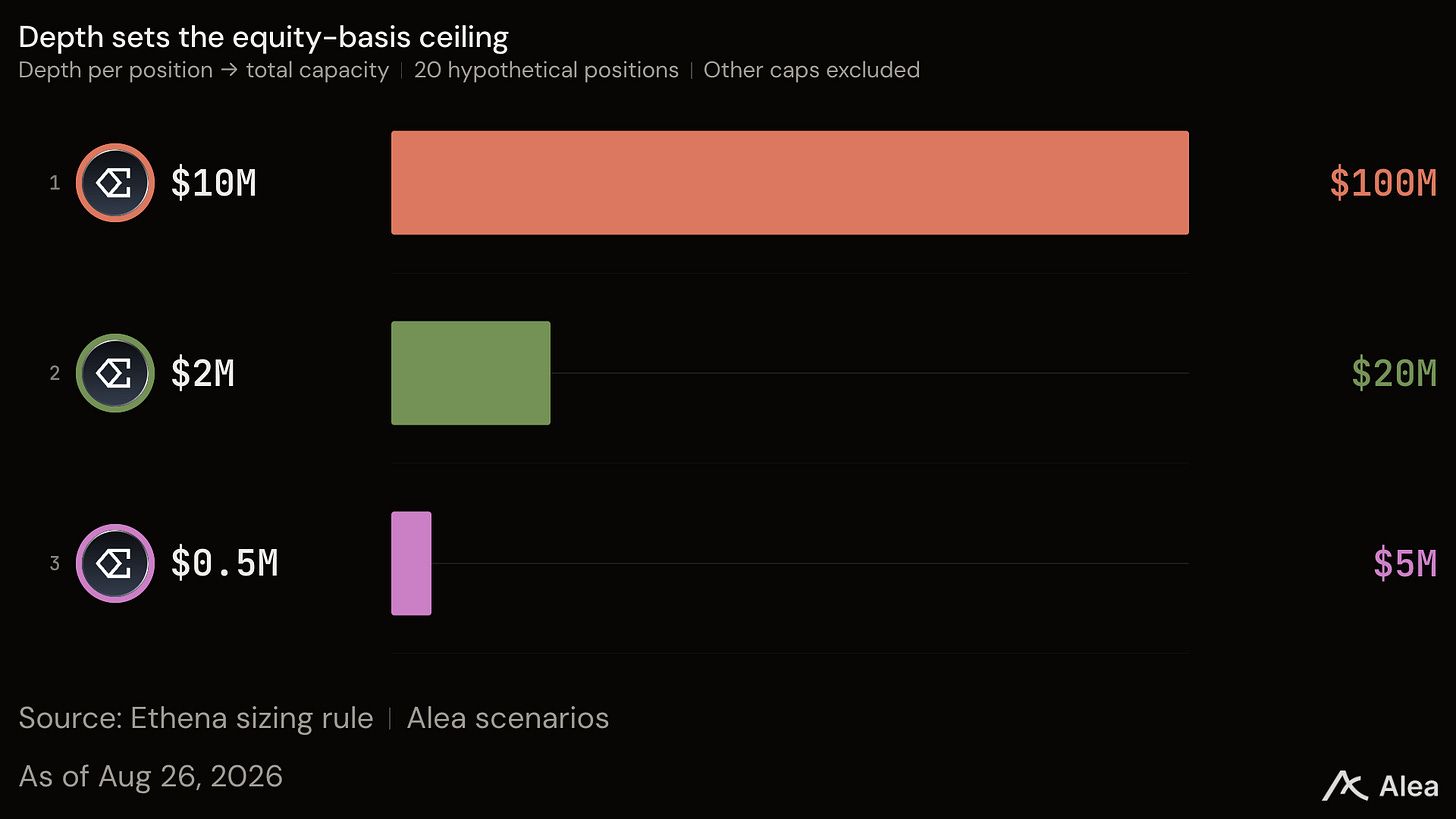
Deeper matching markets enlarge the strategy’s capacity. At an illustrative 7% annual carry, $100M deployed contributes $7M before costs. Binance basket carry fell from 18% in late July to about 7% on August 26, a -61% relative decline. More venues diversify the opportunity; liquidity and carry determine its economic size.
The ENA link is approved
The fee-switch vote closed on September 2 with 17.79M voting power in favor, none against, and 88 votes. The approved schedule allocates 5% of gross protocol revenue at $7.5B of USDe supply, rising to 10% at $10B, 15% at $15B, and 20% at $20B. The Foundation directs 95% of eligible net revenue toward ENA buybacks after activation.
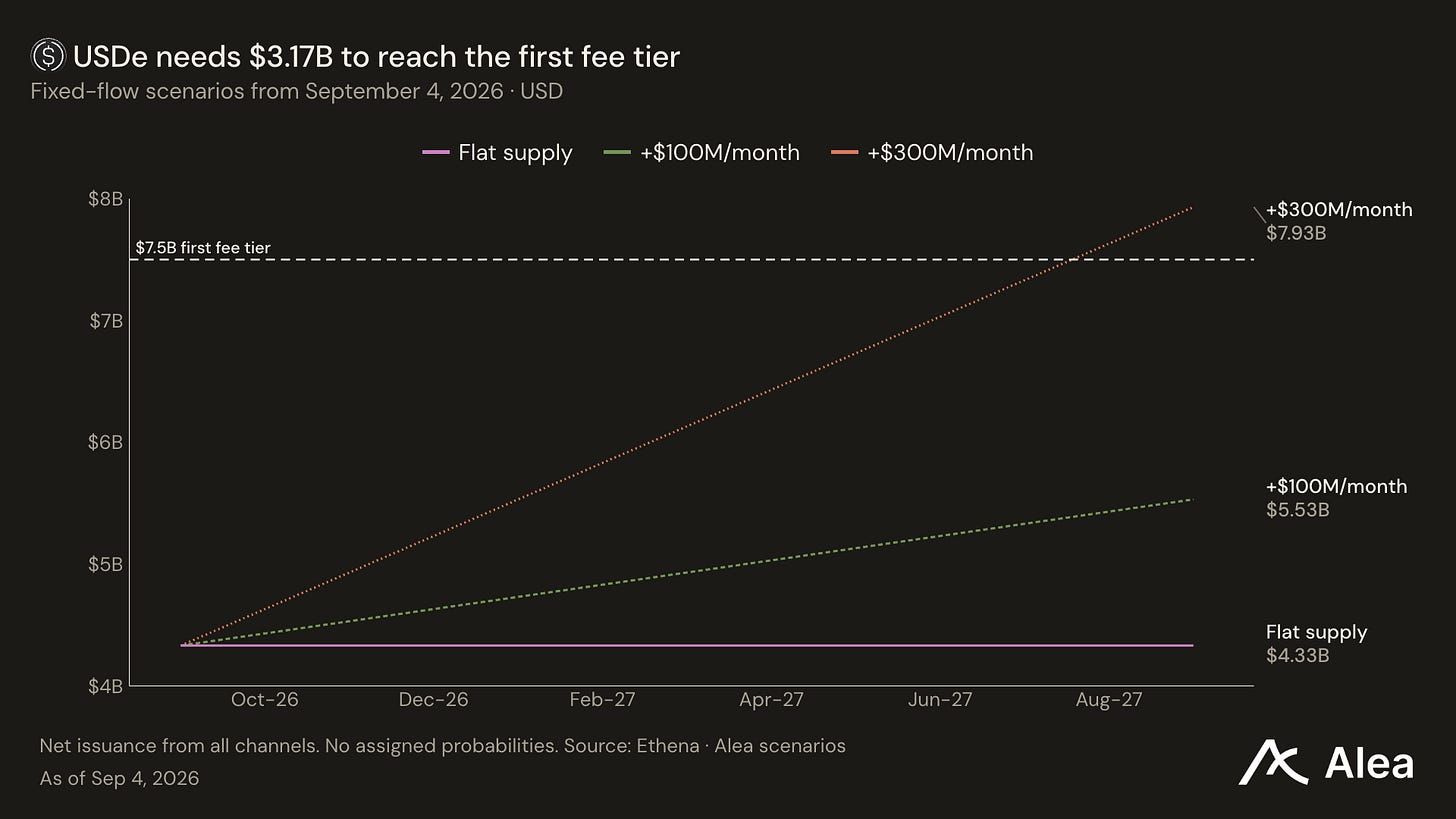
ENA’s $1.60B circulating market value compares with $4.33B of USDe, a 2.71x dollar-supply-to-token-value ratio. At the $7.5B first fee tier, a 4.6% backing yield implies $345M of annual gross income and a $17.25M Foundation allocation.
At the same ENA market value, annual Foundation allocations imply multiples of 142x, 93x, and 71x at backing yields of 3%, 4.6%, and 6%, respectively. Higher earning power lowers the multiple without requiring a higher token price.
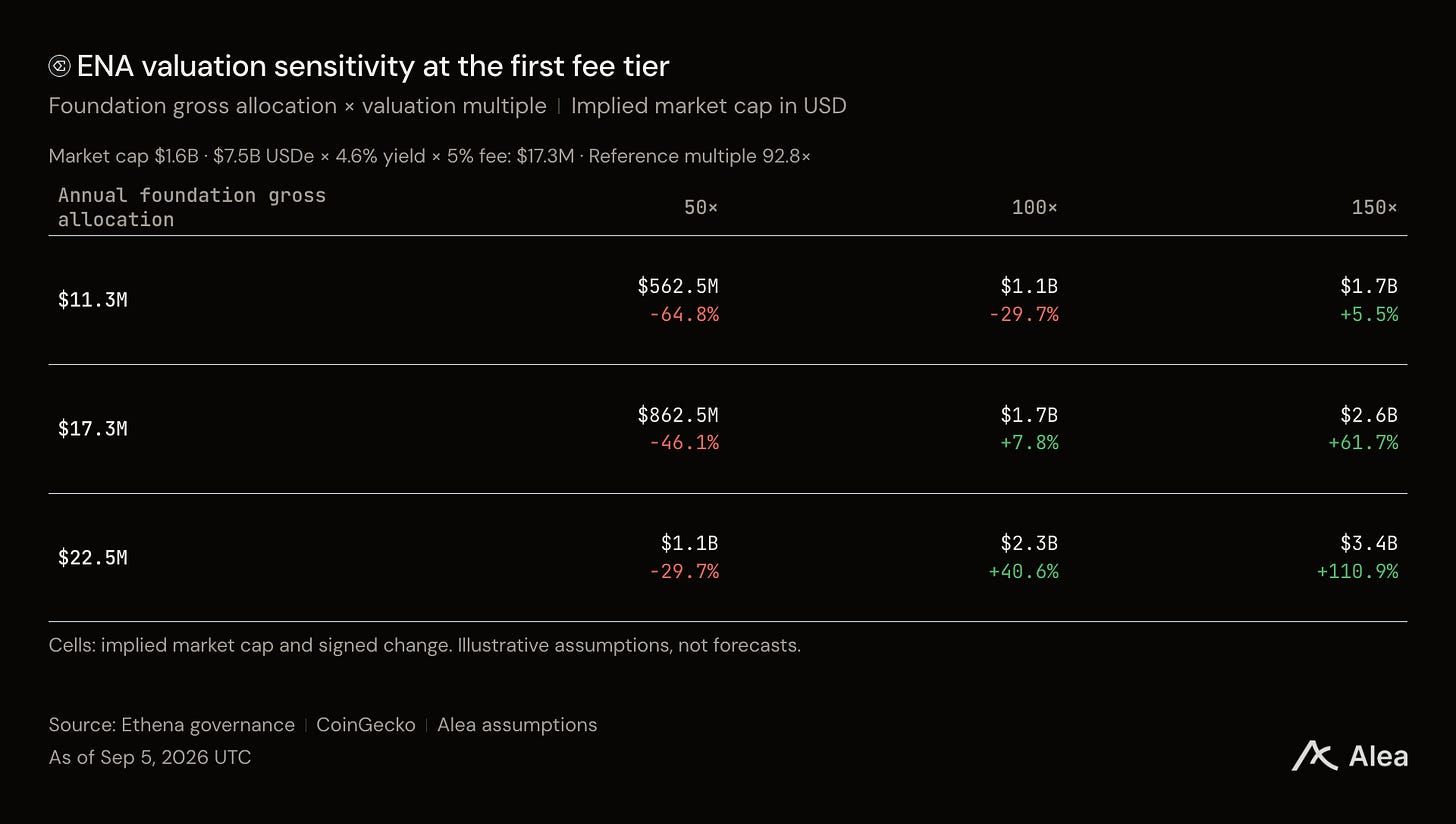
Backing income flows first to the protocol. The fee schedule allocates a share to the Foundation; buybacks use 95% of eligible net revenue after deductions. Gross allocations are not token-holder cash flows.
Pay gives Ethena a customer-acquisition budget backed by its own dollar income and a direct channel to retain balances. That combination strengthens its position against third-party stablecoin distributors. More recurring balances expand the earning base, and the approved fee schedule gives that growth a defined path to ENA buybacks.
Important Links

Alea brings Ethena’s research, operating data, and news into one workspace for traders and investors.
Open the Ethena Data Room to understand the protocol, its risks, and the investment case.
Use Ethena Analytics to compare activity, fees, and valuation through time.
Follow Ethena Intel for protocol news and governance developments.