Bitcoin is a $1.68T asset with no rate of its own. Holders who want one lend their coins out or take rewards in another token. Stacks now pays a bitcoin rate in bitcoin, on coins that can stay under their owners' keys. Its Genesis Bond pays 3% a year in BTC, reporting weekly payments since Sep 17.
Takeaways
The yield arrives in the coin the holder already owns. Other BTCFi protocols like Core and Babylon pay their stakers in CORE and BABY. The Genesis Bond pays its 230.17 BTC in BTC.
The bitcoin can stay under its owner's keys. A bonded coin sits in a six-month timelock on Bitcoin, beside STX worth 5% of it. A smaller holder can join through StackingDAO's stBTC, which pays an estimated 2.4% net in BTC and needs no STX.
Miners fund the rate, and their pool has room for nine Genesis Bonds. The reward pool paid 4.93 BTC in cycle 143, +77.0% on cycle 139, before the fork. At the 2.0x coverage SIP-045 targets, that pool supports about 2,140 BTC of bonds.
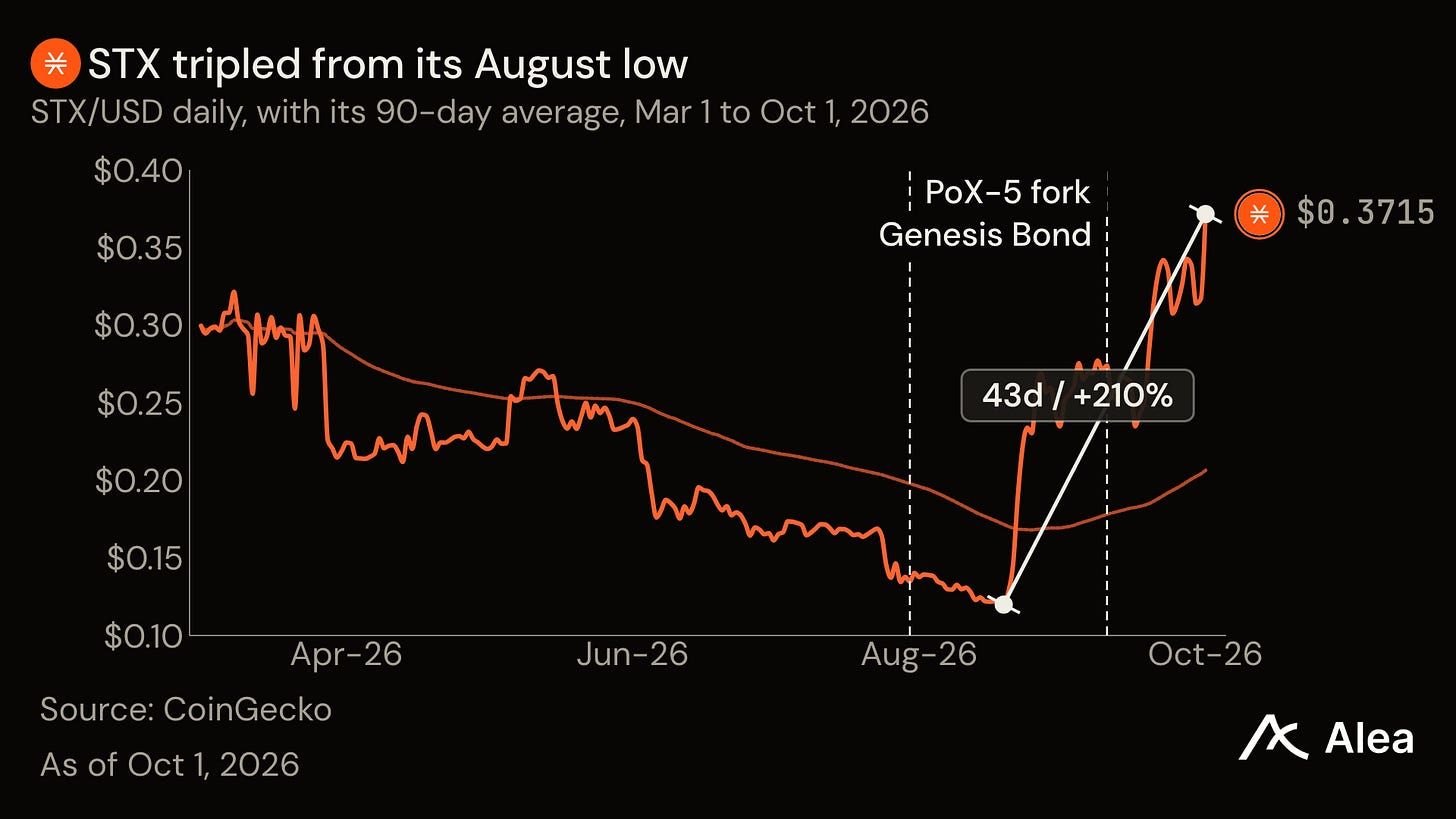
STX is the capacity asset. Every bonded bitcoin locks STX beside it, 3.57M STX for the Genesis Bond. From the Jul 30 fork to Sep 30, STX/BTC moved +105.5%, which raised what miners bid for each coinbase.
A 28.8% fall in STX/BTC erases a bond term's coupon. The STX leg is 5% of the position, and the cross fell that far in 51.8% of 175-day windows since Oct 2021. A hedge short STX position, or StackingDAO's stBTC, can offset that exposure.
Bonding Period 2 opens on Oct 10 with larger capacity. The contract already prices one bonded bitcoin at 267,384 STX, against 310,237 STX for the Genesis Bond.
A bond that pays BTC and leaves the coin on Bitcoin
Most bitcoin earns nothing while it sits still. Apps on Bitcoin itself recorded $4.47B of deposits on Sep 30, 0.27% of the asset's value. The rest earns only when its holder hands the coins to a lender or locks them for rewards in a second token. However, DeFi on BTC tends to offer a reward token that leaves depositors holding a second asset they didn't choose.
Stacks launched PoX-5, its Bitcoin Staking upgrade, on Jul 30. A holder locks bitcoin in a standard timelock on Bitcoin, under its own keys, and pairs it with STX worth at least 5% of the position. Each bond runs about 175 days. SIP-045 supports a 3% annual target, paid in BTC about once a week. A holder of sBTC, the bitcoin-backed token on Stacks, can bond that instead.
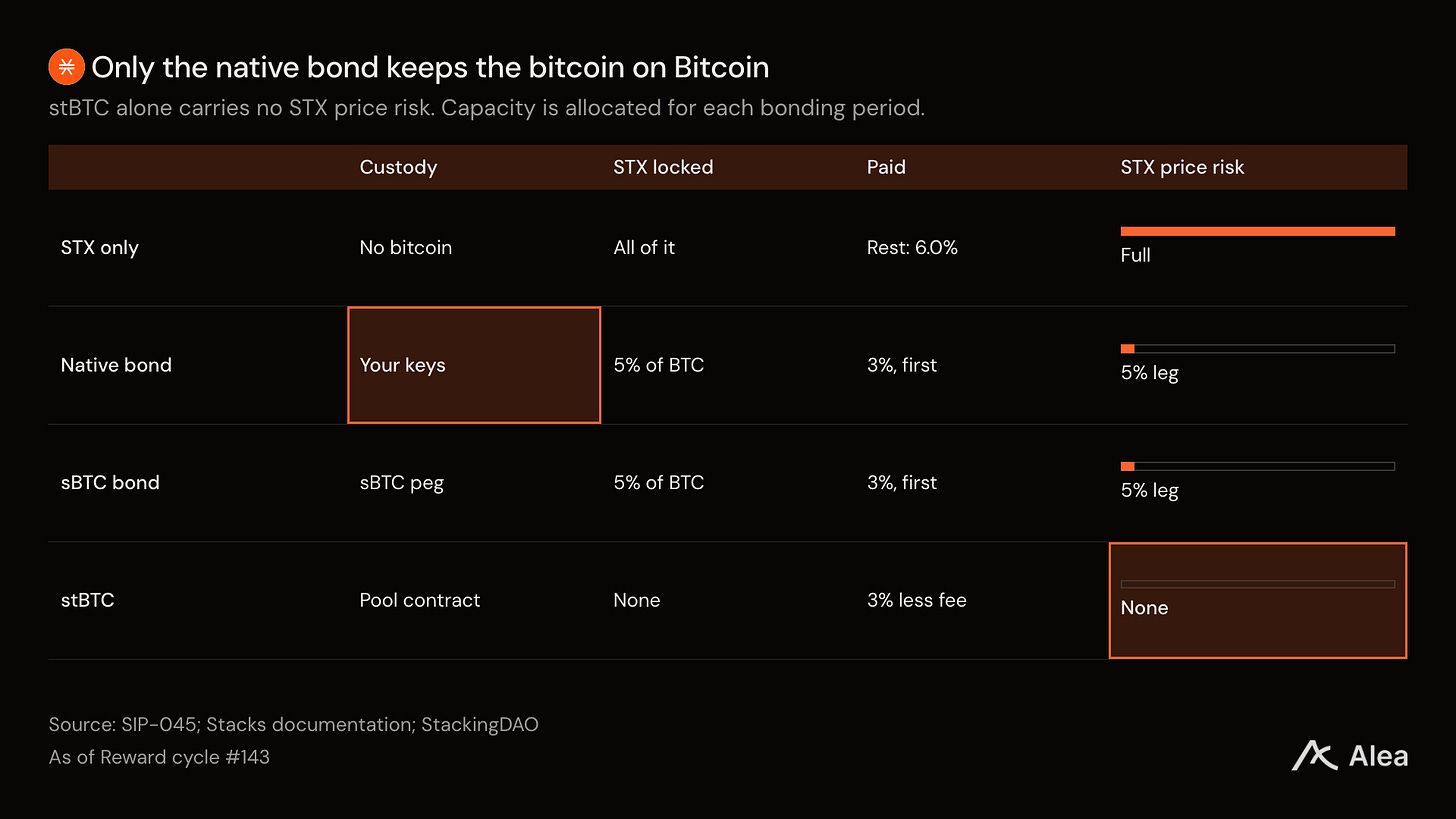
The bitcoin comes back in full at maturity, and neither leg can be slashed. An early exit, co-signed by a designated signer set, just releases the bitcoin sooner. The holder would give up the yield owed for the rest of the term, while the STX leg stays locked until the original maturity.
Miners pay the rate, and bonds are paid first
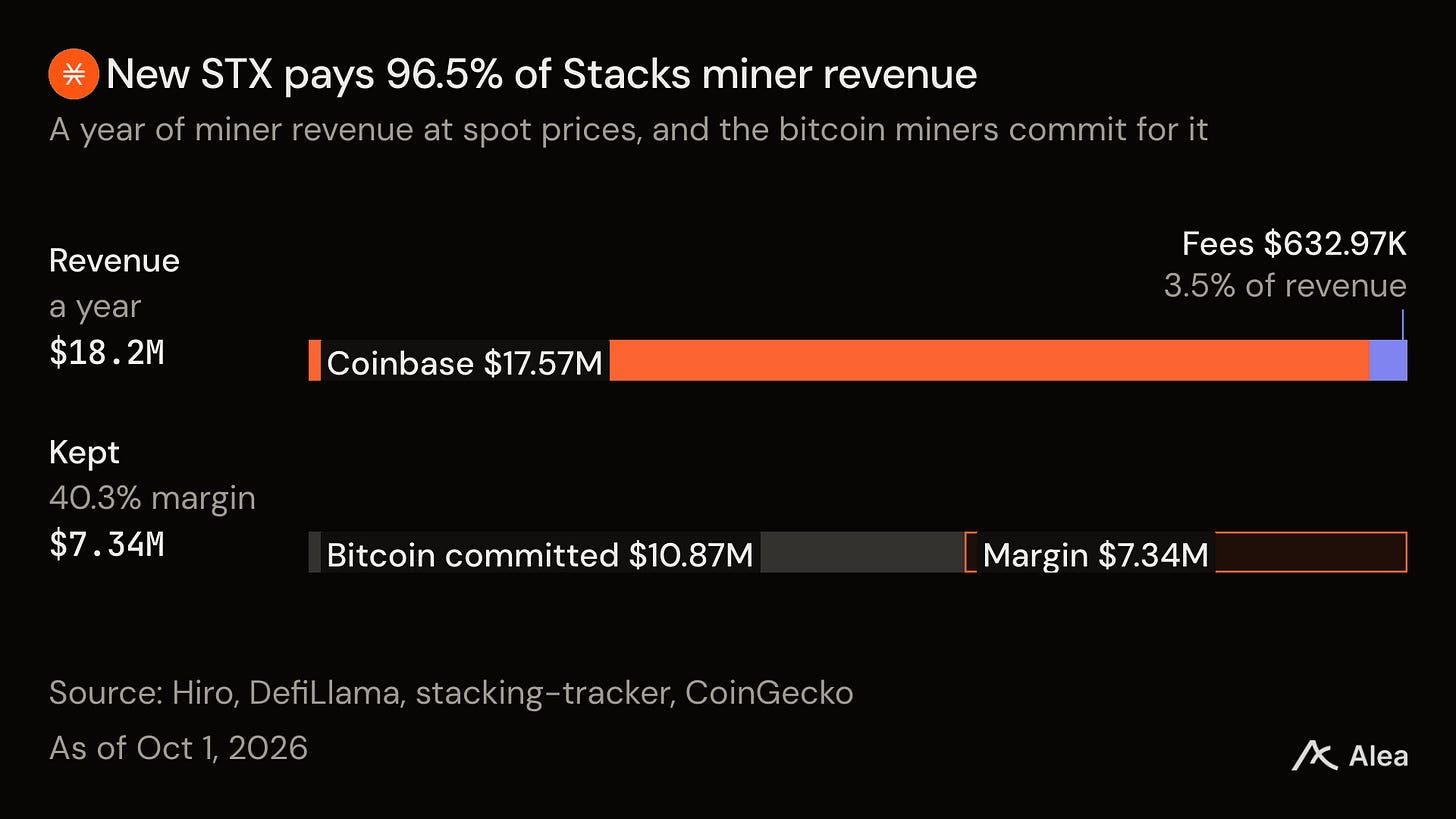
Stacks miners spend BTC for the right to produce Stacks blocks. The winner receives newly minted STX, the coinbase, plus transaction fees. Holders approved SIP-045, which restored the coinbase to 1,000 STX per Bitcoin block from 500 and sends every bitcoin miners commit into one reward pool. Bonds take their 3% before anyone else is paid. Of the rest, 85% goes to STX-only stakers and 15% to a reserve.
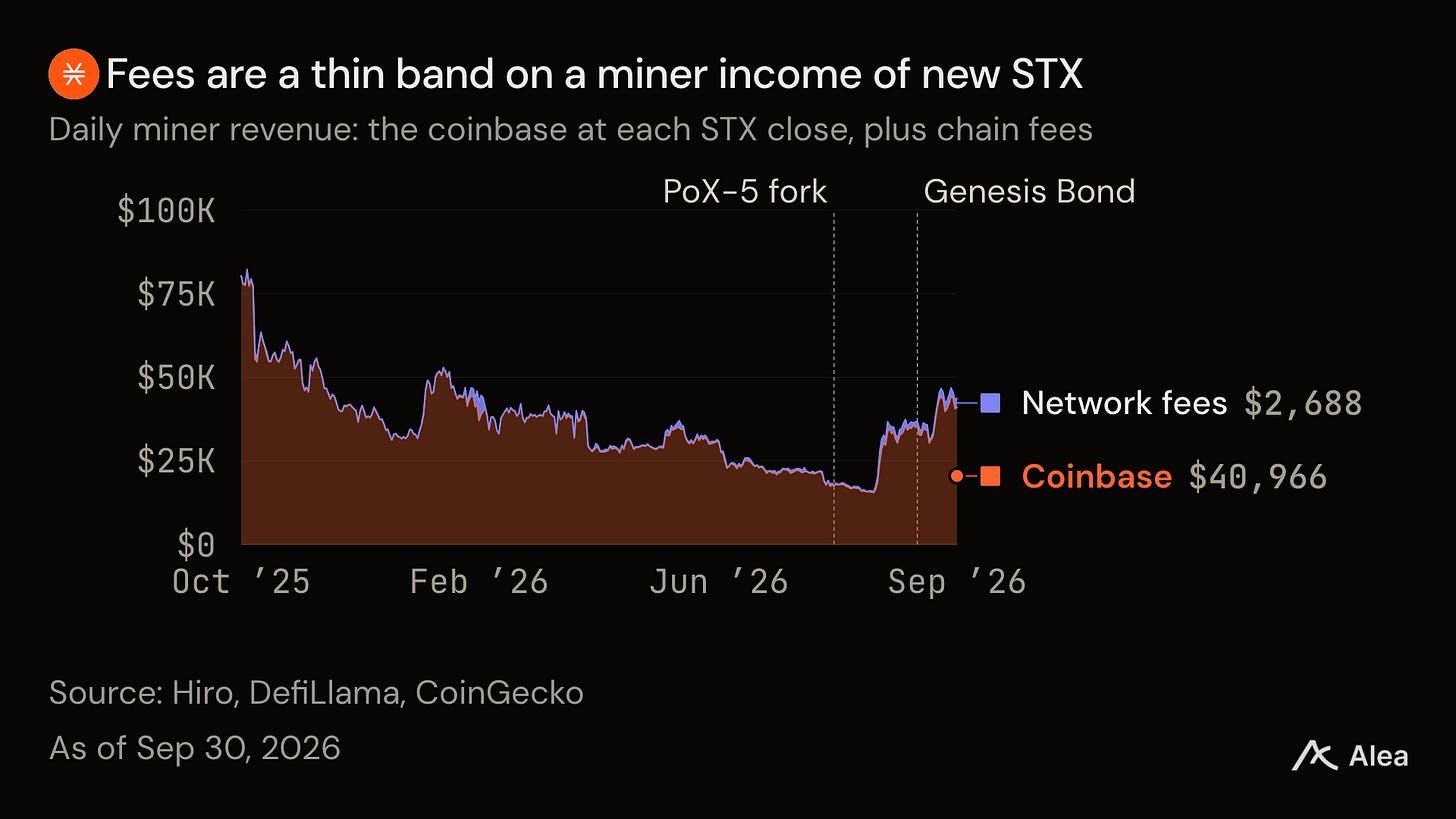
New STX funds this phase by design. Holders pay for the bootstrap through issuance, while fees are a thin second income for miners. A separate treasury emission, which the network approved in SIP-031, funds the Stacks Endowment that manages the launch.
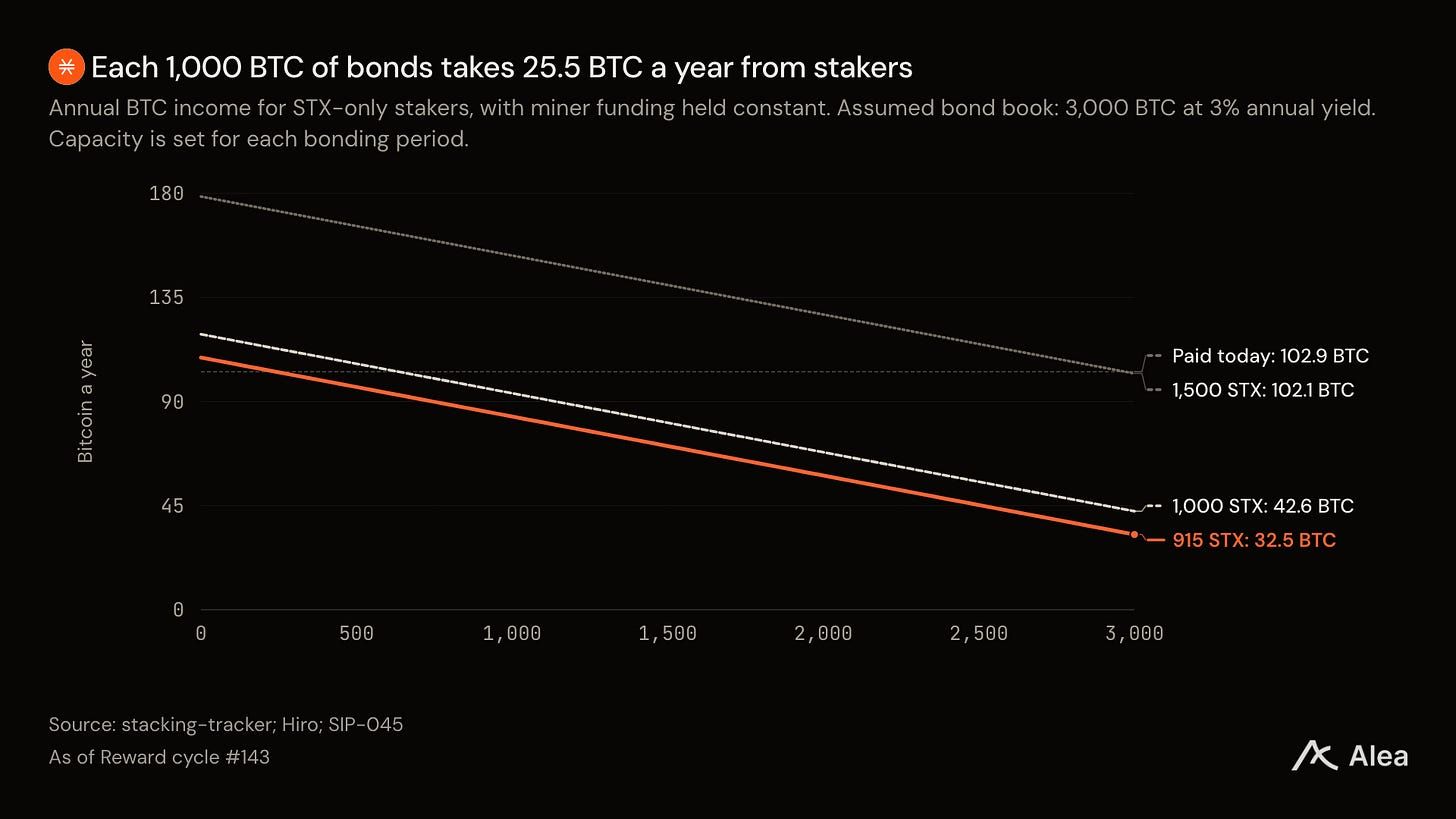
The PoX-5 contract recorded a 1.90 BTC reserve at Oct 1. The reserve accrues through the bootstrap, and SIP-045 ensures that spending it takes a consensus change. If miners ever pay less than bonds are owed, STX-only stakers absorb the shortfall first. Below 1.5x coverage, new bonds shrink. Below 1.0x, the protocol halts new bonds. The reserve then covers the difference.
Month one: 230.17 BTC bonded and paid every week
Stacks launched the Genesis Bond at Bitcoin block 966,350 on Sep 10. Four institutions took part: UTXO Management, Sypher Capital, 21Shares, and HashKey. Muneeb Ali, chief executive of Stacks Labs since Sep 30, said every institutional partner used its full allocation. He argued that the bond rate "can become a 'fed rate' equivalent for bitcoin." StackingDAO's 150 BTC pool closed before the bond opened.
Demand came through both routes. Bond 1 in the PoX-5 contract holds 230.17 BTC: 70.00 BTC in native timelocks on Bitcoin and 160.17 BTC as sBTC, most of it through StackingDAO. Weekly payments started on Sep 17, and StackingDAO updated stBTC's estimated net yield to 2.4%, after its pool fee. Stacks announced Anchorage Digital as a bond custodian on Sep 24, with Fireblocks and Fordefi beside it.
Miner funding determines how much bitcoin can be bonded
The PoX-5 contract recorded a 4.93 BTC reward pool for cycle 143. Cycle 139, the last full PoX-4 cycle, closed with 2.79 BTC paid to stakers, which puts the pool up 77.0%.
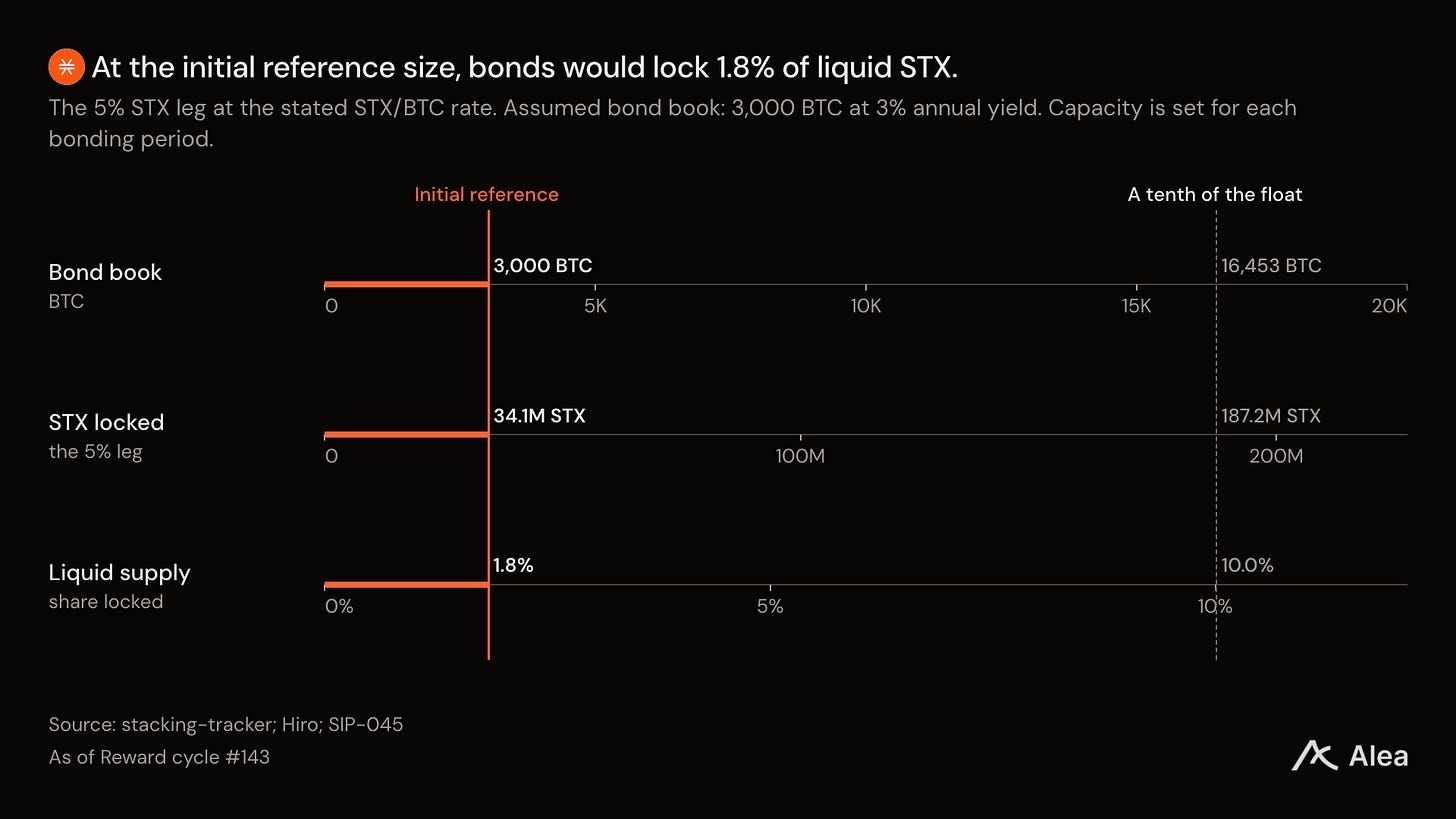
SIP-045 specified initial bootstrap conditions of 3,000 BTC capacity at a 3% target annual yield. That figure is not a fixed ceiling for the bootstrap year. The Endowment sets capacity for each bonding period, and Stacks plans to expand allocations as miner bids grow. The amount available depends on miner economics, including the STX/BTC rate, and the coverage required to support bond payments.
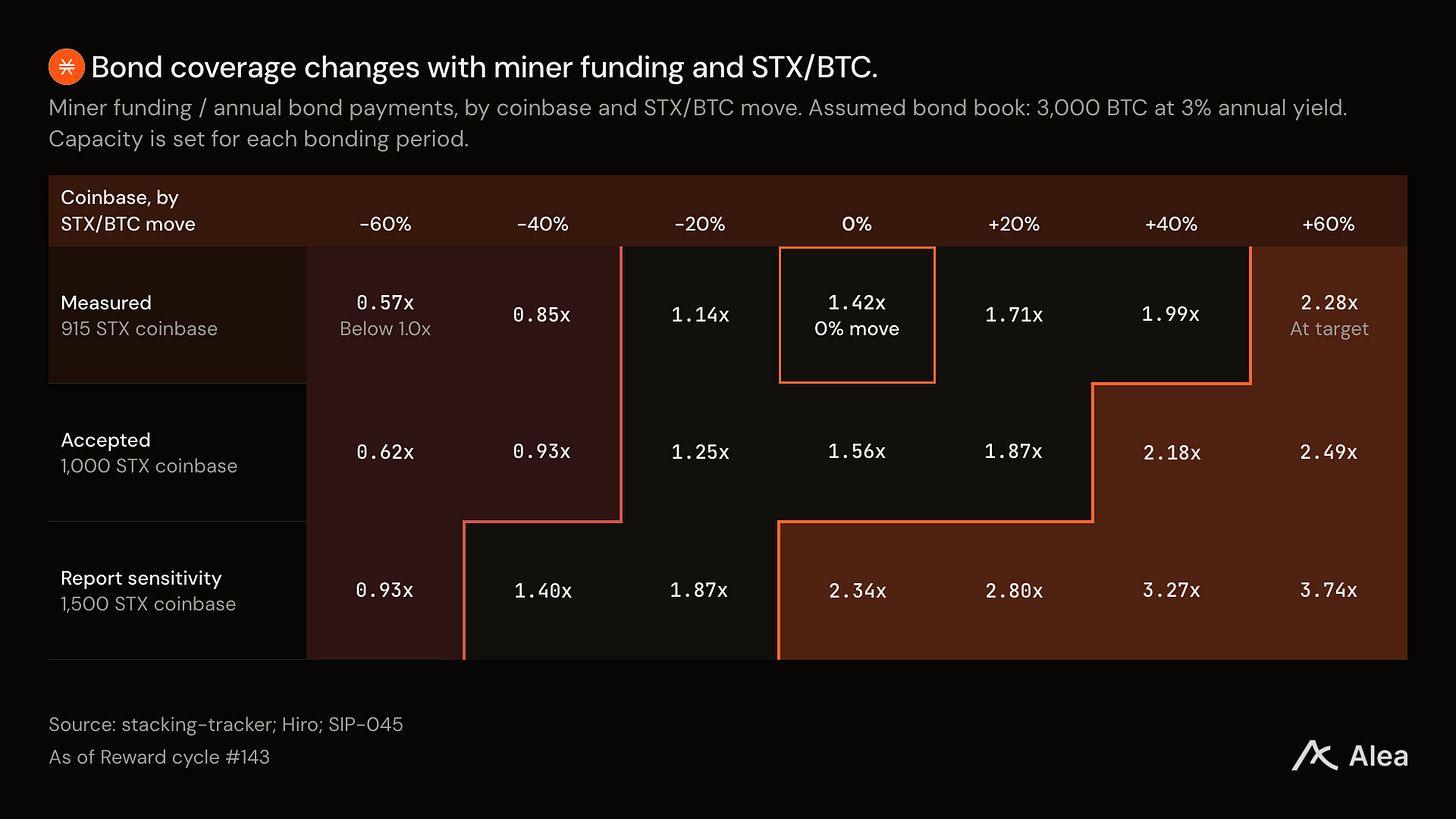
At that initial reference size, annual bond payments total 90 BTC. Cycle 143’s reward pool annualizes to 128.2 BTC, equivalent to 1.4x coverage, compared with 0.8x before the fork. The payment and coverage calculations below hold the bond book at this reference size; future allocations are set separately for each period.
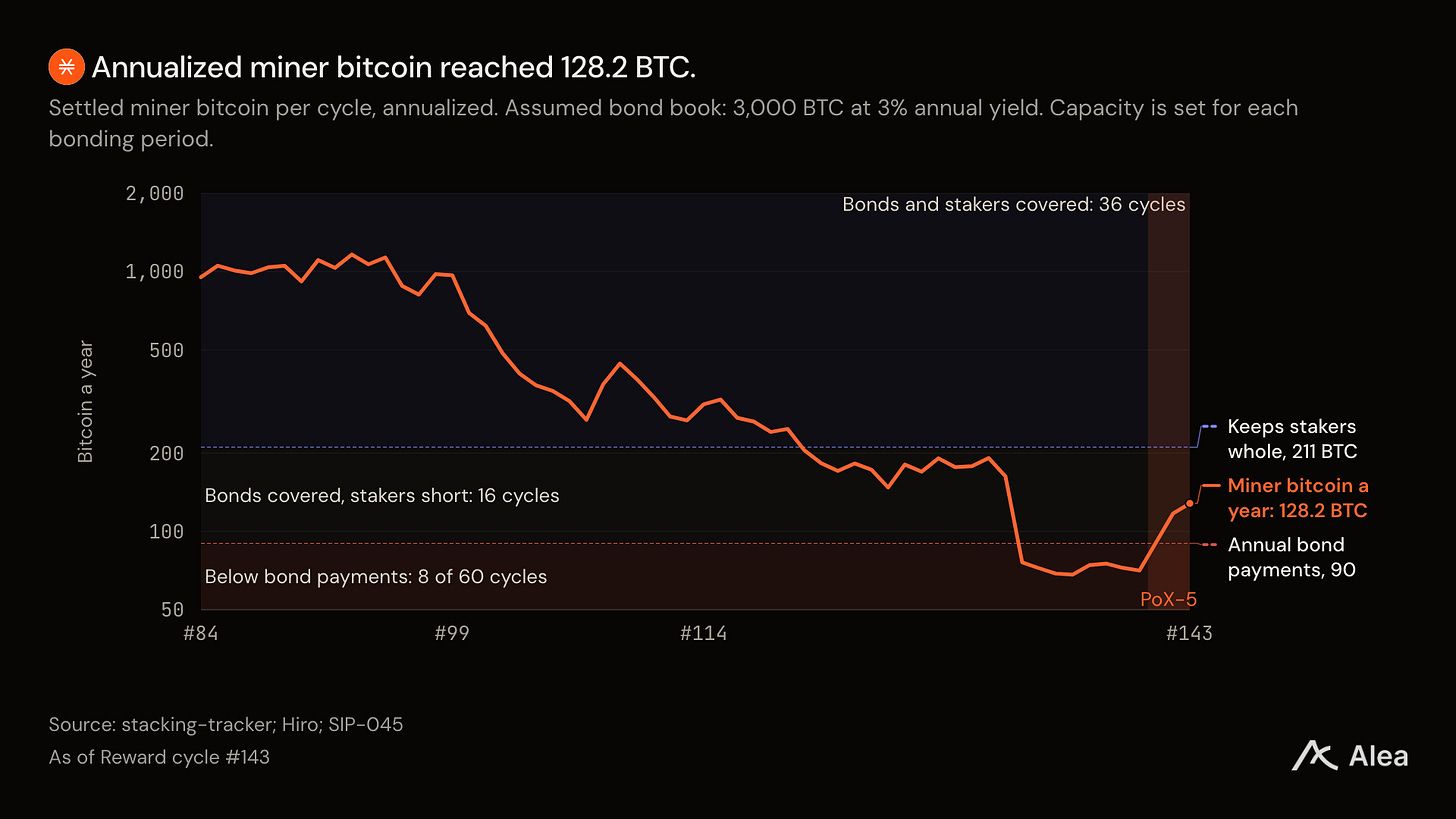
The pool has room for nine Genesis Bonds. It covers the first one 18.6 times. Stacks aims for a 2.0x coverage target in SIP-045, and at that ratio the cycle 143 pool supports about 2,140 BTC of bonds.
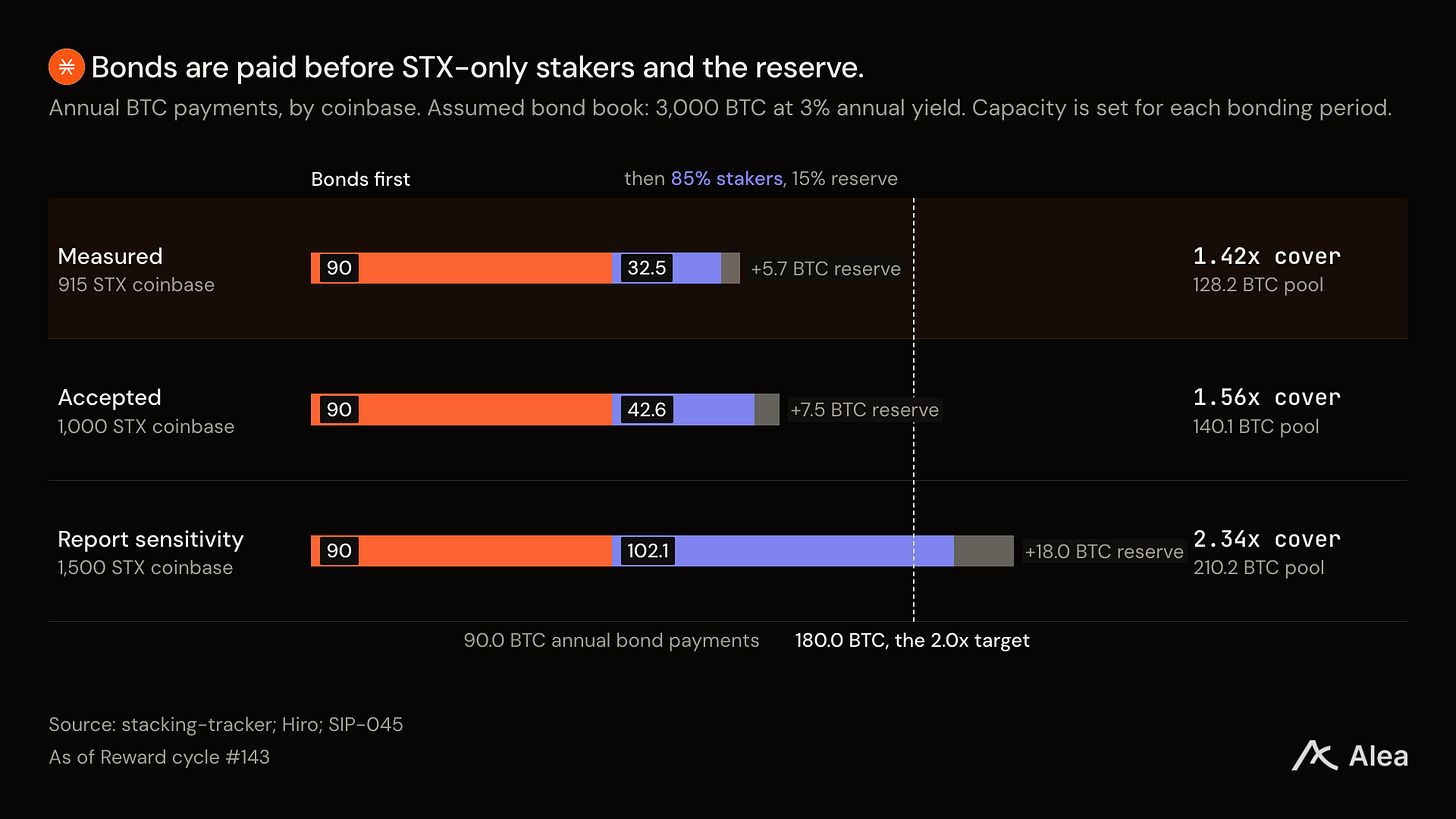
Three moves built that pool. First, PoX-5 restored the coinbase to 1,000 STX and sends into the pool the bitcoin PoX-4 used to burn, as SIP-045 dictates. Second, STX/BTC closed Sep 30 up 105.5% from the Jul 30 close. Third, miners bid BTC for what the coinbase is worth, which means a stronger STX/BTC rate puts more miner bitcoin into the pool.
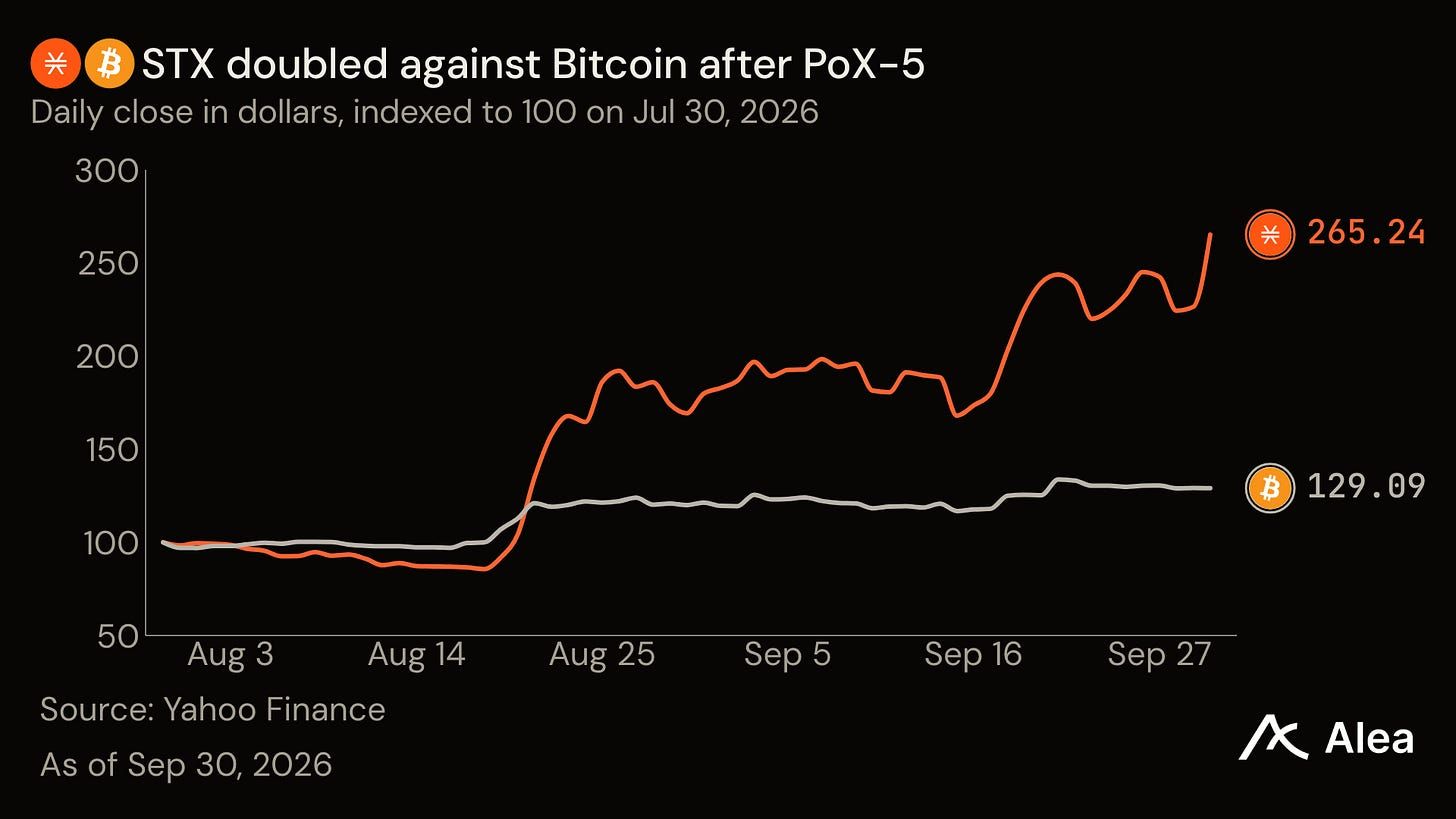
Miners bid the bitcoin value of the coinbase, while active bonds retain their agreed BTC coupons. Holding the bond book at the initial reference size, a 30% fall in STX/BTC would reduce coverage to 1.0x at the measured coinbase, while a 40% rise would reach the 2.0x target.
STX is the capacity asset, and bonds lock it
Every bonded bitcoin needs STX beside it. That's the link between bitcoin demand and the token. The contract recorded a reference of 310,237 STX per bitcoin for the Genesis Bond, which locked 3.57M STX. That is 0.8% of the 448.3M STX stacked in cycle 144. Each new bond turns bitcoin demand into STX demand at a ratio the Endowment sets for each window.
STX's market cap closed Sep 30 at $695M, 10.9 times BABY, the token of Babylon's bitcoin-staking protocol. STX-only stakers hold the residual claim on the pool, and they earned 6.0% a year in BTC on their STX in the last settled cycle. Each bond registered ahead of them raises the senior claim on the same pool.
What a bondholder takes on: the STX leg
A bond pays a 1.44% coupon over its 175-day term. The STX leg is 5% of the position and is marked in bitcoin at maturity. Every 20% fall in STX/BTC costs 1% of the position, and a 28.8% fall erases the coupon.
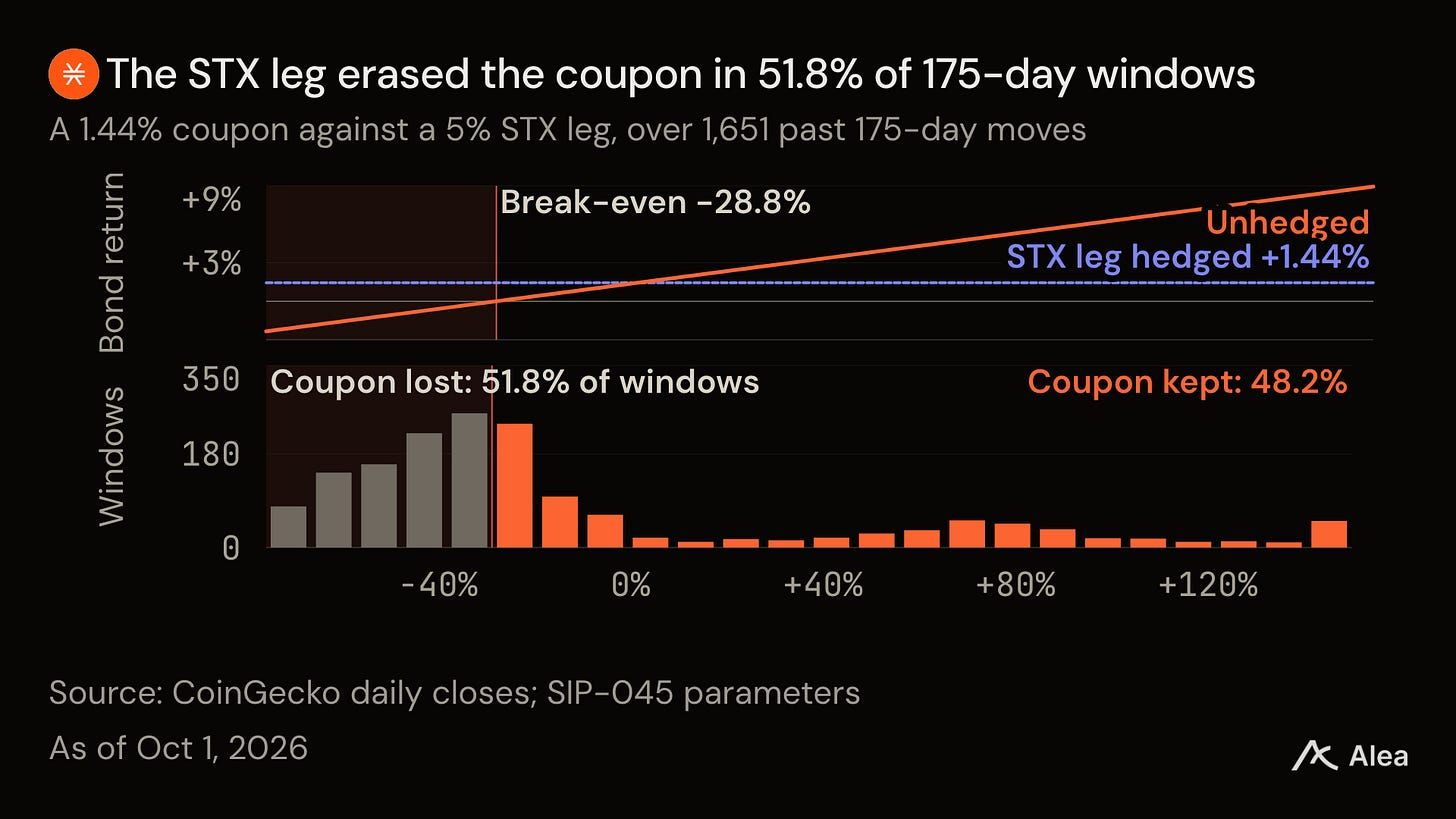
The bitcoin itself doesn't fall with STX. One bonded bitcoin returns one bitcoin. Two routes remove the leg's price risk: i) a short STX position equal to the leg locks in the 1.44% on any path, ii) with stBTC, the holder carries no leg, since StackingDAO pairs the bond against STX it already stacks and keeps a share of the rewards.
Bonded bitcoin goes to work on Stacks
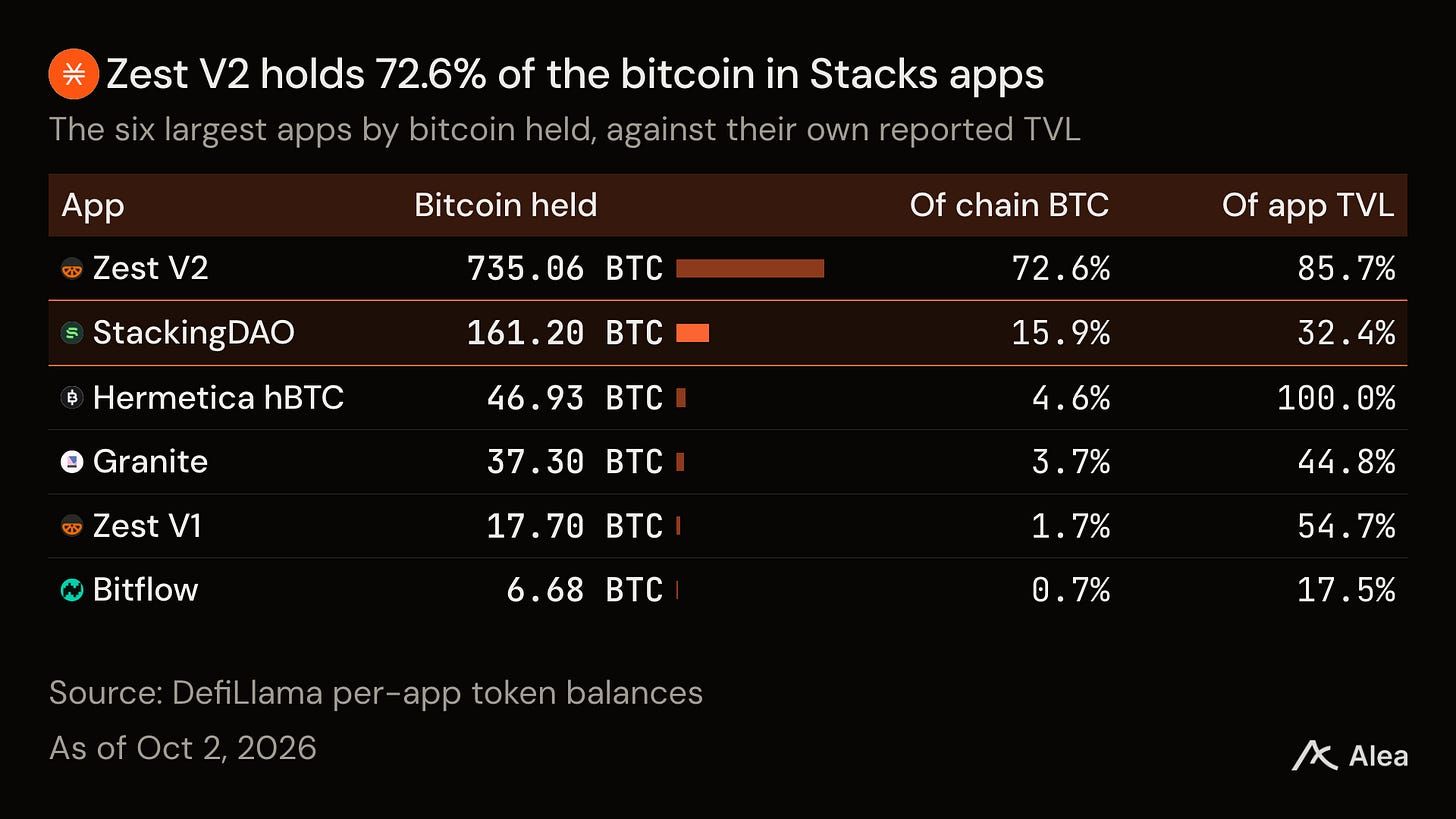
StackingDAO's stBTC turns a bond into collateral, and Zest, which holds most of the bitcoin in Stacks apps, already takes it. Zest's bitcoin collateral vaults launched on Sep 23. Stack Sats, a rewards program, announced 1 BTC a month for users of Zest and Bitflow through Dec 10.
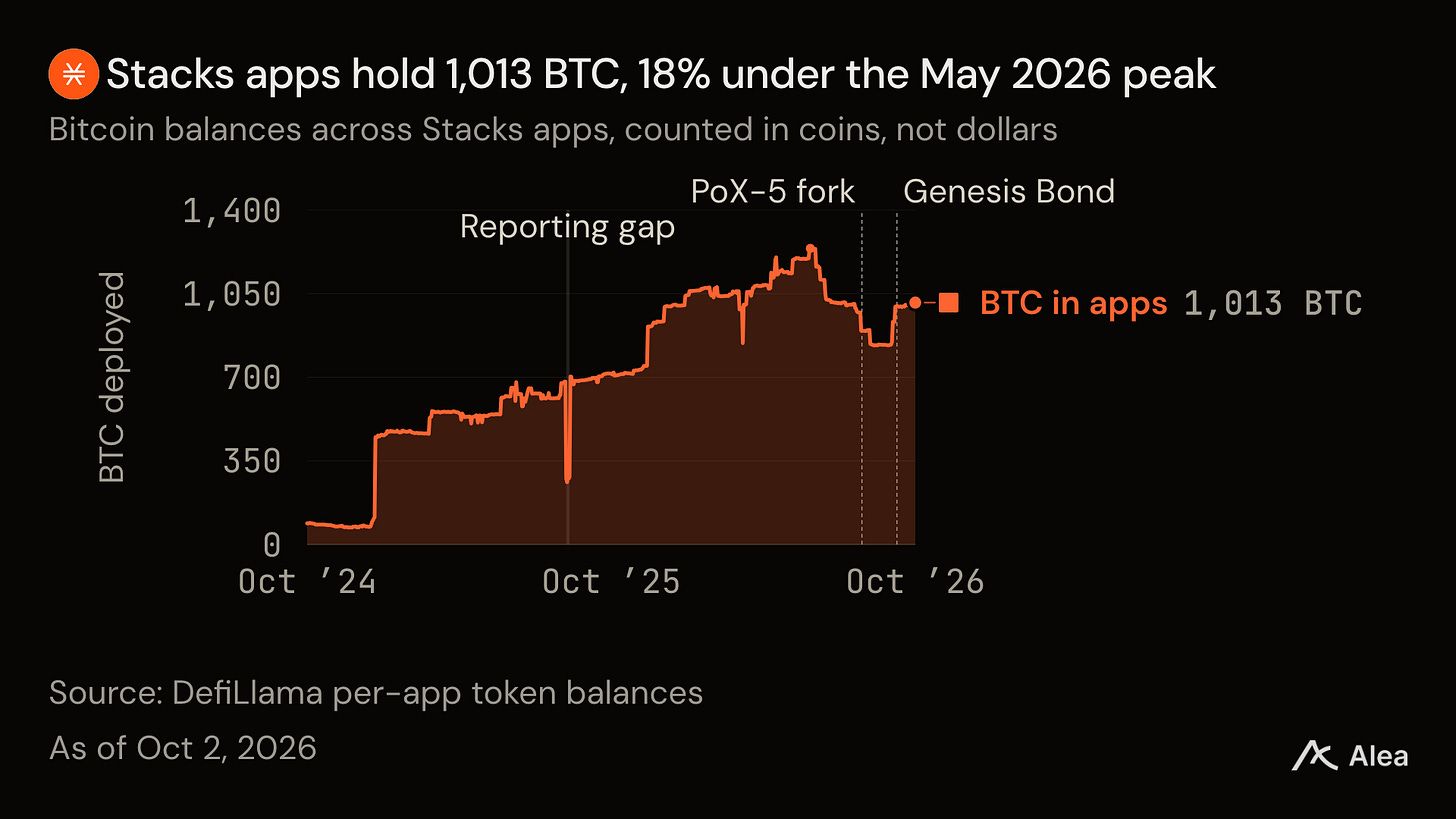
Stacks published a roadmap that adds lending against bitcoin still in its timelock. A treasury with a native bond would then borrow against the bond without moving the coin.
Oct 10: the second bond
Stacks announced Bonding Period 2 for Oct 10. The contract has recorded its terms: a 3% target and 267,384 STX per bitcoin. Ali said Stacks would "likely release larger bitcoin capacity for bond 2." About 10% of each period's capacity goes to open pools, first come, first served, as SIP-045 stated.
Stacks pays bitcoin holders a rate in their own coin, and the coin can stay under their keys. Miners fund that rate when they buy new STX with BTC. One month in, the first bond filled at 230.17 BTC, with weekly payments underway. Each window from Oct 10 turns more of that miner bitcoin into a rate a treasury can hold.
Important Links
Disclosure: Alea Research has a commercial relationship with Stacks. Members of the Alea Research team, including those directly involved in the analysis above, may have positions in the tokens discussed. This content is provided for educational purposes only and does not constitute financial or investment advice. You should do your own research and only invest what you can afford to lose. Alea Research is a research platform and not an investment or financial advisor.

Alea's Stacks Data Room follows how miner bitcoin reaches bond holders and STX stakers. The full Data Room requires an Alea Pro plan.
Research reports. Deep Dives and Blueprints explain protocols and their economics. Theses and Memos examine investment cases and catalysts. Benchmarks compare performance, while Perspectives assess specific developments.
Weekly Pulse. Read a weekly assessment of macro and the major liquid markets.
Protocol Data Rooms. Research each protocol in one place, with Analytics for historical comparisons and Intel for news and governance developments where available. Open Stacks Analytics. Open Stacks Intel.
Podcast Digest and Summit Digest. Read summaries of industry conversations and events. Find Alea shows and their episodes through Podcast Digest.
Governance Tracker. Follow proposals and voting activity across protocols.
For protocol teams preparing institutional conversations, discuss research for your protocol with Alea.