Threshold Network is building tBTC, a decentralized, 1:1 tokenized Bitcoin designed to move $BTC seamlessly cross-chain without a centralized custodian. tBTC is minted and redeemed permissionlessly using threshold cryptography rather than a centralized signer.
The team’s latest push reframes tBTC as institutional infrastructure: native minting on major L2s, deeper money-market integrations, and a product surface geared to treasuries that need predictable routing from BTC to on-chain collateral.
In this edition, we’ll look into how tBTC works and why its model differs from custodial bridges, the broader BTCFi context, where tBTC is integrating, and more.
Stay informed in the markets ⬇️
What Threshold and tBTC are solving
Most tokenized $BTC today is still custodial wrapped $BTC (BitGo + merchant model), a proven but centralized design with explicit reliance on a single custodian. Threshold on the other hand introduces tBTC as a trust-minimized alternative for institutions.
It does so by replacing the custodian with a distributed signer set.
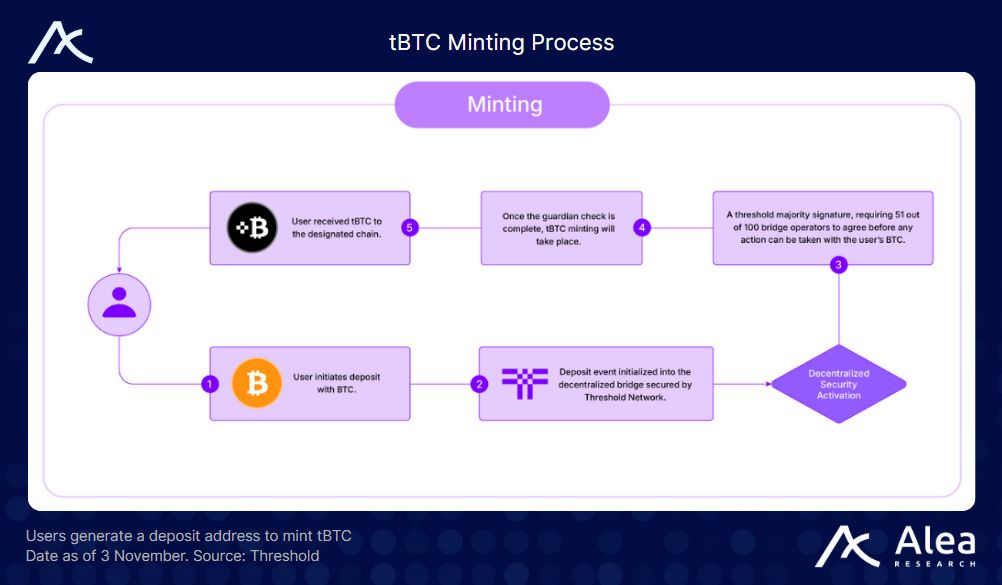
Threshold’s documentation specifies tECDSA signing with a 51-of-100 threshold which is a high quorum that decentralizes control and resists key compromise or bribing of any single entity.
The mint–redeem loop happens as such:
Users generate a deposit address, send $BTC, and mint tBTC on a supported chain
Redemptions burn tBTC and release native $BTC back to a specified address.
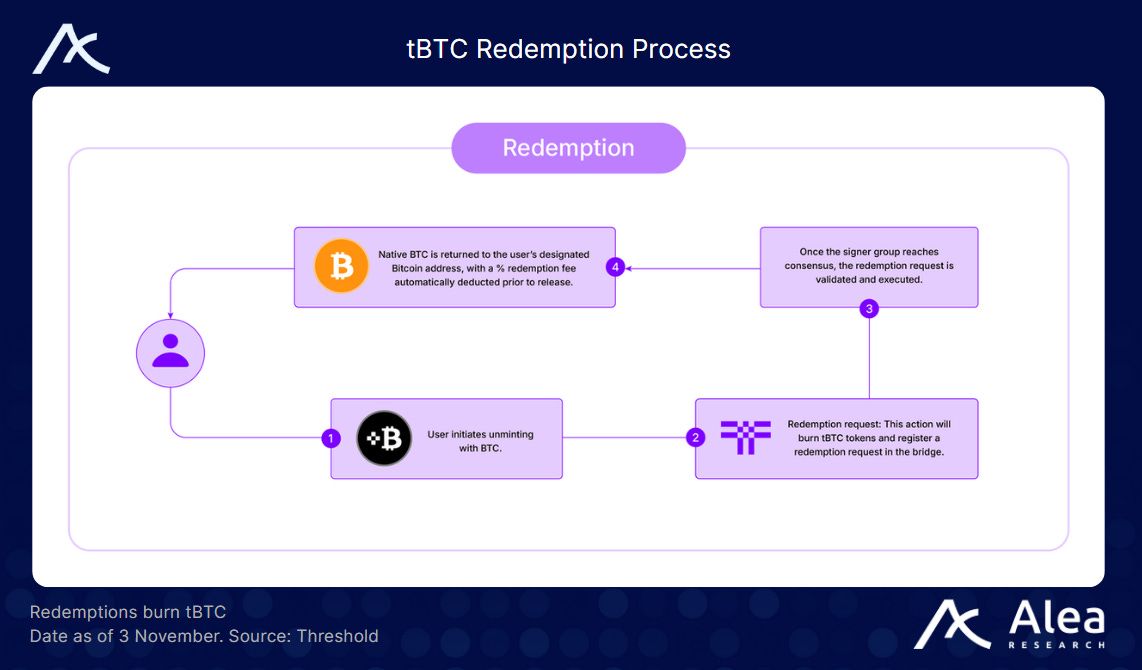
The canonical flow is enforced by on-chain contracts and off-chain signers (“Minters” and “Guardians”) that verify deposits and safeguard against fraud via an “optimistic” dispute window.
To enable multi-chain safety, Threshold deploys L2TBTC (canonical L2 token) contracts that keep L1 supply canonical while delegating mint/burn authority per ecosystem and allowing guardians to pause mints on a specific chain if a bridge incident occurs reducing contagion risk.
BTC Liquidity is Institutionalizing
Institutional flows are sustained and rising. CoinShares reports record weekly inflows into digital-asset ETPs in early October 2025 ($5.0B in the US alone on the week of Oct 6; and $3.17B the following week), with Bitcoin leading ($3.55B and $2.67B respectively) and ETP AUM reaching $242–254B despite volatility.
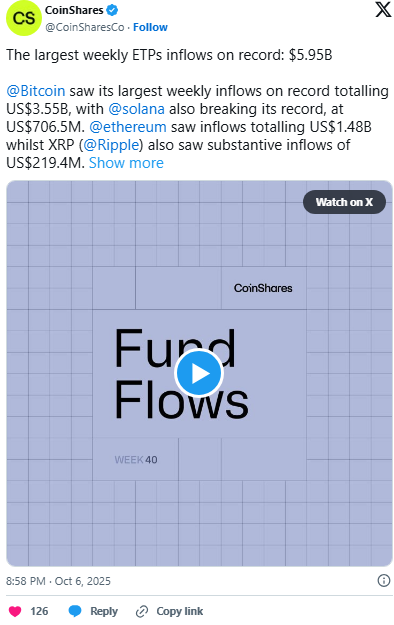
This is the backdrop for treasuries seeking compliant, scalable $BTC on-ramps to DeFi yields, hedges, and financing.
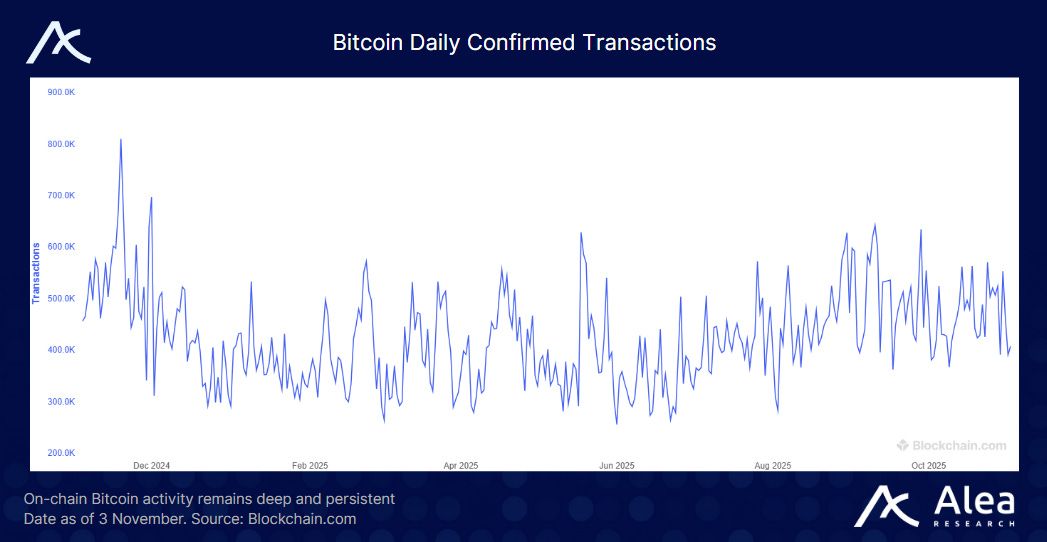
On-chain activity remains high as Bitcoin processes ~0.35-0.50 million confirmed transactions per day with Blockchain.com’s live chart showing ~389k/day recently. Limited float (lost/dormant coins) and rising long-term holdings of institutions like Saylor further increase the opportunity cost of idle $BTC. This is a structural reason treasuries look to mobilize $BTC in DeFi under robust risk controls.
BTCFi is moving off of Ethereum-only during the $WBTC days into various other chains that similarly tokenize Bitcoin. Sui integrated tBTC to bring native $BTC into its Move-based ecosystem (DeFi, payments, trading).
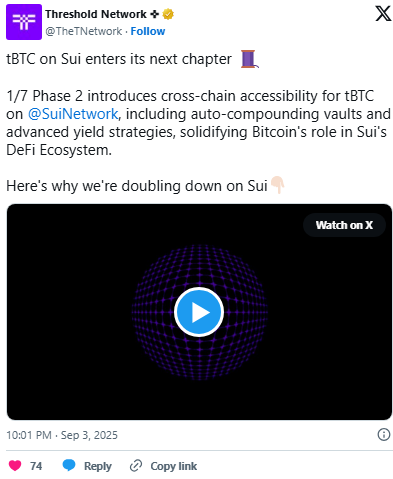
This multi-chain approach makes it even more important for mint-routing, peg-safety, and liquidity fragmentation management which is precisely where Threshold’s canonical L2 token and guardian pause controls are designed to operate.
Threshold’s tBTC Campaign
Threshold rolled out native minting on Arbitrum and Base, eliminating the need for briding from an L1. A relayer (governed by Threshold DAO) coordinates cross-chain settlement so users deposit $BTC once and receive tBTC directly on the target L2.
Launch posts describe UI upgrades and incentive programs (e.g 500K $T rewards for Base; $ARB + $T incentives for Arbitrum-GMX LP/usage). This materially reduces operational overhead for treasuries and market-makers who deploy $BTC across L2 venues.

tBTC now spans 12 chains such as Ethereum, Arbitrum, Base, Optimism, Polygon and more, and even non-EVMs such as Solana and Sui, allowing $BTC to participate in order-book, perps, structured products, and lending markets beyond the EVM alone.
As $BTC becomes increasingly institutionalized, how $BTC participates in DeFi and captures native yield will be the next competitive frontier. Threshold’s tBTC campaign offers native, permissionless L2 minting, broad interchain reach, and money-market integrations.
For desks that need to deploy $BTC across venues with documented counterparty assumptions, tBTC’s large-quorum threshold signing and L2 controls provide a differentiated risk profile versus traditional custodial wrappers (wBTC). The opportunity for allocators is to underwrite these mechanics early, use conservative LTV where liquidity is thin, and capture real fees/yield as BTCFi expands beyond a single chain or custodian.