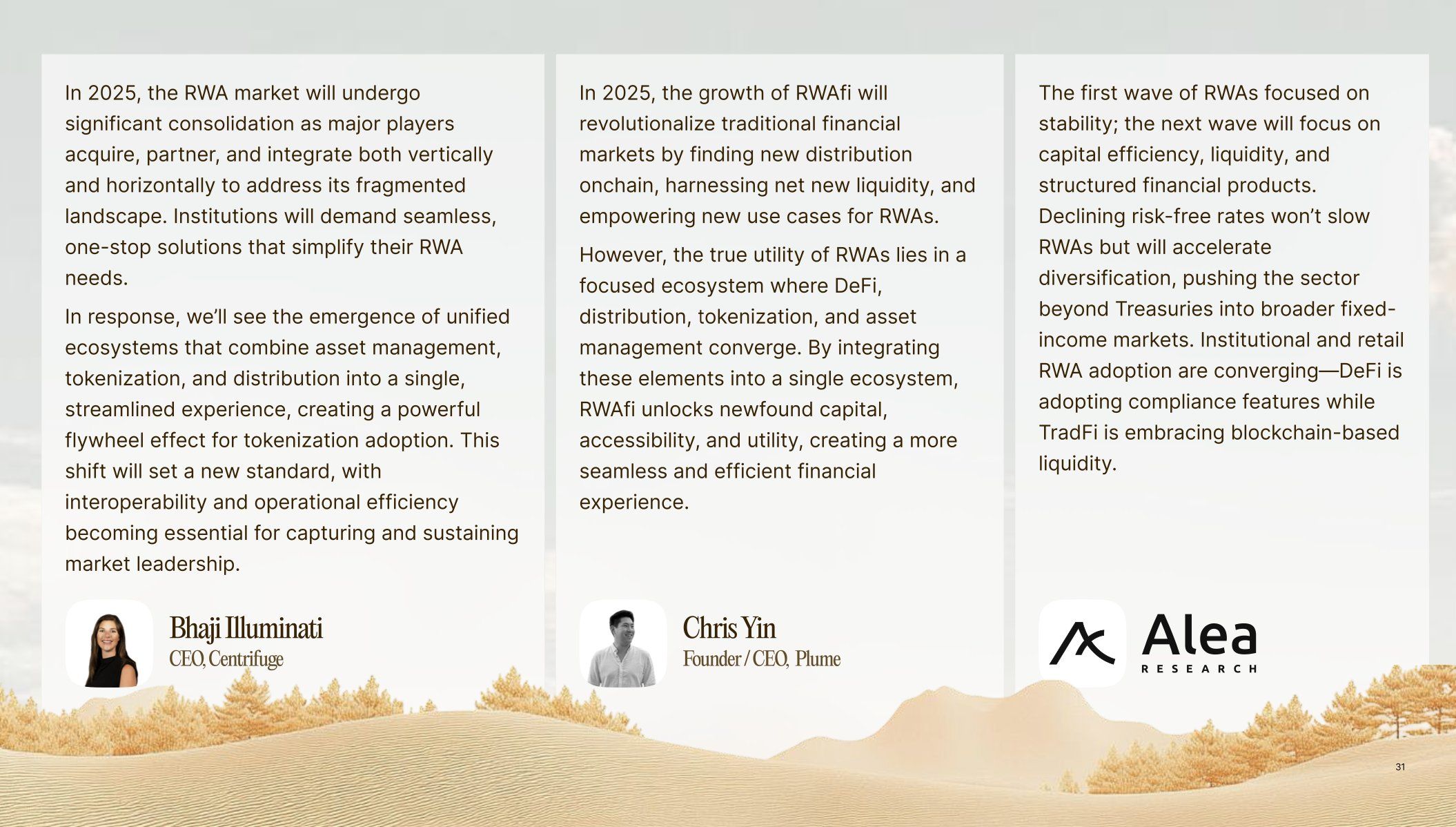
RWAs remain a top 5 narrative in crypto right now, one of the key areas of focus for institutions getting involved with crypto. Right now, markets look gloomy compared to previous months, and institutional narratives like ETFs, stablecoins, and especially RWAs, can potentially receive more attention in this climate.
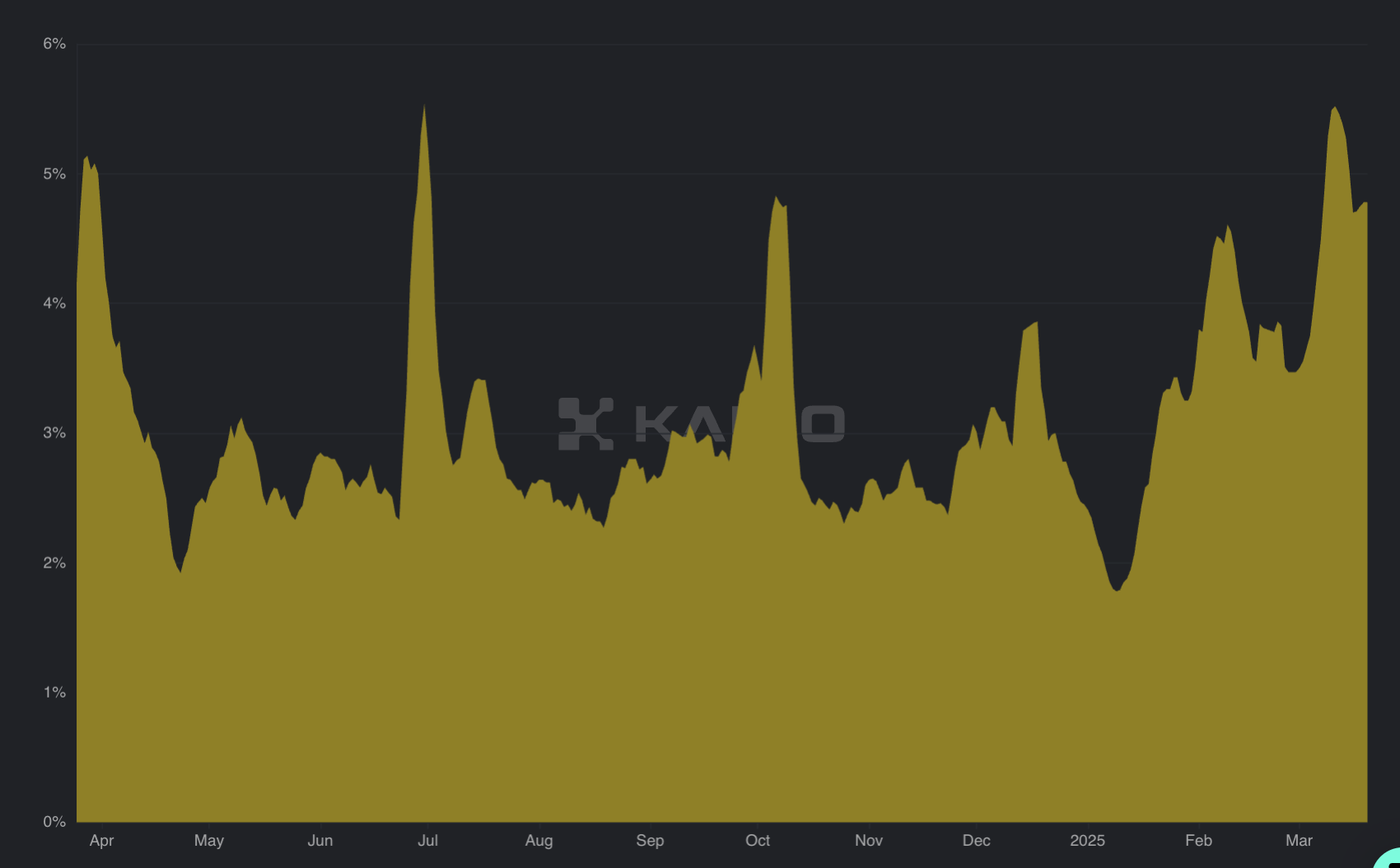
So far, the main story behind RWAs has indeed been institutional adoption, as blockchain can provide inherent advantages over TradFi when it comes to reducing transaction costs and improving efficiency. The main asset class that has grown over the course of the past year is tokenized treasuries, something particularly appealing to institutions, but less so to retail. While the sector has seen immense growth, RWAs have a lot of room to expand, with several key areas like RWA derivatives and others left mostly untapped for now.
Yesterday, Polytrade released their State of RWAs 2024-2025 report, which we also contributed to. In today’s edition, we’ll discuss the most important takeaways from the RWA adoption curve thus far, what to expect in the short-term and long-term for RWAs, and more…
Stay informed in the markets ⬇


State of RWAs
2024 was a big year for RWAs, with the total marketcap of the sector reaching over $15B. Specifically, we saw the market for tokenized treasuries grow 179%, with protocols like Ondo gaining traction and filling demand in this area. Right now, a combination of tokenized treasuries and stablecoin make up the majority of the largest RWA assets.
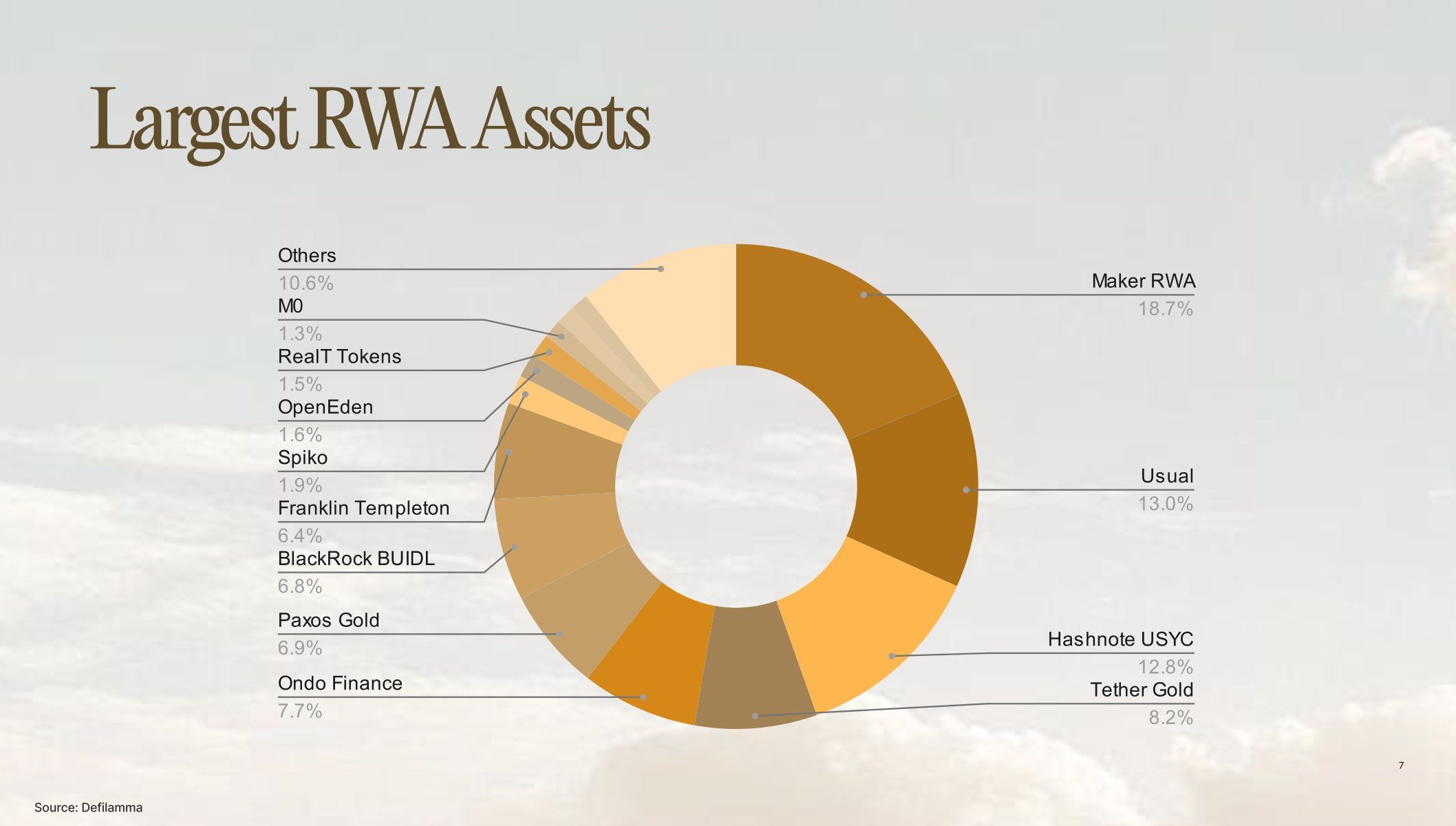
Additionally, key institutions have entered crypto via the RWAs, legitimizing this sub-sector. BlackRock, through its partnership with Securitize, launched its BUIDL fund on Ethereum. Franklin Templeton has launched its own fund via the BENJI token, a representation of a share of underlying treasuries. There is still a lot of growth potential for the tokenized treasuries sector, which just crossed the $1B marketcap threshold last year, while the top stablecoins in $USDC and $USDT have supplies of ~$225B.
One sector within the RWA category that could become responsible for a large share of growth is RWA derivatives. Just as is the case in traditional finance, there’s no reason to think that the notional value of RWA derivatives won’t far exceed the base RWAs. Derivatives can allow institutions to hedge exposure to their holdings and engage in strategies that can protect capital or provide a unique edge. Users can engage with these products without being tied to the underlying assets, enabling increased financialization.
An interesting trend to monitor has been what chains have facilitated the most RWA growth. Ethereum currently leads in the permissionless RWA space, with $4.28B in TVL. This makes sense as capital on Ethereum is often more risk-prone, but there is much more of it compared to other chains. We’ve seen different approaches from institutions, with BlackRock sticking to Ethereum, while Franklin Templeton has expanded across multiple EVM chains. When it comes to chains, the split between institutions and retail is the widest: retail prefers RWAs on existing popular blockchains, while institutions explore custom, dedicated options suited to their preferences.
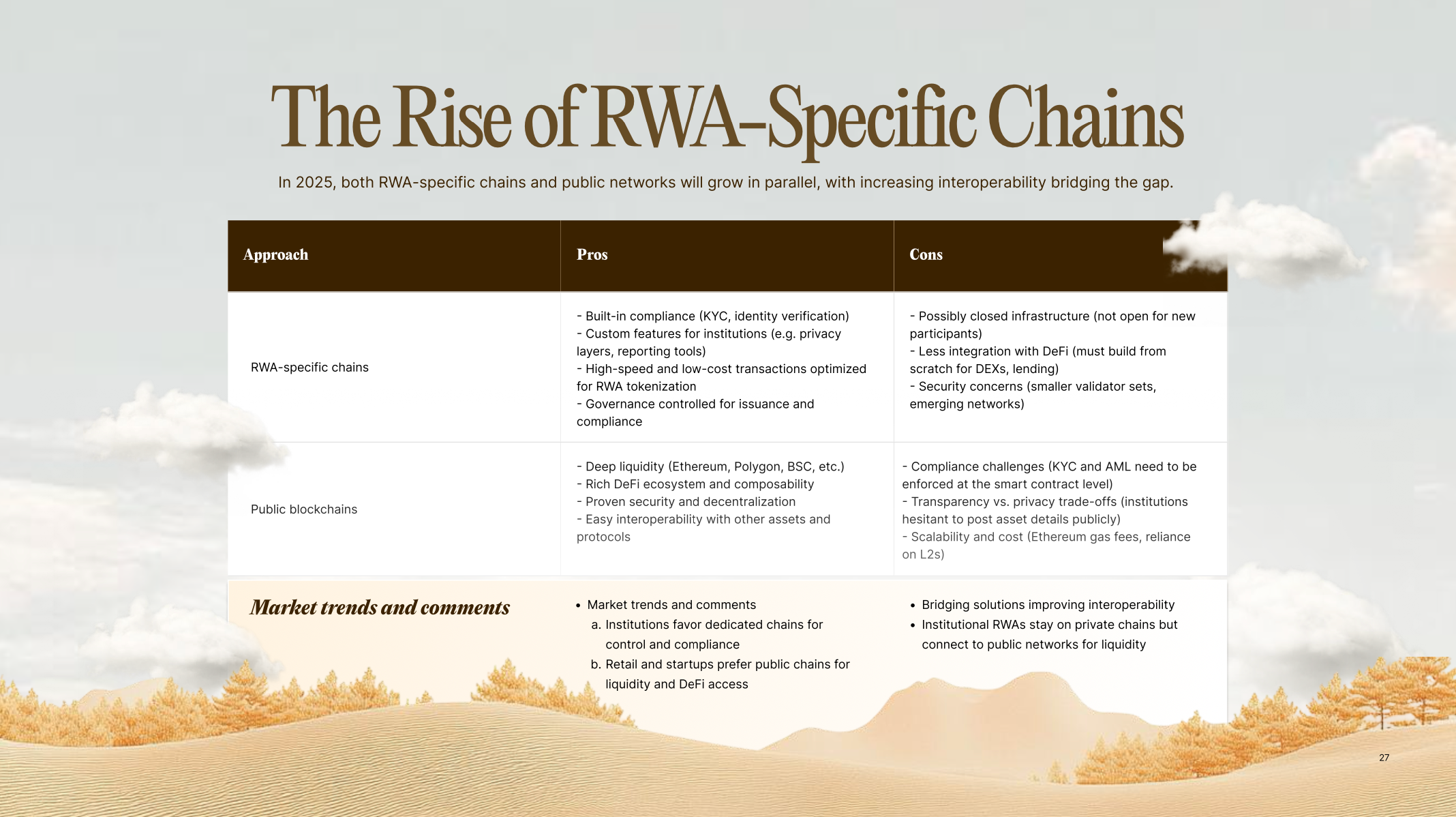
When it comes to reaching retail, this is where the other areas within RWAs come into play. Asset fractionalization can allow individuals to get exposure to things they otherwise wouldn’t have access to, a problem mostly unique to this group of people and not as big of a concern for institutions. Tokenized real estate and RWAs with DeFi integrations or a yield-bearing component stand out as retail-friendly avenues for growth.
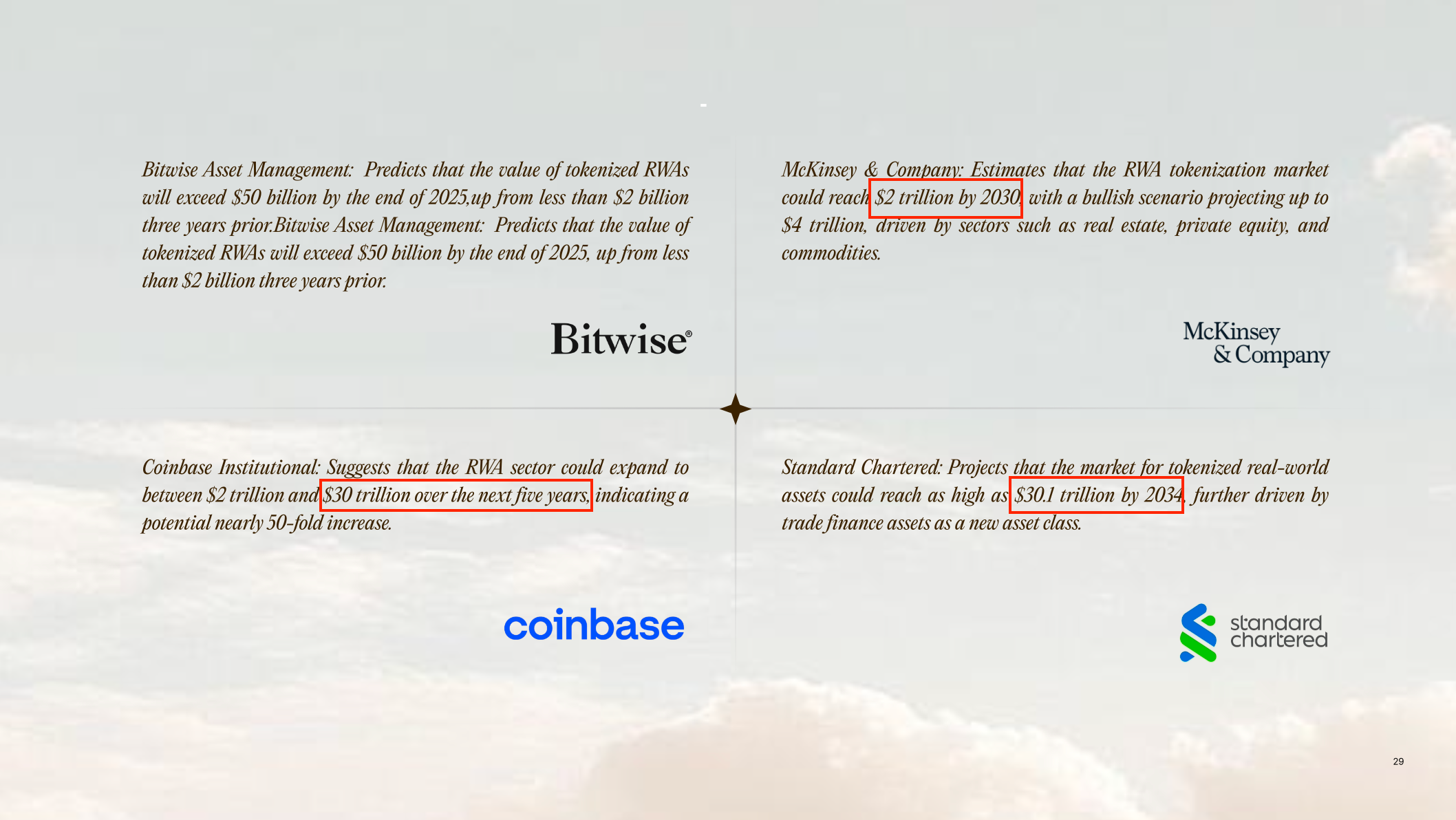
Various companies and firms, consisting of both crypto-native and TradFi organizations, see RWAs snowballing into a multi-trillion dollar industry by the turn of the decade, surpassing the entire current crypto market cap. This would be hugely impactful for crypto as a means of legitimization for the industry and a way to make onchain value seem more tangible.

RWA-related inflows might nestle into certain sectors, perhaps not creating as much of a wealth effect as what we have seen on Ethereum, Solana, and other chains. Instead, RWAs have the potential to be a sustainable way for both institutions and retail to have easier access to pre-existing assets.
In 2025, forecasts suggest rates will come down, though they will likely still remain well above 0. A lot of the interest in tokenized treasuries stemmed from elevated rates which changed risk tolerance and behaviors over the course of 2022 and 2023. This type of environment still provides a lot of opportunity for tokenized treasuries growth, but it leaves more room for other areas to get more attention too.