If Friday’s White House Crypto Summit made anything clear, it’s that nobody is coming to bail out alts, with only a possibility that the government may look into purchasing additional $BTC. Sunday saw another illiquid move downward, with $100B being erased, putting crypto’s total marketcap firmly below the $3T mark at $2.84T. $BTC seems to have found a short-term bottom earlier today at the $80K level, rising higher during Asian and European trading hours, now standing at $83.5K. Even $ETH has held it’s footing after just briefly dipping below $2K.
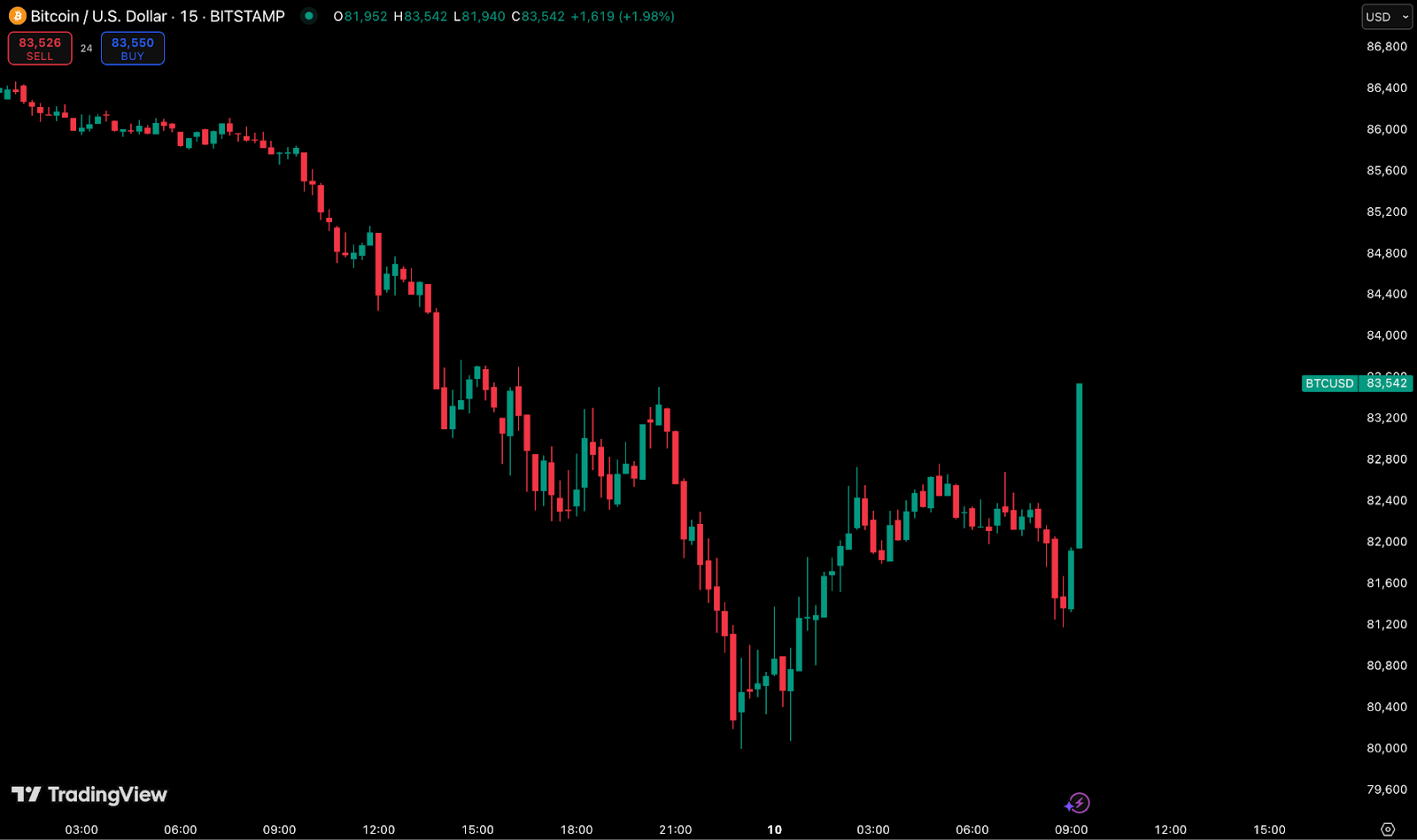
With U.S. futures flashing red and negative crypto price action over the weekend, what’s in store for crypto markets come Monday morning and throughout the week looks daunting. What’s worth noting is that U.S. stocks and crypto are really being hit the hardest right now, reversing a trend of previous outperformance relative to other assets such as Gold and non-US equities. In today’s edition, we’ll discuss how global assets are reacting to Trump’s unprecedented approach to both trade, industry, as well as foreign policy.
Stay informed in the markets ⬇

The Trump Effect
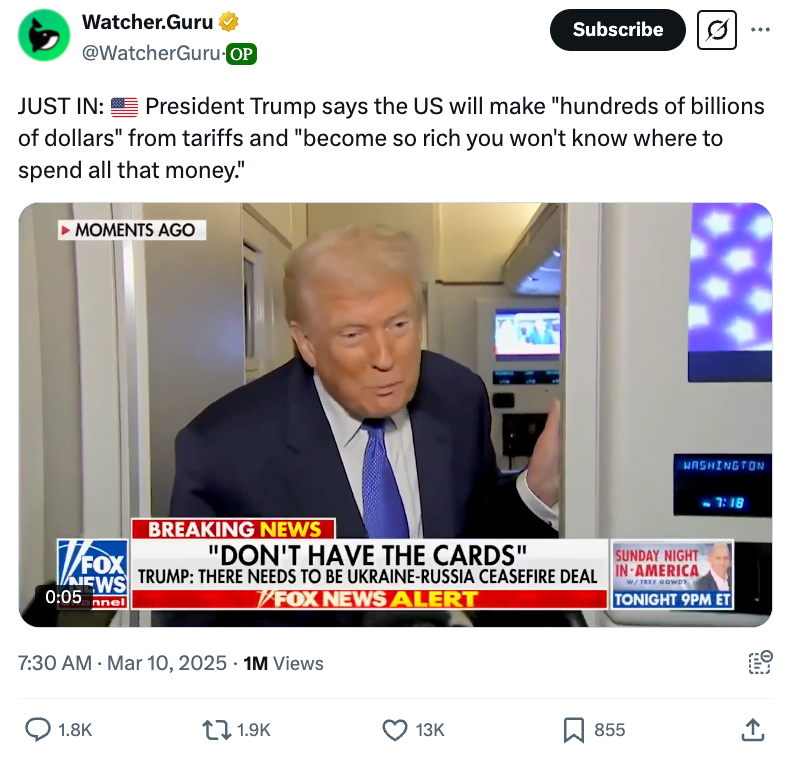
We don’t need to spend too much time detailing how Trump’s actions have jeopardized markets recently. By now, most market participants should be well aware of the threat of tariffs and their perceived negative impact for U.S. trade. What’s notable is that Trump has flipped-flopped on tariffs several times over and is currently settling for an official state of tariffs but with significant exemptions for Canadian and Mexican goods.
Beyond the fact that markets don’t like the uncertainty and inflationary prospect of tariffs, they may also dislike that Trump has seemingly attempted to strike a hard bargain but not gotten too much in return just yet. There are achievements such as TSMC’s $100B investment in the U.S. and some overseas automakers looking to potentially manufacture more in the U.S., but a lot of the core economic benefits of tariffs are not coming to fruition when a significant amount of goods are exempted. To put it simply, Trump has made markets absorb a lot of the pain, without delivering much gain.
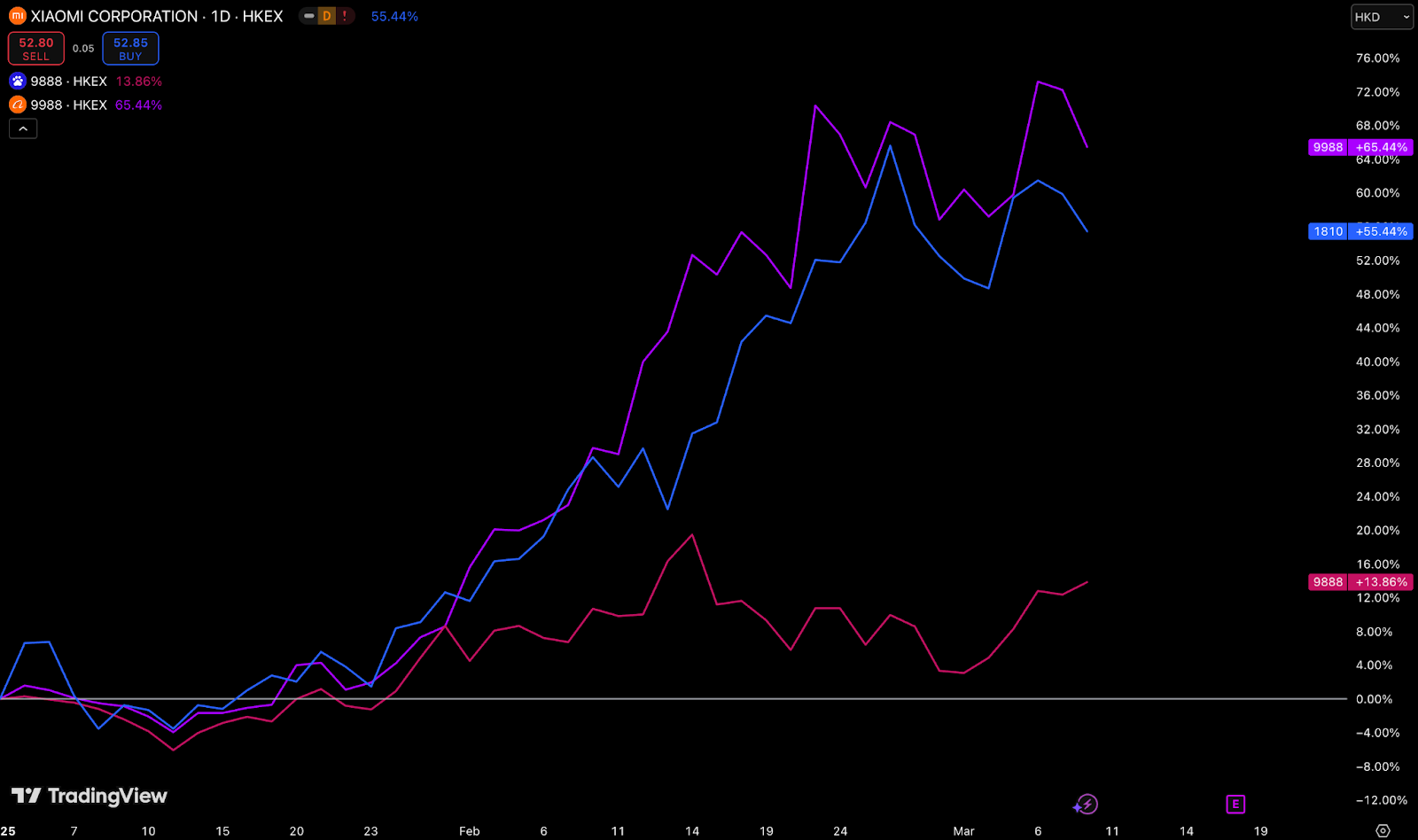
The country that Trump has been the most aggressive toward in policy, but not in speech, is China. Tariffs on China are lower than Canada and Mexico at just 20%, but there are no extensive exemptions given to China.
Amidst retaliatory tariffs, Chinese markets are shrugging off the threat of tariffs. This positive price action is part of a broader rally that precedes Trump’s inauguration, which hasn’t been spooked by the thought of financial constraints on U.S. bound exports.
Another way to look at Chinese markets is that there might be a renewed sense of optimism. This follows several significant developments: the advent of DeepSeek, established dominance in the EV sector, advances in aerospace and defense, and even soft-power expansion with things like Mixue—which recently IPO’d after surpassing McDonald's to become the world's largest restaurant chain. These sorts of things could be viewed as narrative fuel for Chinese markets.

What’s more, is that Trump’s actions have inspired a rally in Europe. This has less to do with anything tariff-related (tariffs still negatively affect German automobile exports) but more to do with a newfound isolationist foreign policy preference coming out of Washington. The memeable argument between J.D. Vance, Trump, and Zelensky in late February ramped up performance for European defense stocks as talks of the U.S. withdrawing from NATO became louder.
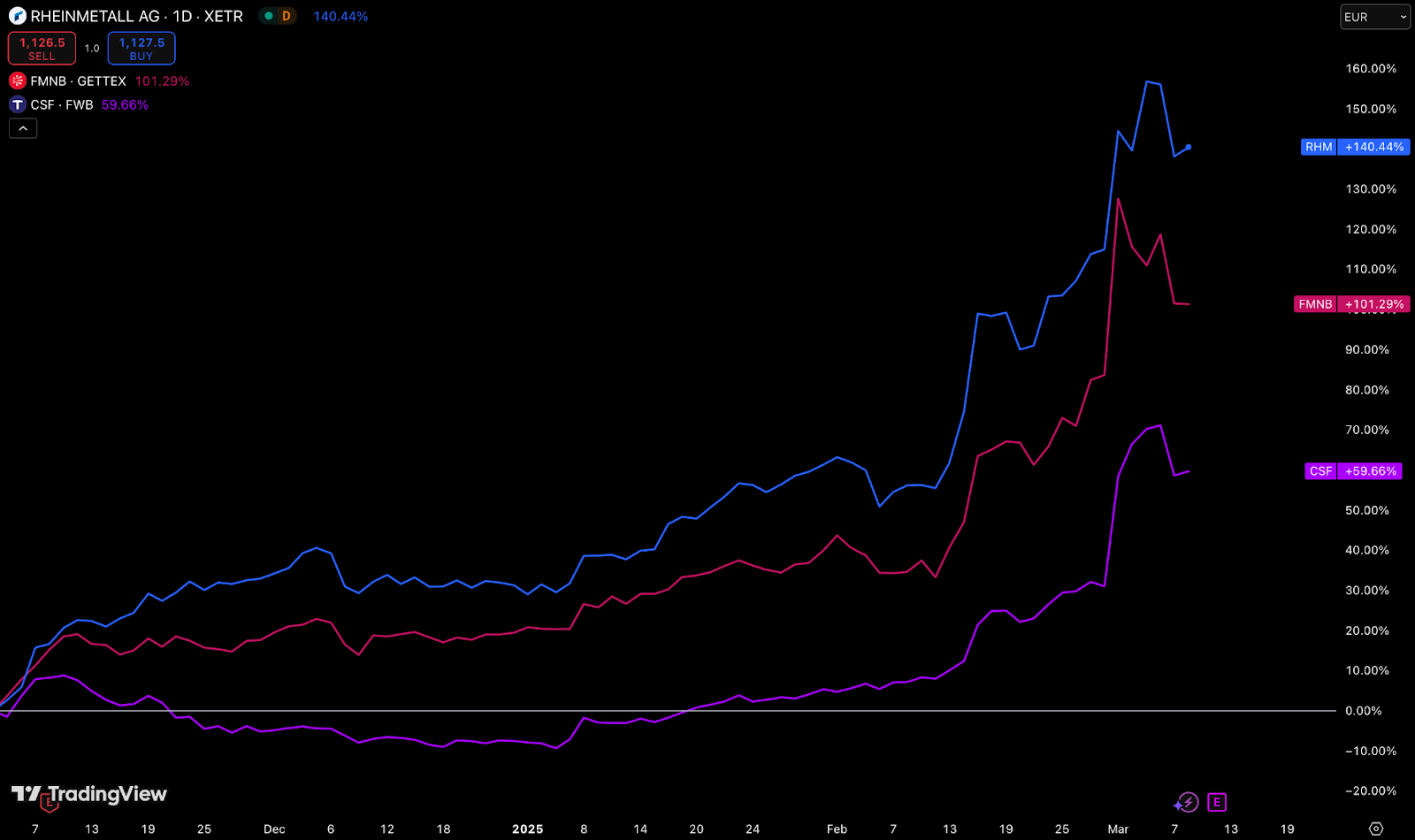
What European and Chinese markets might have in common is an impulse for more fiscally liberal policies, which was not the norm until now. Currently, the U.S. is the odd man out, looking to reduce spending and lower bond yields. Now German and Chinese bond yields are rising while U.S. 10-year yields are lowering for the first time in a while.
Even while other key markets are moving favorably, crypto only cares about one. Crypto follows U.S. equities, and will likely continue to move in lockstep with traditional markets as they react to the evolving macro situation.