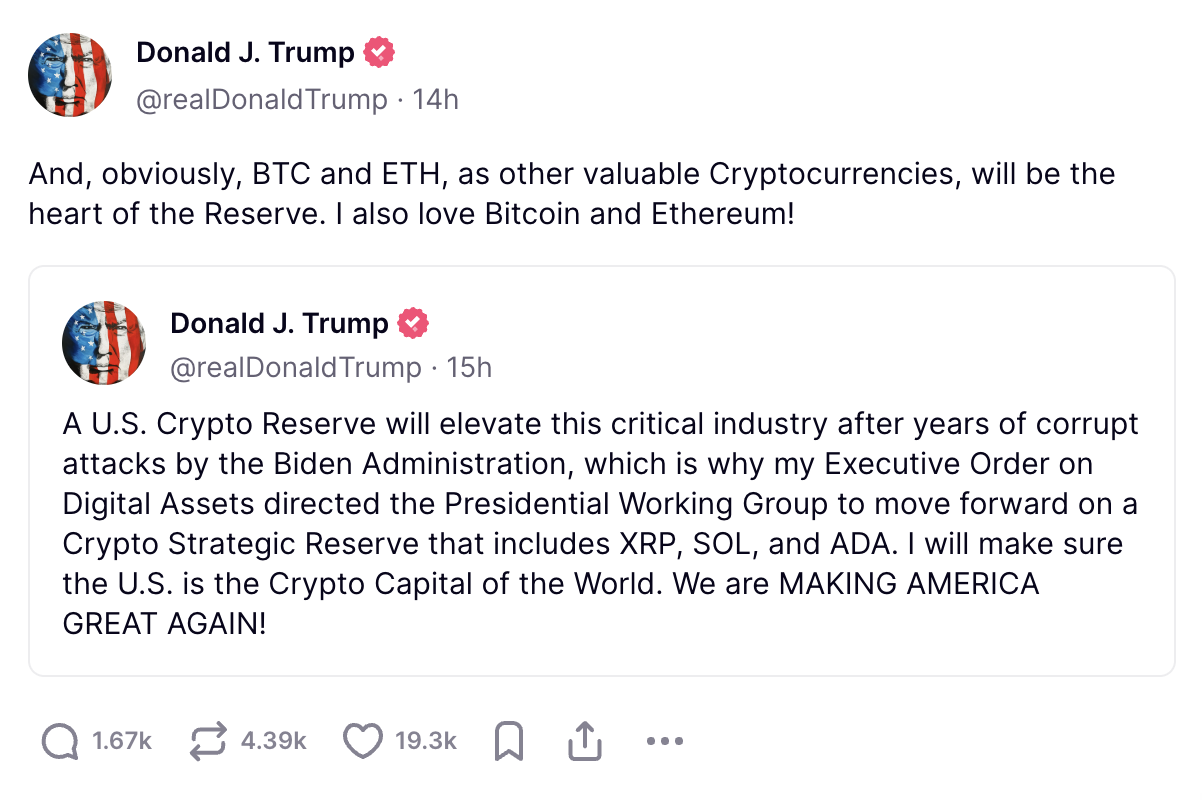
This weekend was a perfect example of the ‘It’s so over → we’re so back’ adage. Just as markets looked as if they had completely capitulated and short-side volumes began surging, crypto markets followed TradFi upward heading into the weekend, with $BTC climbing from $79K to $86K. Sunday saw the real fireworks, when Trump took to Truth Social to give more details around a “U.S. Crypto Reserve”. This sent $BTC as high as $95K, before settling firmly above the $90K range, at $91.8K currently.
Earlier on, there were rumblings around slim chances for a Strategic Bitcoin Reserve, and even more far-fetched rumors of the government looking to accumulate American projects like $SOL and $XRP. These rumors were put on hold during the latest market dump
In today’s edition, we’ll discuss what this recent U.S. Crypto Reserve announcement means, whether the current macro and crypto outlook has changed, and more…
Stay informed in the markets ⬇


U.S. Crypto Reserve
The term “U.S. Crypto Reserve” is a new one, not previously uttered by Trump or other influential figures involved with crypto legislation such as AI and Crypto Czar David Sacks or Senator Cynthia Lummis who initiated the BITCOIN act. Put bluntly, the use of this name is half of the significance of this announcement. It confirms the President’s desire for the Federal government to establish holdings of crypto, and it extends the possibilities for what assets might be in this reserve beyond Bitcoin. This is significant, though not anything groundbreaking, as this post mainly uses flowery language to bring up Trump’s day one crypto executive order.
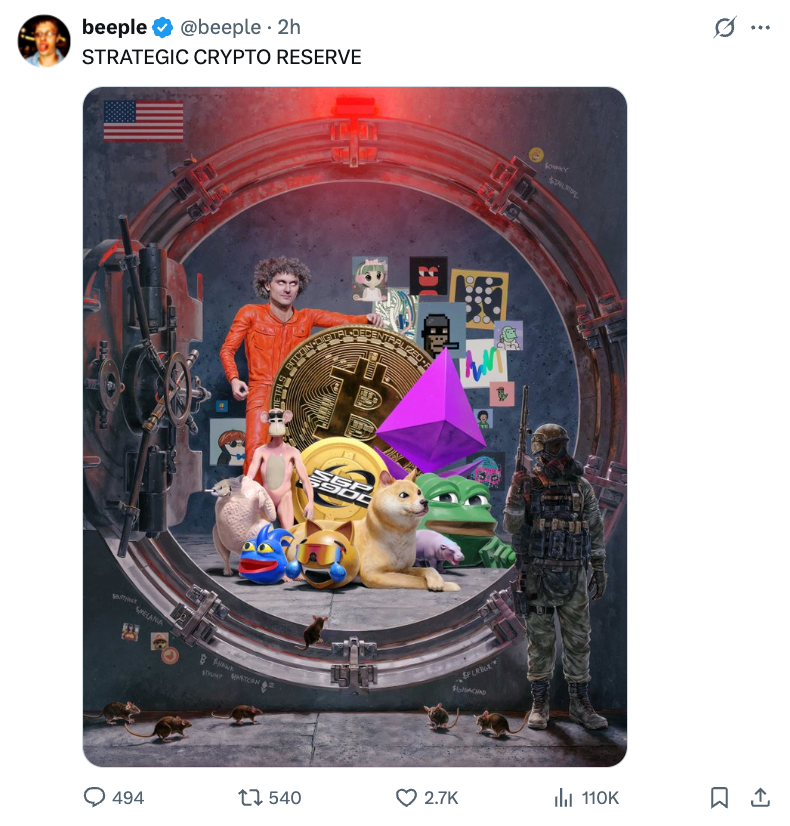
The meat of this post is the fact that Trump gave specific coins that would be apart of this reserve: $BTC, $ETH, $SOL, $XRP, & $ADA. It’s worth noting that the latter 3 were listed first with none listed in a way to suggest one is more important than the other. This shows that there is likely a lack of crypto-nativeness in the Trump administration, with more of a focus on just creating a reserve of majors and large-cap coins representing Foundations and organizations based in the U.S. $BTC and $ETH were only mentioned in a follow-up post. This is not a concrete list, but just the coins explicitly mentioned as having a spot in a Reserve right now.
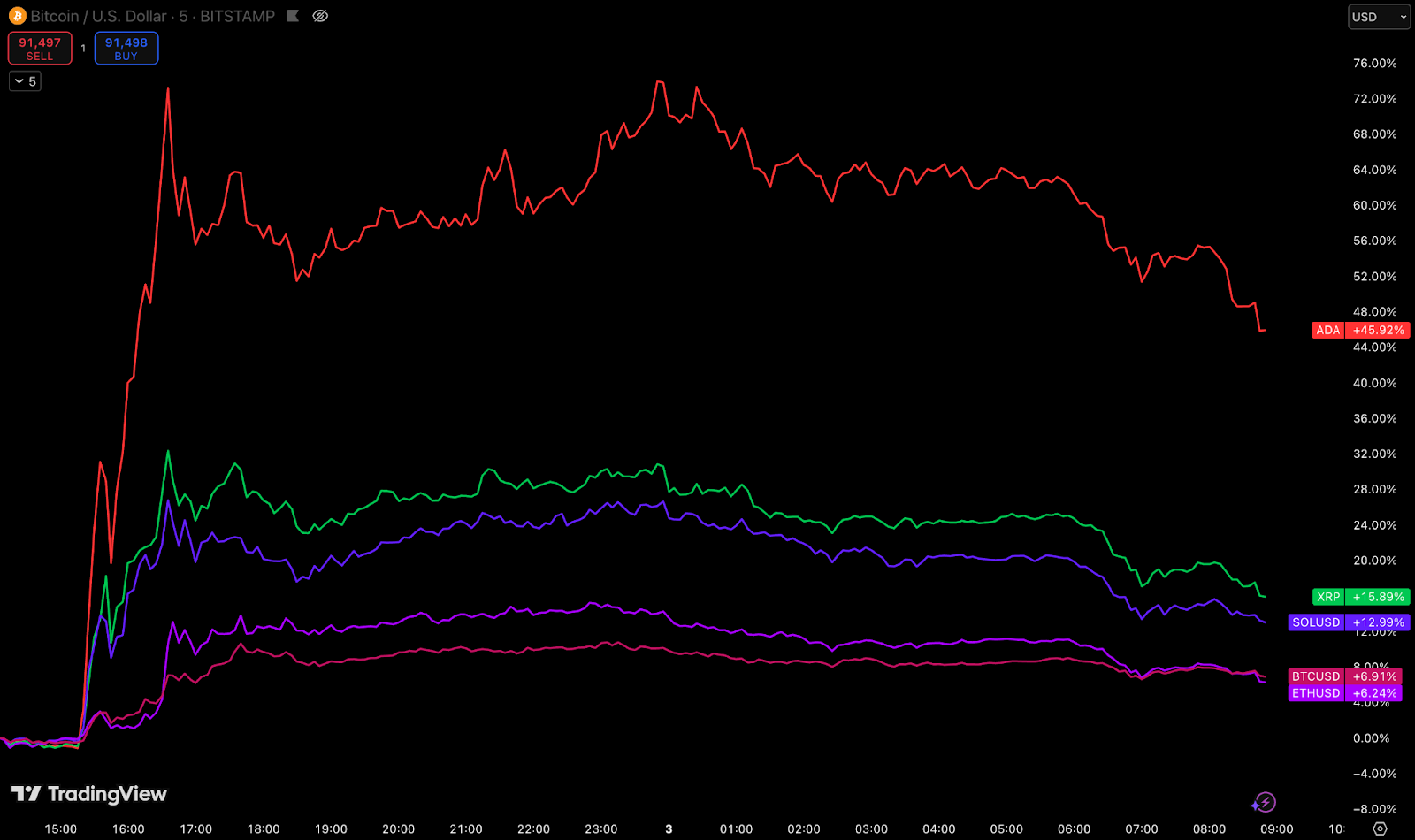
Unsurprisingly, the coins mentioned by Trump have done particularly well. $ADA performed the best, most likely because it had the least going for it prior to this announcement. It’s worth noting that Solana experienced significant FTX unlocks just the day before this announcement, now up nearly 13% since then.

It’s entirely unclear what exactly the U.S. Crypto Reserve will look like, and if it can even come to fruition. Congressional approval may be required to create such a thing. The other matter is whether or not this reserve will simply repurpose seized crypto assets, or actually involve systemic purchasing of coins.
From $5M Golden Visas, to the U.S. Sovereign Wealth Fund and now this U.S. Crypto Reserve, there are a lot of interesting things coming out of the White House that certainly sound positive but whose establishment remains unclear. More details on this administration’s crypto policy are expected to come during the crypto summit on March 7.
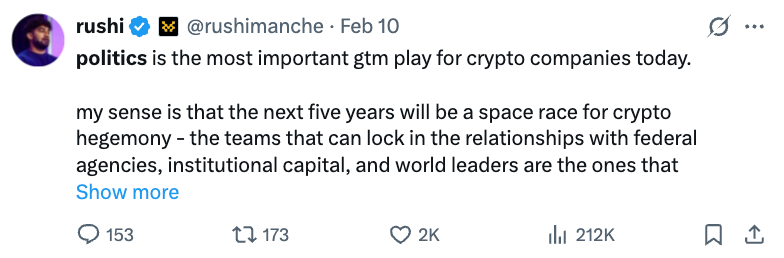
This U.S. Crypto Reserve announcement also highlights the notion that one of the ways in which crypto Founders can gain an edge is by forging close ties with the Trump administration. Rushi Manche, Co-Founder of Movement Labs ($MOVE) has been the most vocal about this, earning some criticism.
This most recent Trump post may have solidified a bottom, but it may not have put an end to the crypto market chopping within a range in the near-term. The macro situation remains the same. In fact, this recent announcement just serves as another example of Trump’s tendency to be unpredictable in policy prescription, the attribute responsible for much of the market’s negative performance since his inauguration.
In the midst of this macro picture, it’s plausible that tokens associated with Founders and leadership with close ties to the Trump administration can outperform, as market participants look for any kind of edge that can be had in the absence of larger and broader tailwinds. At the end of the day, there’s only so much juice that can be squeezed from vague announcements, even from the sitting U.S. President, before more substantial and specific action is required to give markets a proper catalyst.