infiniFi is an onchain fractional‑reserve system that aims to replicate modern banking while giving depositors transparent control over how their capital is deployed.
Users deposit stablecoins and receive iUSD, which they can leave liquid or convert into duration‑based tranches that trade liquidity for higher yields. This model uses unbonding periods and multipliers to match assets to depositor time preferences. infiniFi launched a six‑month points campaign on June 1 2025 to incentivize early participants.
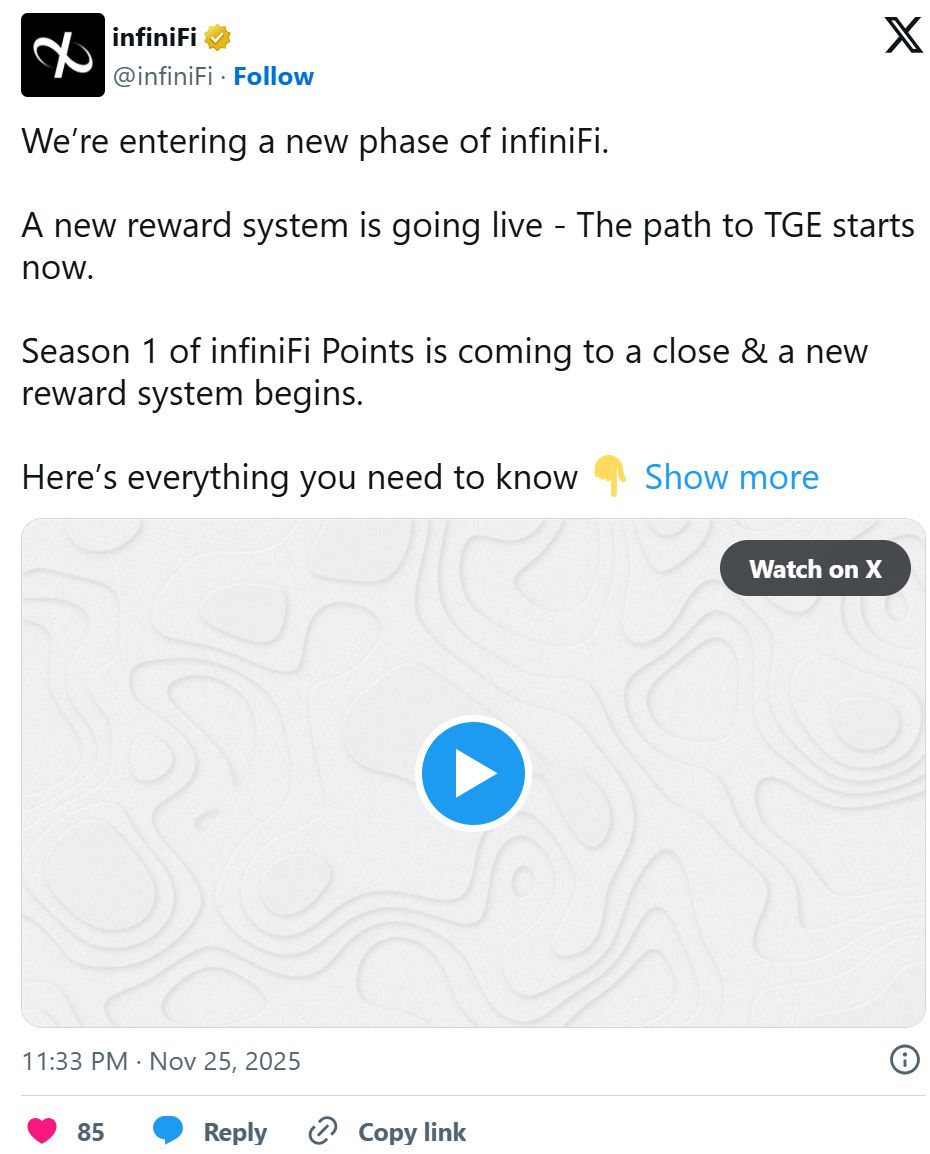
As Season 1 ends, the team is preparing a new points system ahead of their TGE expected in early 2026.
In this edition, we’ll cover what infiniFi does, what the Season 1 campaign is about, and outline the upcoming points structure as they approach TGE.
Stay informed in the markets ⬇️

What is infiniFi
infiniFi is designed to solve the duration gap problem of fractional‑reserve banking by letting depositors choose between liquid and illiquid exposures. When someone deposits USDC into the protocol they mint iUSD, which represents a dollar‑pegged claim.
Depositors then select an unbonding period that determines how long their funds must remain locked once they decide to exit. The longer the unbonding period, the higher the time multiplier which increases their share of future returns.
infiniFi distributes the assets into a mix of liquid and illiquid yield strategies. A portion of capital stays in liquid venues (e.g. Aave) so that depositors who choose short unbonding periods can exit easily, while the remaining capital is redeployed into illiquid assets (e.g. Pendle, Ethena) that offer higher returns. With this, the protocol is able to create a ladder that looks like this:

Liquid depositors earn a blended return between the liquid and illiquid assets, higher than if they had deposited solely into liquid venues.
Illiquid depositors receive the base return from illiquid strategies plus a share of returns sourced fractionally from the liquid tranche, generating yields above those achievable via direct illiquid deposits.
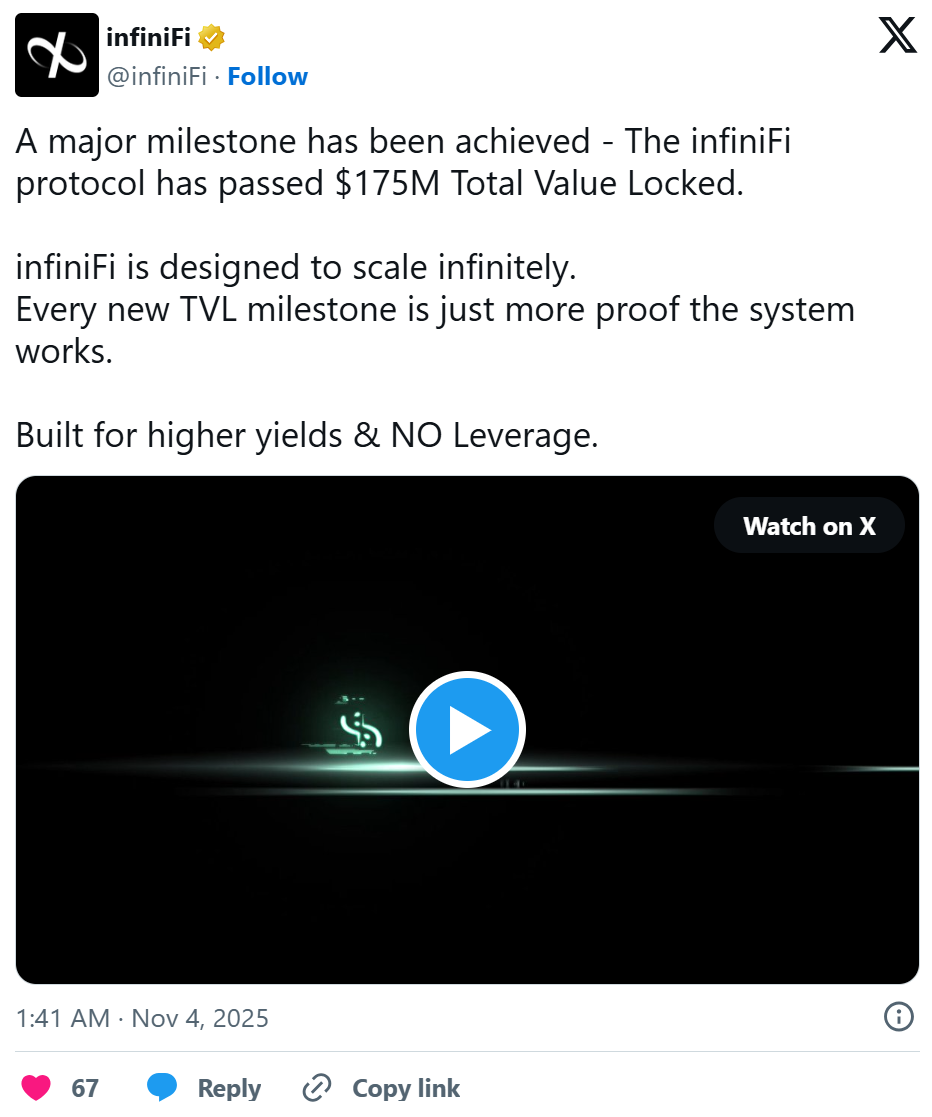
To-date, infiniFi has attracted $175M in TVL
Fractional Reserve Banking On‑Chain
In traditional banking, deposits are taken to invest in a portion of illiquid assets while maintaining liquidity buffers based on non-concrete parameters. The trade‑off between liquidity, returns and duration management creates a duration gap where if too many depositors withdraw at once, banks may become insolvent.
infiniFi attempts to solve this by letting depositors reveal their preferred duration by choosing unbonding periods, then using that information to create the portfolio accordingly.
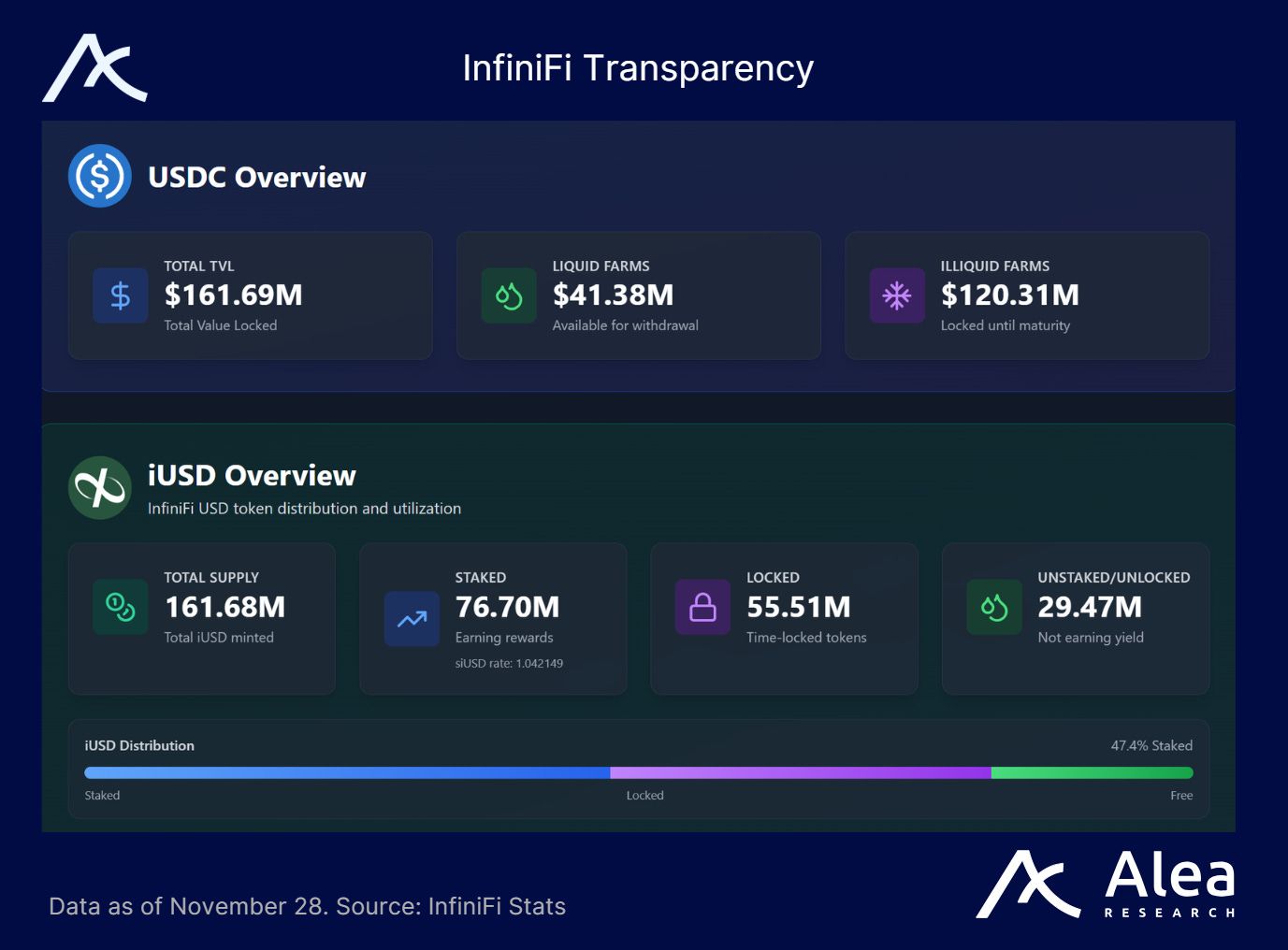
By making all liabilities and yields transparent onchain, infiniFi offers an alternative to opaque banking models. Depositors clearly see the system’s reserve ratio, the composition of its yield strategies and the loss waterfall.
End of Season 1 and Road to TGE
infiniFi’s Season 1 points program began on 1 June 2025, rewarding users for holding iUSD, staking into siUSD, locking into liUSD, providing liquidity and referring friends. Points accrued at roughly 1 point per $1,000 per week.
The points are amplified by an R multiplier (reflecting yield choices) and a consistency multiplier.
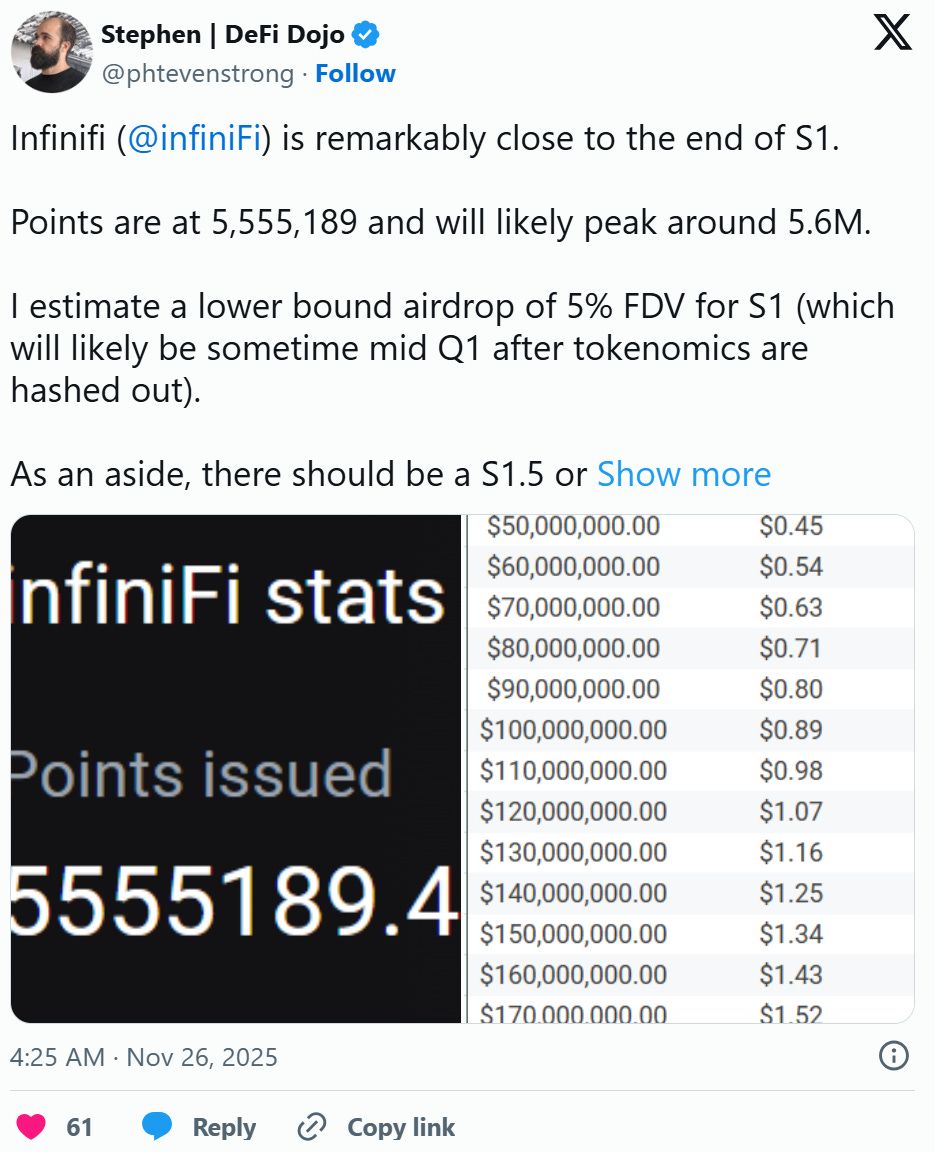
The campaign concluded with roughly 5.6 million points issued.
After Season 1, infiniFi announced a Chapter‑based points program leading up to its 2026 TGE. The new program features:
Weekly chapters: Each week (called a chapter) allocates 336,000 points across participants, with the distribution determined by the original points formula.
6 hour intervals: Points accrue continuously but are finalized every six hours where users’ share of 12,000 points per checkpoint is locked in based on their deposit size and multipliers.
Weekly resets: On Mondays the chapter closes, points are finalized and a new one begins.
This new structure aims to maintain engagement while smoothing point issuance ahead of the TGE. By using shorter epochs and weekly resets, incentives are better aligned by encouraging sustained deposits and participation.