Most DeFi tools still cater to single‑asset speculation. Indexify takes a different approach by letting anyone package a thesis into a tradable “Stack” which is a curated basket of tokens (ie. an index) that others can buy with one click.
Each Stack launches at $1 to make performance easy to track. Users pay a 1% platform fee and creators can earn up to 0.5% per trade, while holding their assets in a self‑custody wallet.
In this edition, we’ll explore how Indexify works, why social trading may be the next DeFi frontier, and what the latest beta features mean for investors and creators.

What Indexify Is and Why It Exists
Indexify positions itself as a social investing platform (mobile-supported) where users create, follow and trade Stacks which are transparent, onchain portfolios curated by community members. The design reflects a simple insight: investing is social by nature, yet most crypto portfolios remain opaque. Indexify turns users into fund managers and communities into ecosystems by providing live performance charts, activity feeds and built‑in safeguards.

Each Stack is a fixed basket of tokens that starts at $1 and can be bought or sold like a single asset. Until early 2026, creators couldn’t modify a Stack’s composition and they had to use notes to communicate thesis changes. All trades occur onchain on Solana, and users control their keys through an embedded self‑custody wallet with the option to export keys at any time. This contrasts with traditional social trading platforms that custody user funds.
Indexify fee structure is as follows: a 1% platform fee on each buy or sell order, and optional creator fees up to 0.5%, capped so that total fees never exceed 1.5%.
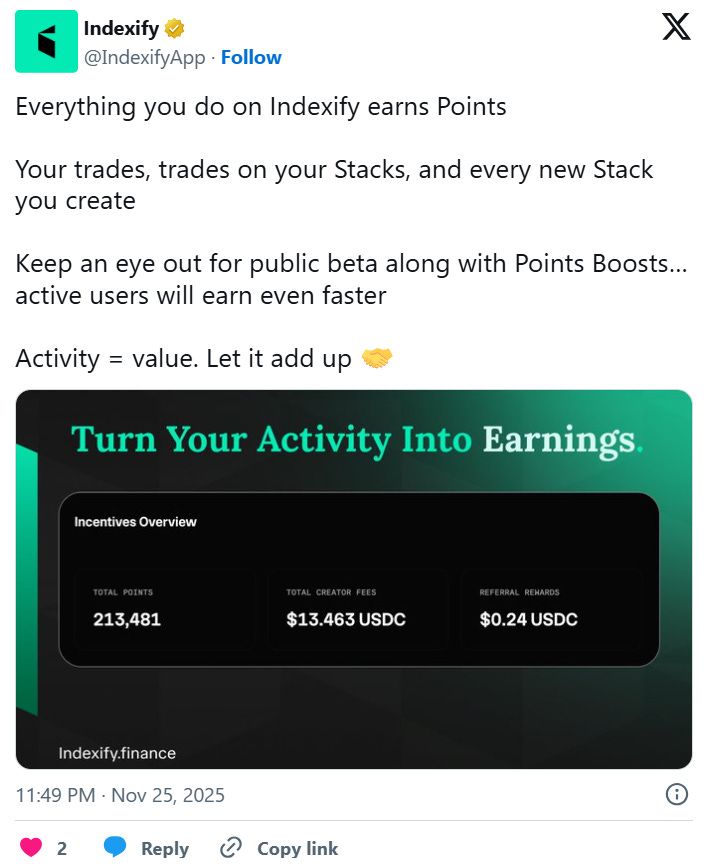
The platform sponsors base network fees on Solana and provides adjustable slippage settings and optional priority tips for faster execution. Creators earn rewards from each trade on their Stack, while a 3-tier referral system pays 15%, 8% and 2% of the platform fee to direct and indirect referrers. An Indexify Points programme awards one point for every dollar of trading volume; points accrue from personal trades, trades on stacks you created and stack creation itself, building reputation and unlocking future perks.
Market Context: Social Trading Meets Onchain Indexing
As DeFi matures, capital is shifting from isolated yield strategies to structured products like ETFs, baskets and automated portfolios. Platforms like Ribbon and Pendle abstract away complexity, but most remain opaque or centralized.
Indexify attempts to fill a gap: community‑curated indexes that are transparent, onchain and self‑custodial. It aligns with the broader trend of social trading, where influencers and analysts build public portfolios and earn revenue by sharing their ideas. By packaging portfolios into Stacks with live charts and fees, Indexify creates an incentive structure that could make social investing sustainable.
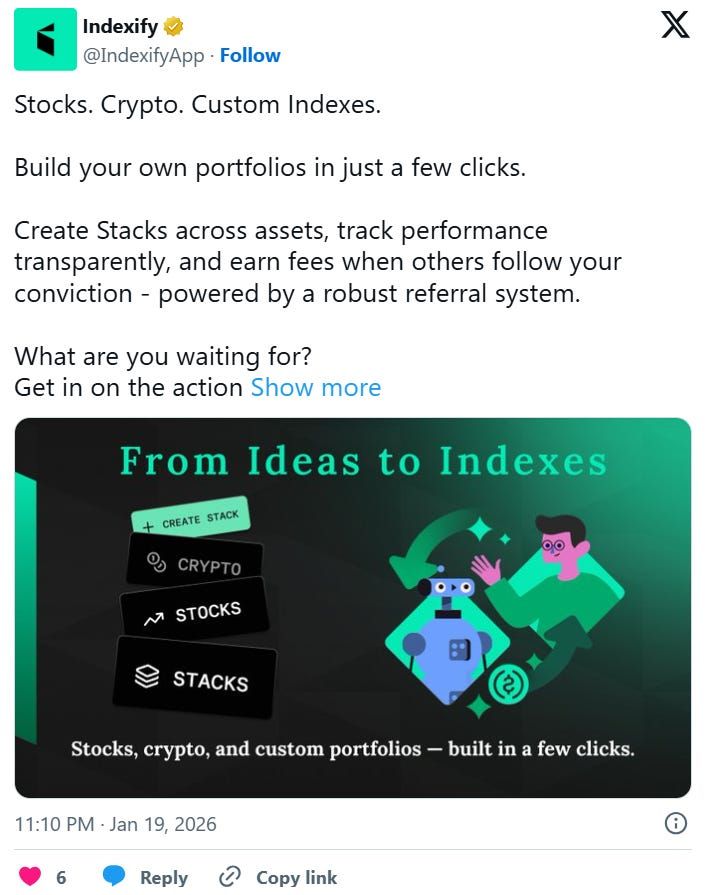
Indexify wants to make investing in strategies as easy as buying a token. Success depends on:
Building enough liquidity in Stacks to make spreads reasonable
Attracting credible creators who build diversified portfolios rather than “memecoin baskets”
Ensuring that self‑custody and onchain execution remain smooth as volumes grow. Because fees are low and revenue is shared with creators, the platform’s viability will hinge on scale and engagement.
Core Update: Beta Features Coming into Focus (Q1 2026)
Indexify’s rapid cadence of releases suggests the team is iterating quickly. The February-March 2026 beta updates introduced several meaningful capabilities:
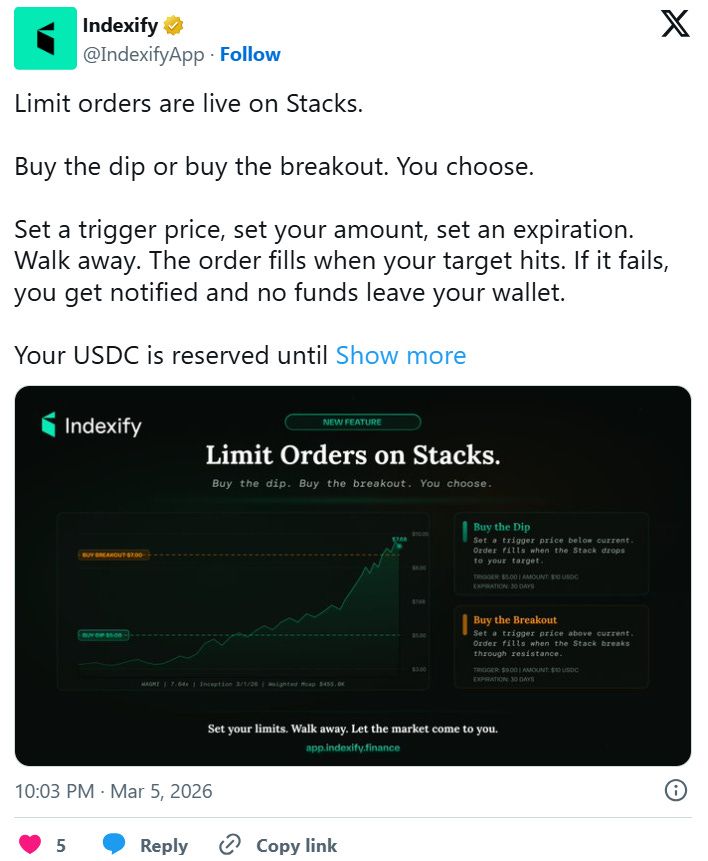
Limit orders and trading tools: Users can now place limit orders on both individual tokens and entire Stacks. Advanced order types (buy breakout, buy dip, take profit, stop‑loss) arrived for tokens, bringing Indexify closer to a full‑featured trading terminal.
Solana token support: The March 4 update added the ability to trade SOL and include it in a Stack. Until then, only SPL tokens were supported; adding SOL broadens the universe of investable assets and may attract more liquidity.
Editable Stacks and rebalancing: Creators can now edit a Stack’s composition, adding or removing tokens and adjusting allocations. Holders receive notifications and can rebalance their positions to match the new mix. A Stack Version History records every change, adding transparency.
Creator visibility and analytics: The updates surface creator rewards in transaction history, show live creator holdings on Stack pages and add a Token Intelligence tab to deanonymize token holders. Additional Stack categories (high‑risk and low‑risk, medium‑term) and improved charts make discovery easier.
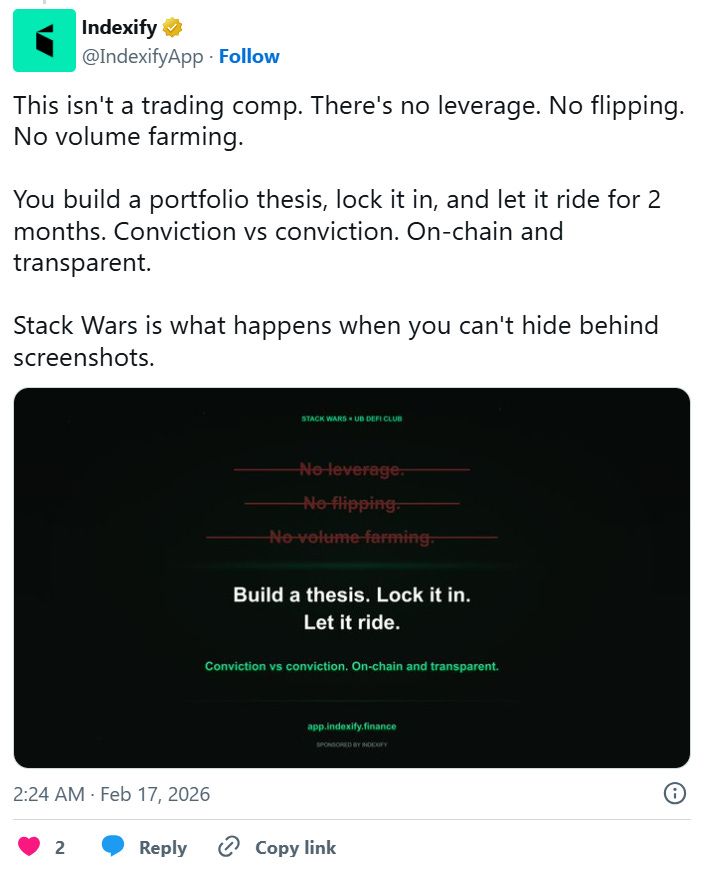
Stack Wars and gamification: January releases introduced Stack Wars, a head‑to‑head competition with comparison charts and AI‑generated summaries. This gamifies investing and may drive engagement, albeit with the risk of encouraging short‑term thinking.
These updates mark a pivot from simple, static baskets to an interactive trading and portfolio‑management platform. Limit orders, rebalancing and API access make Indexify more attractive to active traders, but they also raise complexity. The challenge will be balancing advanced features with the simplicity that drew early users.