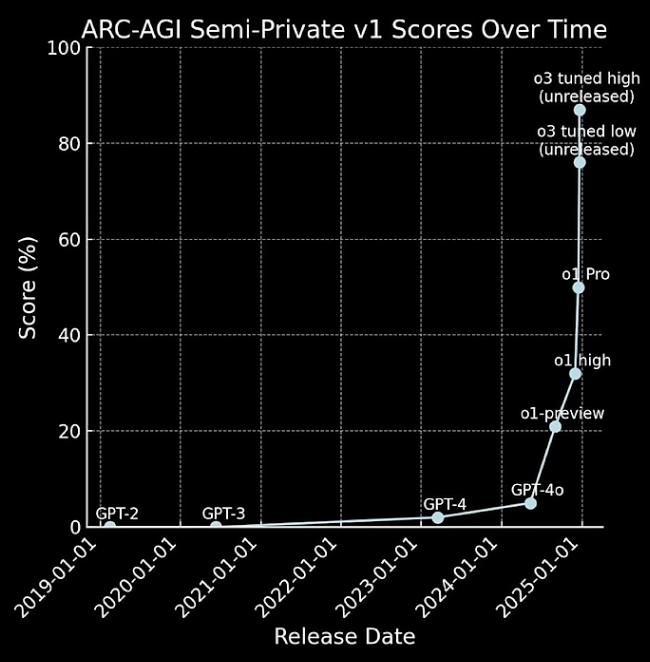
It's easy to get caught up in narratives and fast-moving tokens, keeping up with the current AI agent narrative. We will actually be rolling out some dedicated AI agent coverage every week; make sure to read our emails in the coming days for more details.
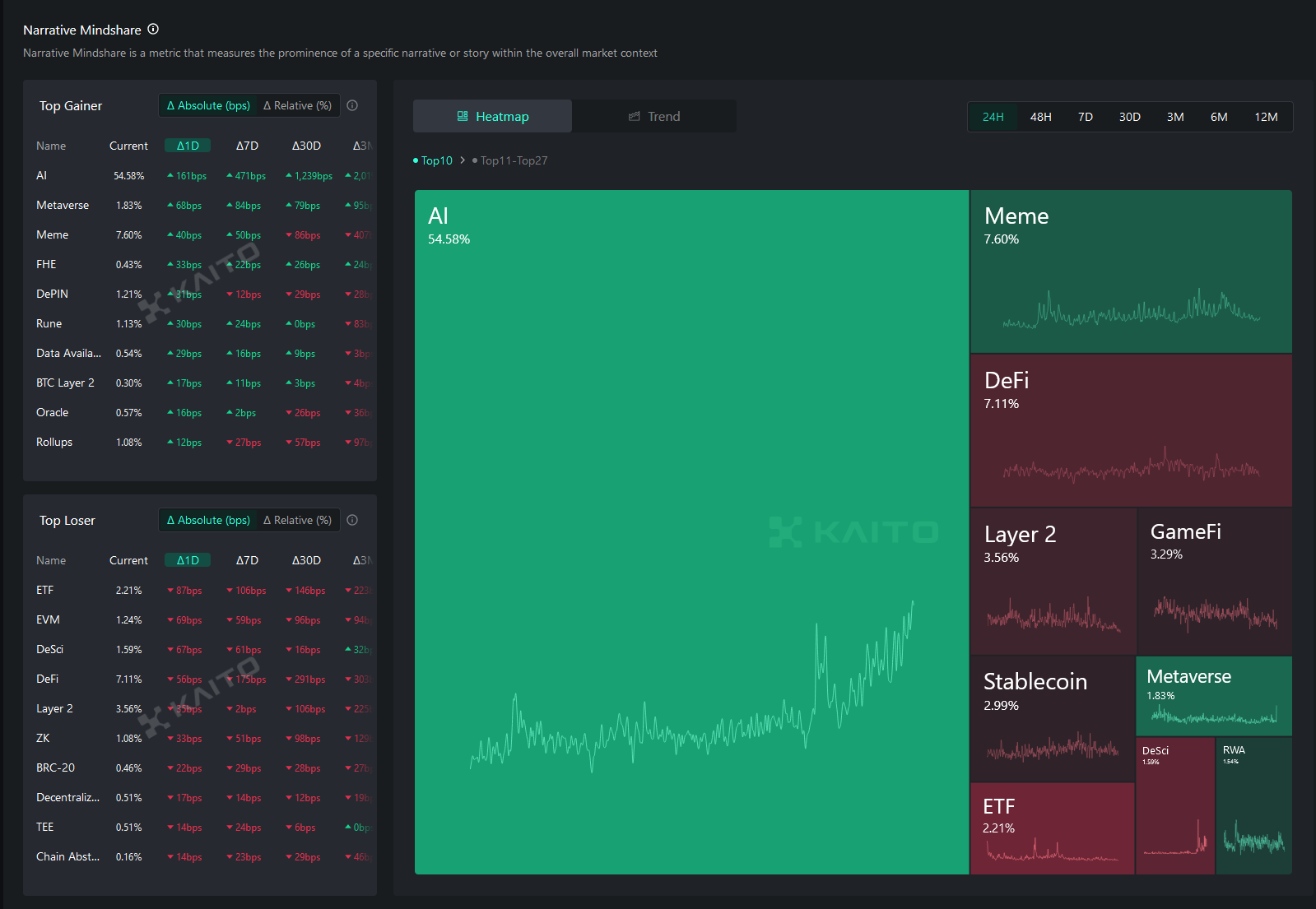

But it's also important to take a wider view of AI in general and not only hyper-focus on the crypto-specific breed of AI that has come into existence in the past few months. There might even be ‘alpha’ to be gained from reading between the lines and seeing what ideas from outside of crypto may flow downstream into the space. With agents and governance, we’ve seen how ideas promoted by a16z and other Silicon Valley thought leaders end up impacting crypto.
Last week, we drew insights from an interview with Emad Mostaque, Founder of Stability AI, who has now taken his talents to crypto. For those who didn't read this edition, the main theme was that there is a tremendous amount to be gained from using existing AI offerings for societally productive use cases, rather than blindly marching forward on the path to AGI/ASI just for the sake of it.
In today's edition, we’ll look to an interesting source for inspiration when it comes to the topic of AI ‘ethics’ and the path ahead; the Vatican.
Stay informed in the markets ⬇
Societies around the world have traditionally used religion as a means of establishing a framework of values. In the Western world, this framework has been Christianity, with the Vatican historically being the stemming point from which laws, philosophy, diplomacy, and more often originated, as the home of the Roman Catholic Church.
In recent times, western countries have moved more toward secularism, with religion playing less of a prominent role compared to times past. AI has the potential to reignite conversations around ethics, religion, and everything in between as the technology carries the potential to dramatically change society as we know it. In fact, the Vatican itself has already begun thinking about this matter, issuing its own ‘Guidelines on Artificial Intelligence’.
In the interest of time, we’ll explain the crux of the first few articles, which could be considered the most important, to get a feel for the document in general. There are 15 articles given in total, split into three chapters.
Chapter One:
What is AI? - This 1st article provides the criteria for defining AI, specifically citing:
Automated computation processes and systems
Technological ability for models to autonomously adapt
Use of machine learning to perform tasks commonly undertaken by humans
Ethical AI - This guideline gives both vague and specific recommendations for developers to consider, including prioritizing personal data, ‘human dignity and the common good’, as well as the security and interests of the Church itself.
This article aims to align the ethics of developers with those of the common people, though not necessarily the teachings of the Church itself. The requests for developers to respect certain wishes of the Vatican is perhaps more comparable to existing guidelines that nation-states give to social media platforms in both Western and Eastern countries for self-preservation and safety, not an explicit guideline to impose upon all users of AI.
This article also underlines the need to be transparent about data collection and sourcing methods, as well as the underlying goal for AI to enhance human end-users, not take their place.
A Few Commandments - This article lists some regulatory considerations when it comes to what AI should and shouldn’t be used for. These recommendations relate to the more general matter of restricting the use of AI in acting against the interests of mankind and allowing actions that go against the interests of the Vatican city-state.
AI No No’s - This article gives some specific prohibitions regarding the use of AI, including the regulation and restriction of outright manipulation, exclusion or discrimination among access for disabled peoples.
The 4 article summaries above, making up the first chapter of articles, set the tone for the remainder of the document. Other key points given across the other guidelines include some recommendations on what AI should be used for, such as scientific and medical research, developing infrastructure, and maintaining established culture. These articles attempt to create some kind of consideration that developers take into account when applying their work in the real world, and how the Vatican as a government and regulating body can keep up.

This set of guidelines can be viewed as an interesting example of how governments and regulatory bodies might come to think about AI. While these guidelines were issued by the Vatican, there isn’t too much that is particularly religious in nature about the recommendations or decrees given, they could probably transfer quite smoothly to other cities or countries in practice.
Much of the articles focus on ensuring AI creates abundance, rather than scarcity in the workforce, maintaining security, and prioritizing existing laws that are not really specific to the Vatican. However, the Vatican does explicitly position itself and it’s guidelines as having the potential to lead the rest of the world, though these guidelines and articles could simply be applied in isolation in the Vatican. Of course, each government will have to tackle the matter of AI in its own way, as they see fit. Just like drafting constitutions and legislature, copying or at least taking inspiration from existing governments’ laws may or may not make sense.
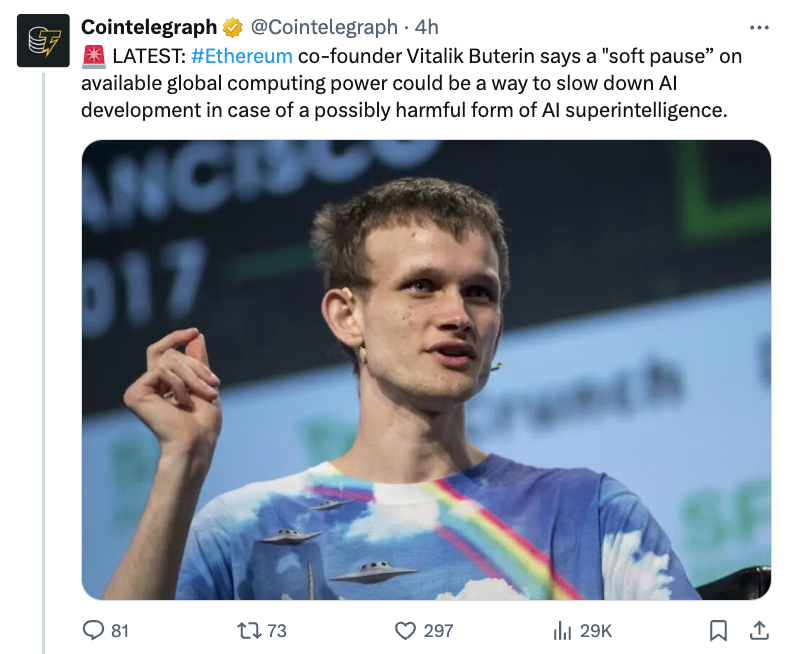
In the year already, Vitalik himself has given perhaps the most de-accelerationist opinions of prominent leaders in crypto or elsewhere, while Sam Altman is going full steam ahead, claiming that AI agents will already begin entering the workforce as early as next year.
As AI accelerates (Vitalik likely won’t get his way), discussions around AI ethics will too. Some have already begun predicting that 2025 will see more AI progress per quarter than 2023 or 2024 did. It is quite possible that the pace of discussions around the use of AI will not keep up with the pace of AI development.