Yesterday was brutal for stocks and crypto alike, with the recession word flashing across the timeline for the first time in a while. Like it or not, price often drives narrative. Whether it’s AI agents or gaming, there are a whole host of tail-end sectors in crypto that all of a sudden look much less interesting when market participants are more concerned with conserving capital than trying new things.
If it makes anyone feel better, the odds of a rate cut in May have just spiked to over 50% in the past day. The new narrative, copium or not, revolves around Trump and Treasury Secretary Bessant prioritizing lowering the 10-year yield one way or another. Should the threat of tariffs be so great that the prospect of a true recession or growth scare looks likely, this could finally urge Fed Chairman Jerome Powell to cut rates even though he is not exactly aligned with the Trump administration.
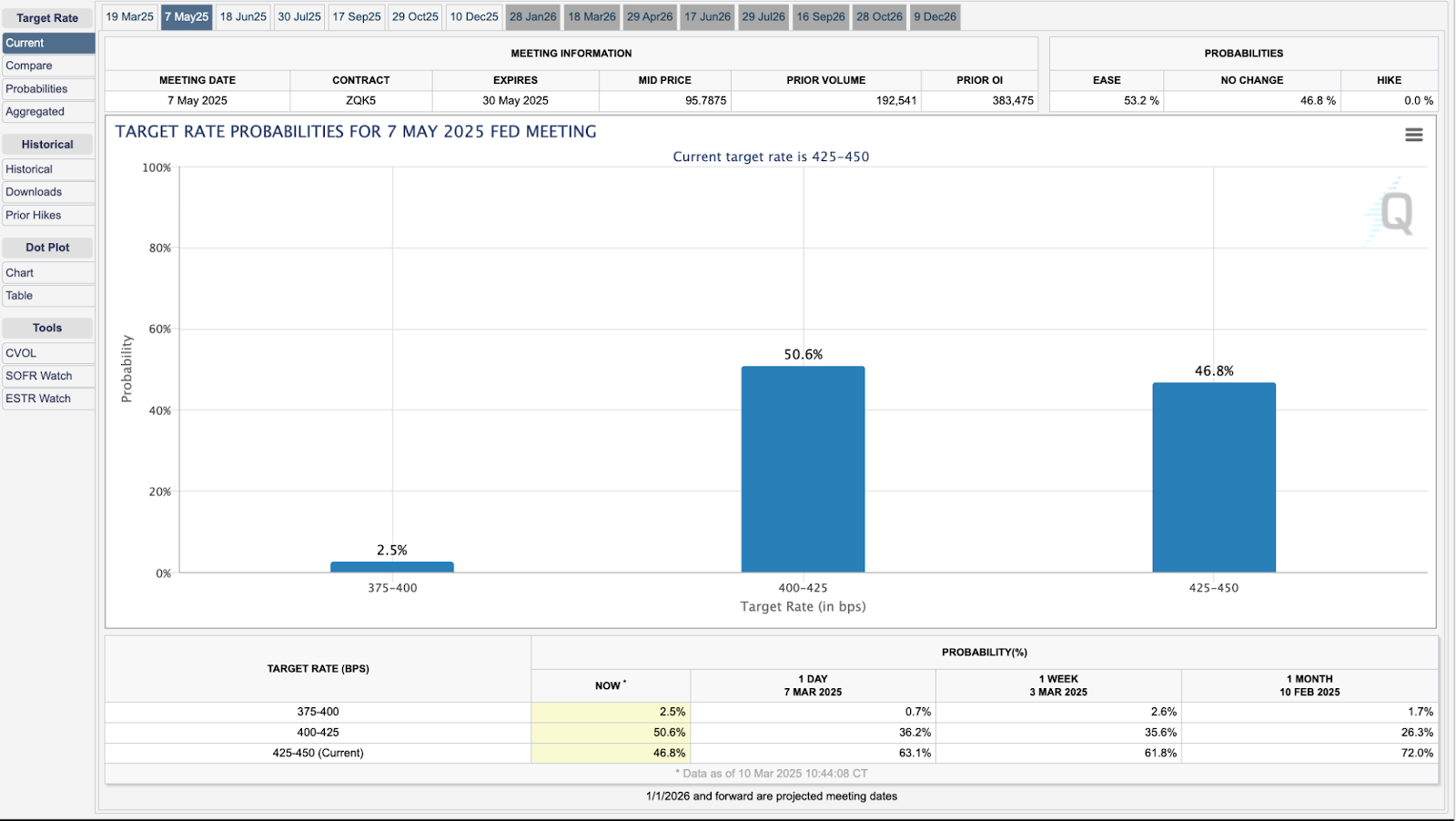
In the past, $BTC has often led traditional markets, especially during key shifts in sentiment and policy. While there is some for crypto markets in the mid-term, the present scenario at hand doesn’t look immediately rewarding enough to warrant going risk-on. Farming stables or earning yield while keeping capital ready to deploy if opportunities present themselves could be a good move. In today’s edition, we’ll discuss a couple options for taking advantage of trading volumes and earning a more protected yield, with Hyperliquid’s HLP and Jupiter’s JLP.
Stay informed in the markets ⬇


HLP & JLP
HLP and JLP serve the same function, for Hyperliquid and Jupiter, respectively. These vaults or pools effectively act as liquidity pools for the protocol, where the community can provide liquidity and receive a share of protocol revenue.
Hyperliquid’s HLP uses multiple market-making and strategies to help thicken orderbook liquidity, earning funding fees along the way. HLP takes 100% of taker fees, for both spot and perps trading. In addition, HLP helps handle platform liquidations. This is where the pool acts as the house, profiting when platform users lose.
To participate, users simply deposit USDC and accept a 4-day lockup period. There are no deposit fees, and profits from HLP are distributed proportionally to deposit size. The current APR for HLP is 8%.
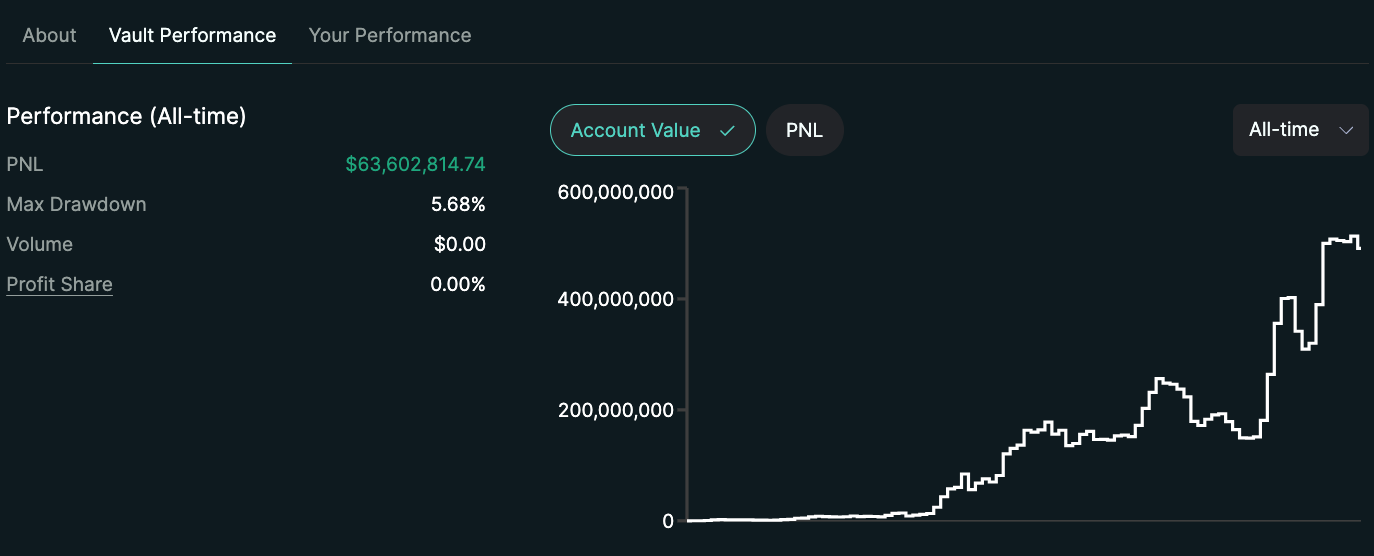
HLP provides a very stable, risk-adjusted way to denominate in stablecoins and earn a reasonable yield based on Hyperliquid’s performance. HLP does have periods of under and overperformance, as seen below. So while your deposit is denominated in stablecoins, there is a risk that your share of HLP will be worth less if you need to withdraw soon. To avoid this, users should plan to park money for at least several months.

Jupiter’s JLP takes a slightly different approach, distinct from Hyperliquid’s HLP. This is because Jupiter’s perps architecture doesn’t use an orderbook, JLP serves as the liquidity backbone for Jupiter’s perps markets. JLP is much more similar to GMX’s GLP model, completely distinct from HLP.
JLP denominates deposits across all of the assets for which Jupiter provides perps market for. There are target weights for JLP to abide by, which can cause rebalancing if liquidity ratios deviate substantially from the target.
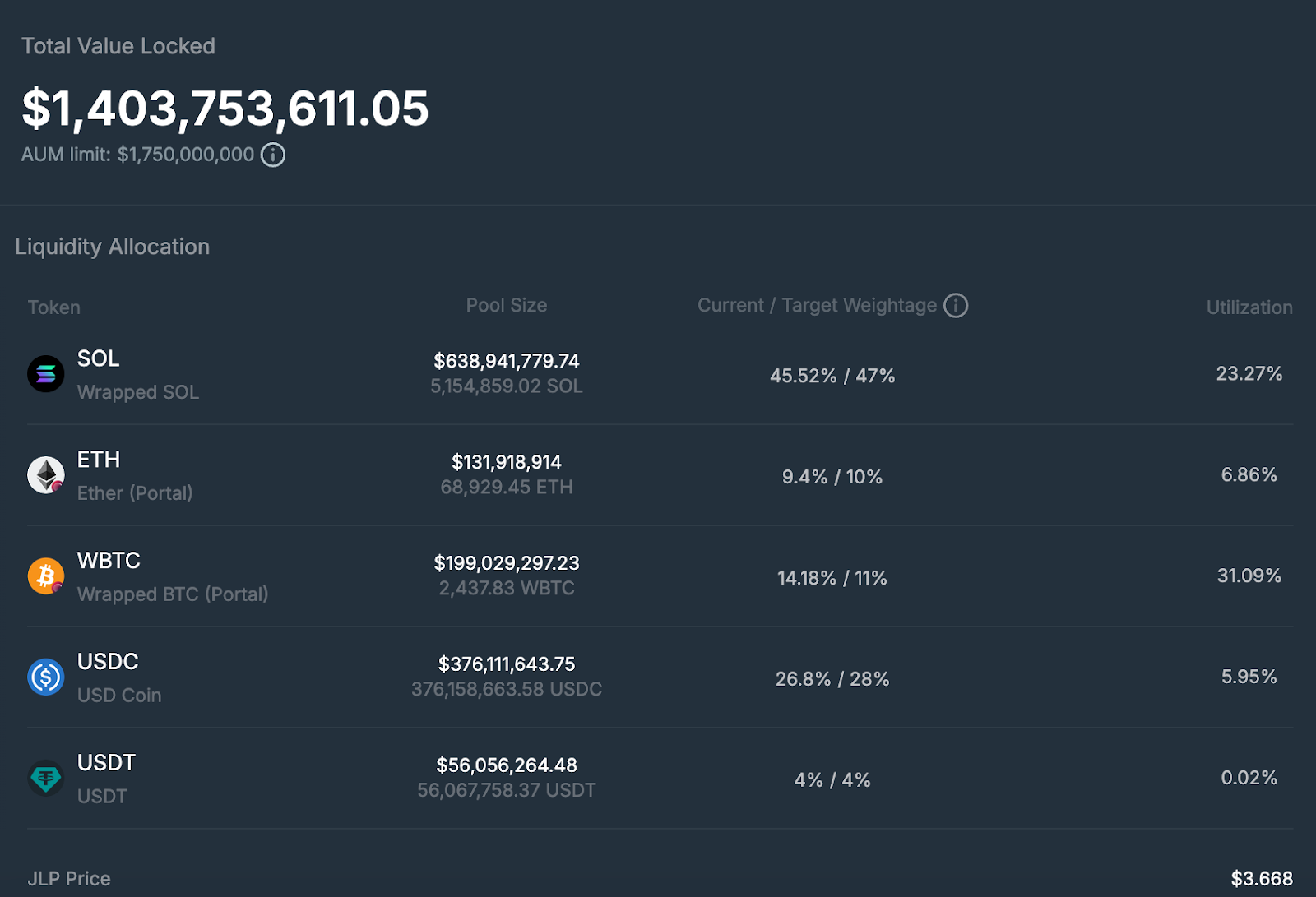
JLP will allow users to allocate nearly half of their deposit toward $SOL, the major which is down the most in percentage terms over the last month, which also may have the most upside. With FTX unlocks already out of the way, the path is clearer than it was previously for $SOL to outperform if a market reversal comes. Besides $SOL, the pool only consists of majors and stablecoins, good for controlled exposure.
$JLP has multiples more TVL than Hyperliquid ($1.4B vs $490M). $JLP’s APR is also significantly higher, currently sitting at 35%. This is because JLP is exposed to more risk, serving as the counterparty to the collective of platform traders. JLP also earns 75% of all the protocol revenue that comes from perps trading specifically.
Jupiter and Hyperliquid represent two of the most important applications for onchain speculation in modern-day crypto. Hyperliquid represents the perps side of things, taking a chunk of volume that otherwise might have gone to CEXs, while Jupiter has more limited perps offerings. Both have reasonable earning opportunities in this current market environment, providing different ways to play the backend revenues associated with these perps platforms.