Ethereum’s upcoming Pectra upgrade marks a pivotal evolution for the network, combining Execution and Consensus layer changes for the first time since the Merge.
With a focus on user experience, validator efficiency, zero-knowledge friendliness, and statelessness readiness, Pectra lays critical groundwork for Ethereum’s long-term scalability and usability upgrades which include upcoming Fusaka and Glamsterdam hard forks. At the heart of the Pectra upgrade is EIP-7702, a major leap in account abstraction that allows regular wallets to behave like smart contracts.
In today’s edition, we’ll take a look at the ETH Pectra’s focus, 11 new EIPs as part of Pectra, and more…
Stay informed in the markets ⬇

From Dencun to Pectra: Ethereum’s Post-Merge Trajectory
The upcoming Pectra upgrade marks the next evolutionary step in Ethereum’s post-Merge roadmap, building directly on the foundation laid by Dencun (Deneb + Cancun). Rolled out in March 2024, Dencun introduced proto-danksharding through EIP-4844, a feature that significantly reduced Layer 2 transaction costs by enabling blobs as a new, cheaper data format for rollups. Alongside EIP-4844, Dencun included execution and consensus layer refinements such as improved staking UX, withdrawal credential upgrades, and enhanced network efficiency.
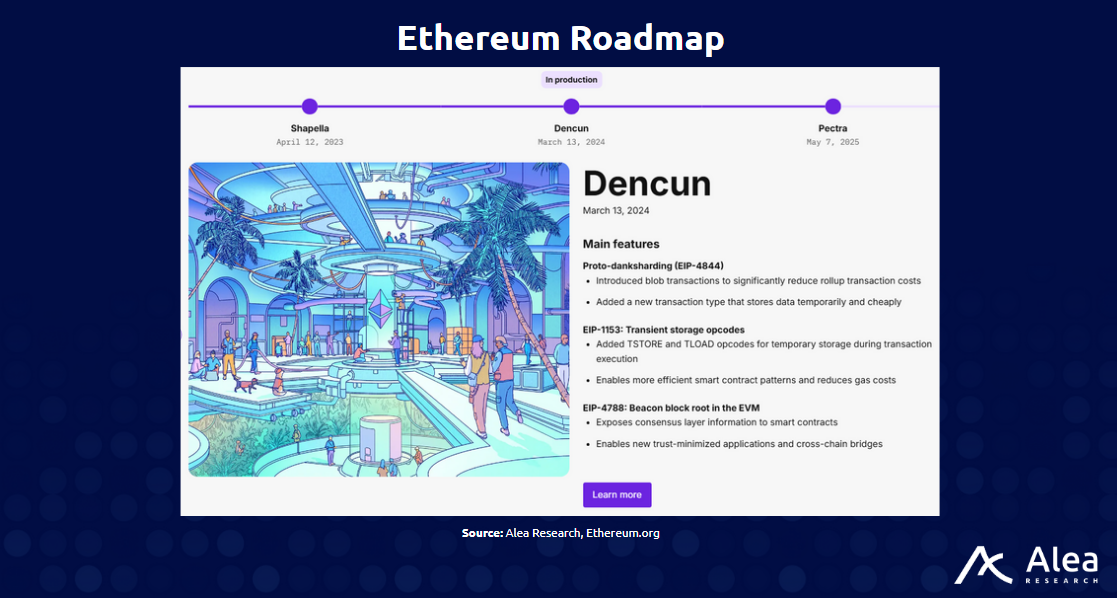
The main goal of Dencun was a scaling upgrade to make Ethereum economically viable for high-volume dApps that built on it. However, Dencun didn’t substantially improve the user experience at the base layer, nor did it address lingering architectural bottlenecks in the validator set or EVM design. Pectra addresses these issues.
What is the Pectra (Prague + Electra) Upgrade?
Pectra combines two coordinated updates: the Prague execution layer hard fork and the Electra consensus layer upgrade. It is Ethereum’s most user-centric upgrade to date where the primary focus is on wallet UX improvements with the introduction of smart accounts that essentially transforms user wallets into programmable smart contracts. It is set to be the most feature-packed upgrade with 11 EIPs to include.
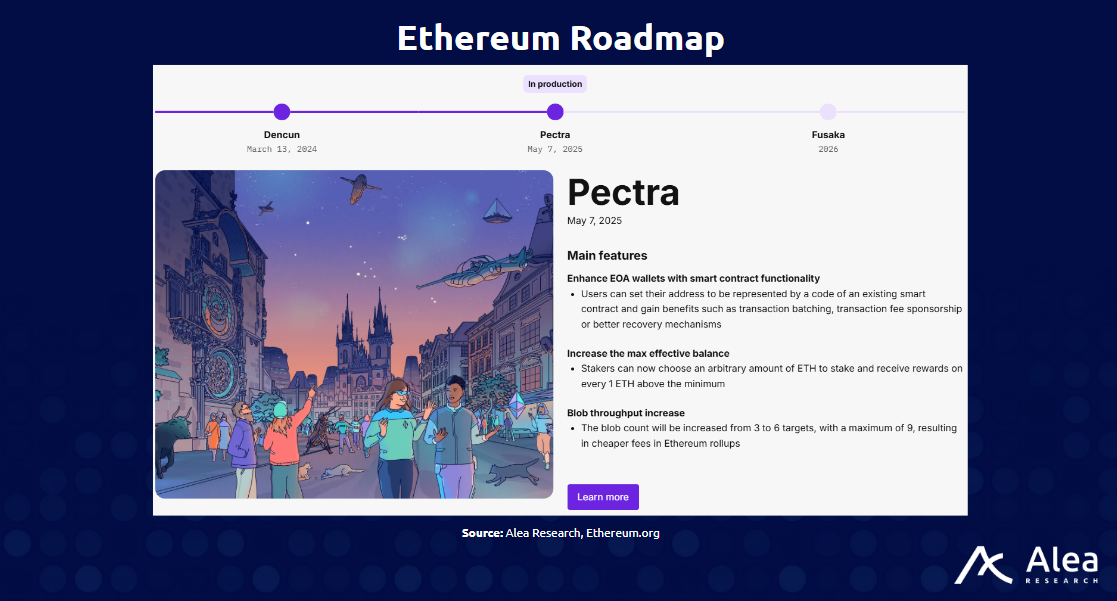
At a high level, Pectra touches on 4 main dimensions:
User Experience: EIP-7702 Pectra unlocks smart contract-like behavior for regular wallets (EOAs), enabling native batched transactions, sponsored fees, and programmable permissions.
Validator Efficiency: EIP-7251, EIP-7002, EIP-7549 and EIP-6110 simplify staking operations, reduce churn, and streamline economic alignment across large validators and node operators.
Statelessness Readiness: EIP-2935, EIP-7685, and EIP-7840 supports historical block access, Verkle tree preparation, and more modular state logic, Pectra enables Ethereum nodes to verify blocks and execute transactions without holding the full state. This prepares Ethereum’s architecture for the shift from Merkle Trees to Verkle Trees which have been an ongoing research for years, and is planned to be implemented in the Glamsterdam upgrade in 2026
ZK-Friendliness: EIP-2537 and EIP-7691 boosts Ethereum’s compatibility with zero-knowledge systems, making zk-rollups and privacy-preserving applications more performant.
Pectra’s Core UX Upgrade: EIP-7702
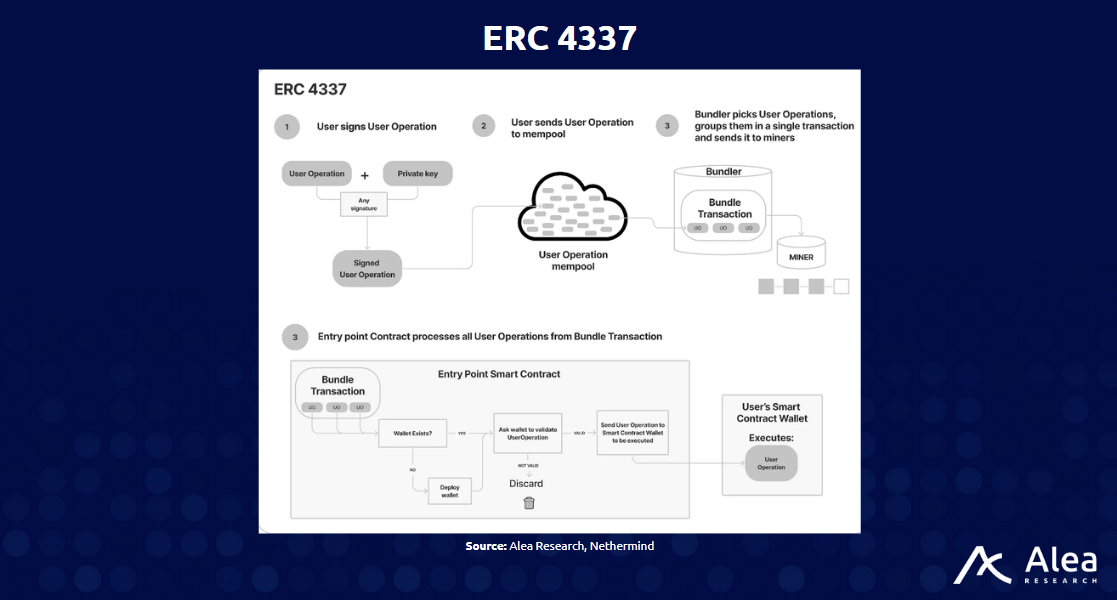
The core upgrade at the heart of Pectra is EIP-7702, which fundamentally redefines how wallets interact with Ethereum. Ethereum’s move from ERC-4337 to EIP-3074 to EIP-7702 is an evolution toward protocol-native smart wallet functionality.
ERC-4337 was first proposed in 2021 by Vitalik Buterin and others as a way to introduce smart contract wallet features without requiring changes to Ethereum’s consensus layer. However, its reliance on off-chain infrastructure introduced complexity, including coordination issues between bundlers, inconsistent UX across chains, and security tradeoffs that discouraged widespread adoption.
To address these issues, EIP-3074 was introduced. It proposed adding two new opcodes “AUTH” and “AUTHCALL” to allow EOAs to delegate control to a “trusted” smart contract (known as an invoker contract) to perform transactions on its behalf. However, this was a controversial upgrade due to its huge centralization risks where invokers gain significant control over user accounts. Vulnerabilities or malicious code in the invoker contract can be exploited to steal funds, execute unauthorized transactions, or cause other damage.
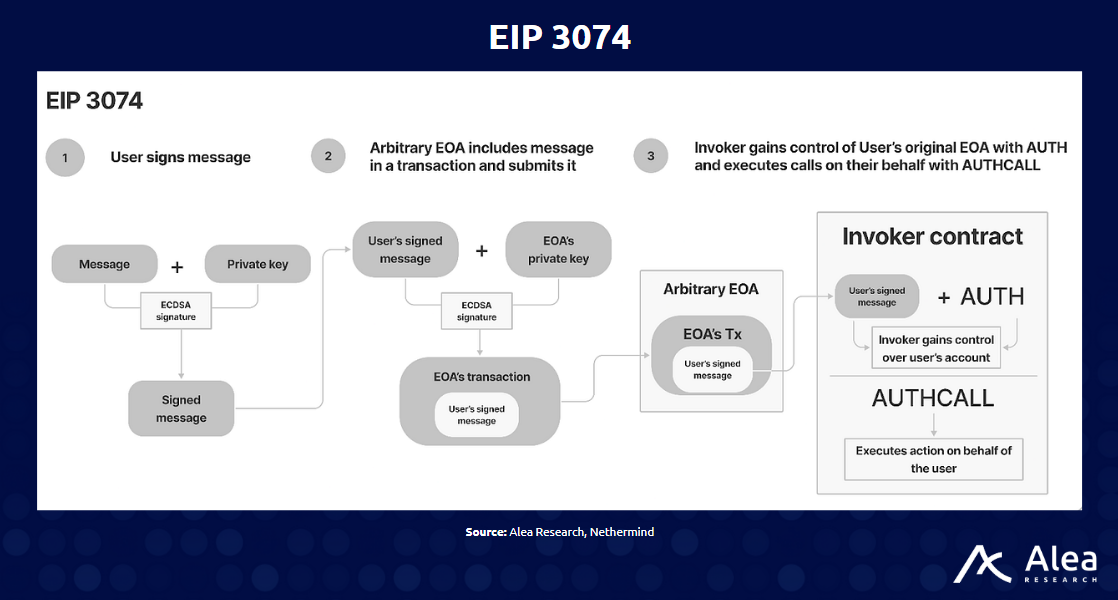
As mentioned earlier, EIP-7702 allows EOAs like MetaMask, Phantom, etc. to attach a smart contract to it. This converts EOAs into a smart contract wallet where an EOA can have custom functions to add more functionality.
Unlike ERC-4337, which builds abstraction off-chain via bundlers, EIP-7702 does it natively within the protocol. It allows EOAs to temporarily behave like smart contracts for the duration of a transaction. This means users can bundle multiple actions into a single operation (e.g., bridge → swap → transfer), authorize conditional logic (e.g., "only pay if x succeeds"), and allow third parties to pay gas on their behalf.
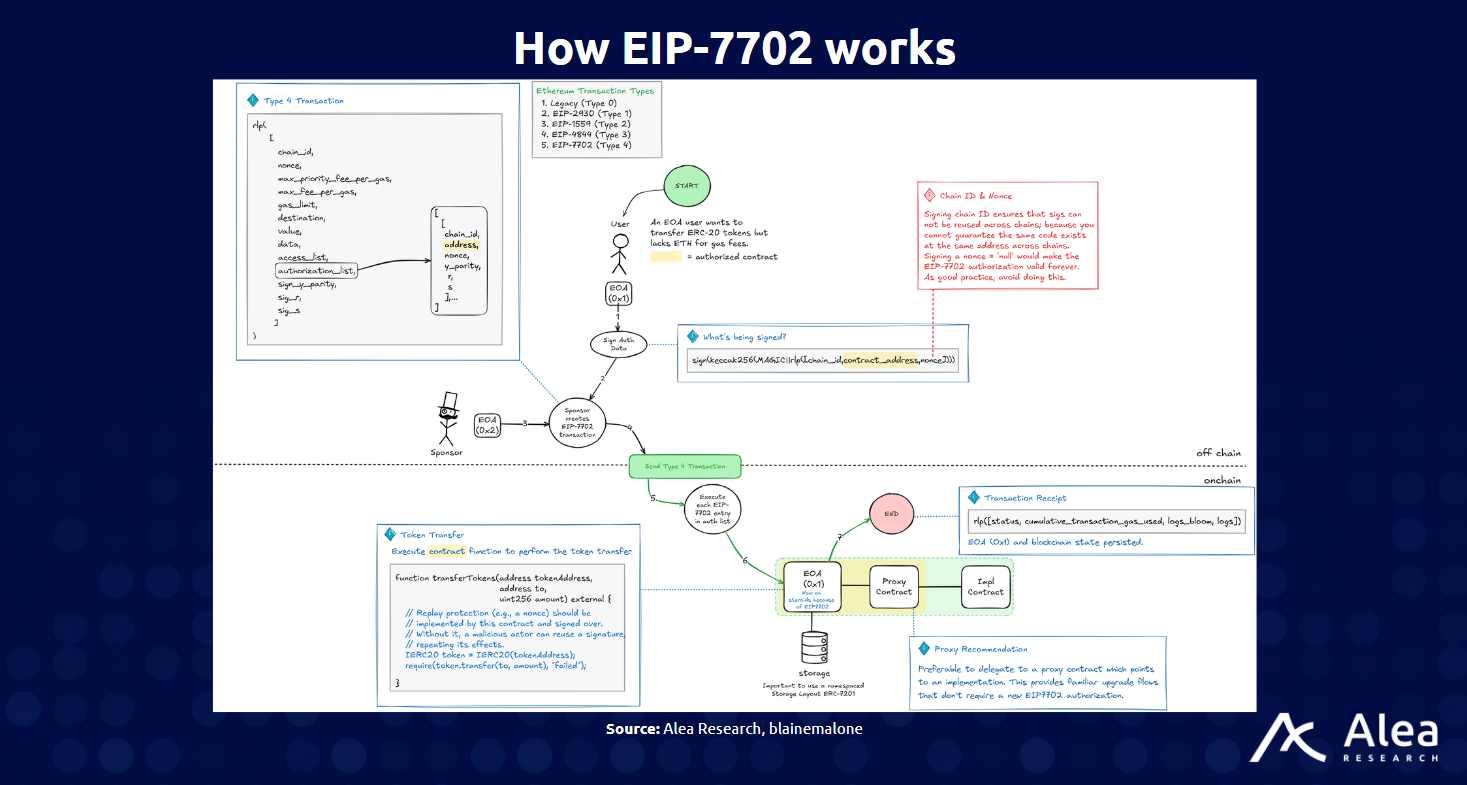
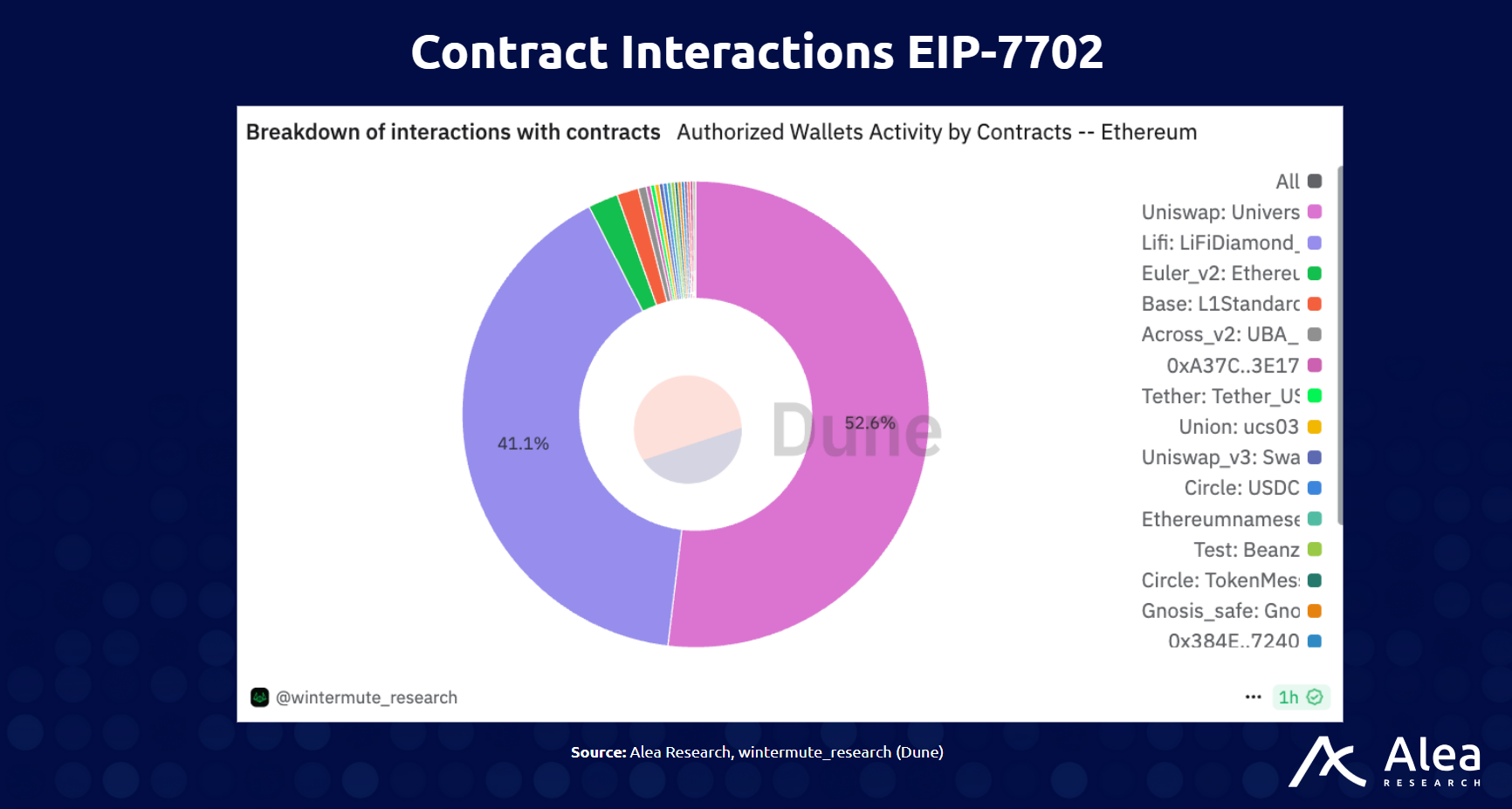
So far, less than ~28K wallets have authorized contracts and upgraded to EIP 7702 across chains, with 300 unique contracts deployed. Currently, over 93% of delegate contracts are duplicate contracts used to target vulnerable wallets. Among genuine contracts, Uniswap and LI.FI lead all applications by contract interactions.
Important Links
