Antes de entrar en la edición de hoy: Únete a nosotros el jueves a las 10AM EST para nuestro 5º episodio de Market Cap. Estaremos en directo con Defactor para centrarnos en los RWA y discutir:
- Condiciones Macroeconómicas Actuales
- Cómo la evolución del comercio global podría impactar a los RWAs
- Adopción institucional en curso -
- y más...
Ahora, volviendo a la cobertura de hoy: Las stablecoins son uno de los únicos puntos brillantes en crypto en este momento. Las stablecoins pueden mantener la demanda durante todo tipo de condiciones de mercado, al tiempo que tienen posiblemente el mayor interés institucional de cualquier sector dentro de Web3. Con este interés, probablemente veremos surgir nuevos proyectos, ya que puede haber más apetito por parte de los inversores para respaldar empresas de stablecoins que en otras áreas en este momento.
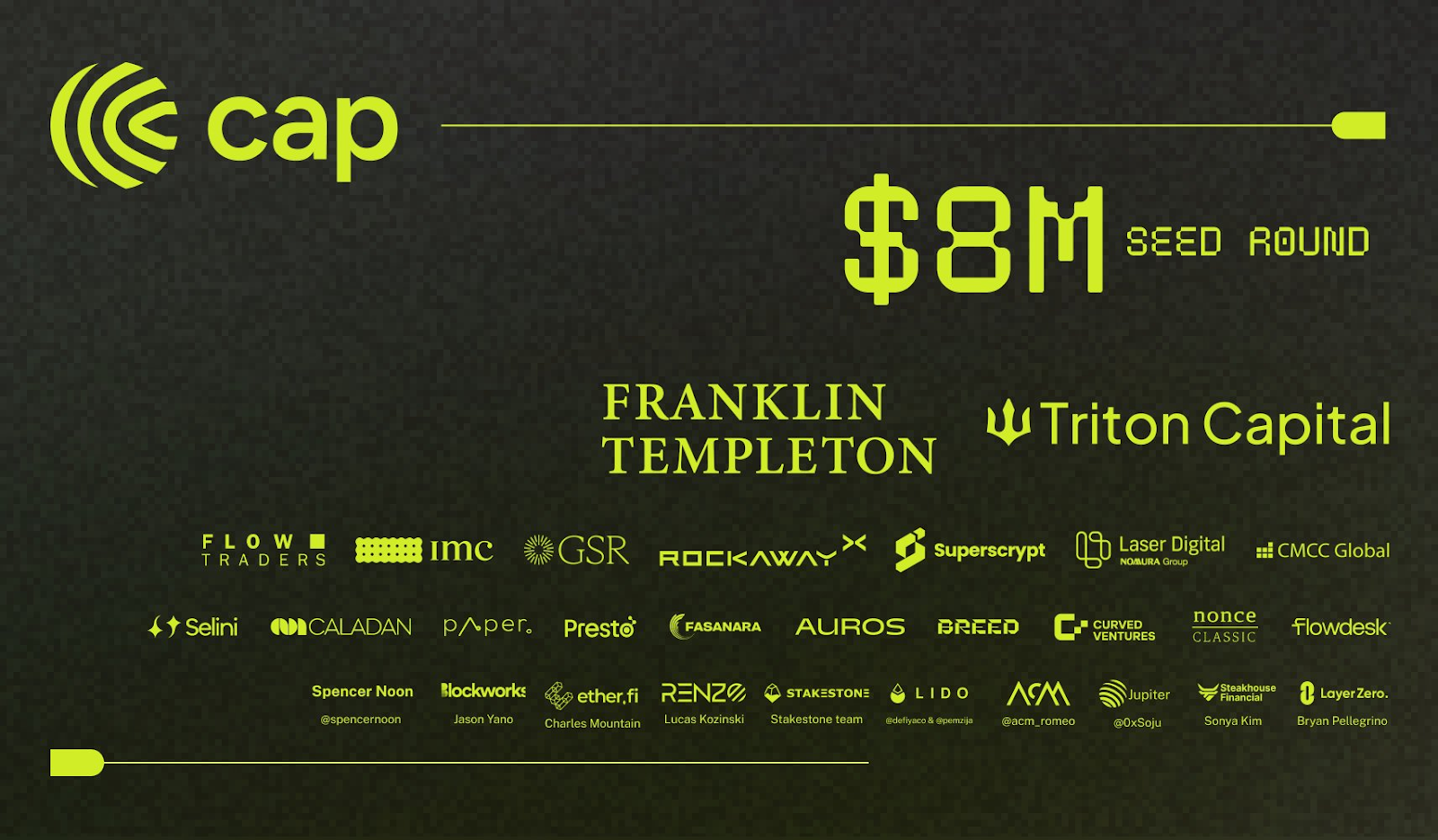
Uno de los participantes más nuevos en el espacio de las stablecoins es cap, construyendo sobre MegaETH. cap acaba de recaudar 8 millones de dólares en una ronda semilla liderada por Franklin Templeton y Triton Capital, con participación adicional de Selini Capital, Jupiter, GSR, y otros. Esto eleva la financiación total a 11 millones de dólares.
En la edición de hoy, hablaremos de cap, que adopta un enfoque diferente para garantizar el rendimiento a los depositantes…
Mantente informado en los mercados ⬇


Antecedentes sobre el límite
cap tiene como objetivo introducir un nuevo modelo de stablecoin descentralizada, iterando sobre modelos anteriores que han surgido a lo largo de los años. El equipo de cap también lideró QiDAO, la primera stablecoin sobrecolateralizada crosschain. Esta empresa viene con años de experiencia, viendo qué funciona y qué no funciona en el espacio de las stablecoins. El equipo de cap describe 2 caminos clave que la mayoría de protocolos de stablecoins toman hoy en día:
- Stablecoins de Tipo 1: protocolos de stablecoin que obtienen su rendimiento de las estrategias del equipo y la gestión de bóvedas, algo así como un fondo de cobertura con el mandato de maximizar el rendimiento de stablecoin.
- Stablecoins de Tipo 2: protocolos de stablecoin que simplemente depositan los fondos con grandes custodios, por ejemplo, Sky (anteriormente MakerDAO) utilizando custodios como BlockTower para gestionar el rendimiento.
cap aims to build on both of these models and introduce a ‘type 3’ stablecoin to the market. This stablecoin, dubbed cUSD, will minimize human involvement and management of yield, as is prevalent with type 1 stablecoins. cUSD also aims to provide more assurances and risk management compared to type 2 stablecoins.
Institutional lending has dried up in crypto, and some protocols have been able to capitalize on this, crowd-sourcing deposits from a decentralized userbase and lending to reputable institutions willing to pay more for access to capital. One example is Wildcat Labs, which recently launched markets paying above-market yields with CMS Holdings, Wintermute, and Selini Capital.
cap is going after a similar demographic, leveraging limited access to capital for crypto institutions, as well as large TradFi firms that are looking to get involved with crypto. The cap team claims to already have strong interest from large TradFi firms. This is important, as a protocol limiting itself to only crypto-native institutions might not be able to scale as much.
Crypto-native firms are also less proven than their TradFi equivalents, and are charged a higher hurdle rate than TradFi firms would be subject to. These crypto-native firms are also more willing to take on these higher rates, as their crypto-tailored strategies and activities often yield more than TradFi competitors. cap can balance the interests of both of these groups, as well as the lenders on its platform.
The main differentiator with cap is that it goes beyond smart contracts, lending capital with real-life contract guarantees. This is made possible by the fact that the protocol is going after large entities who have a corporate footprint, instead of anon users who are operating strictly onchain. Developments like the Stable Act draft, and overall increasing recognition of crypto entities from a regulatory standpoint enable protocols like cap to become viable.
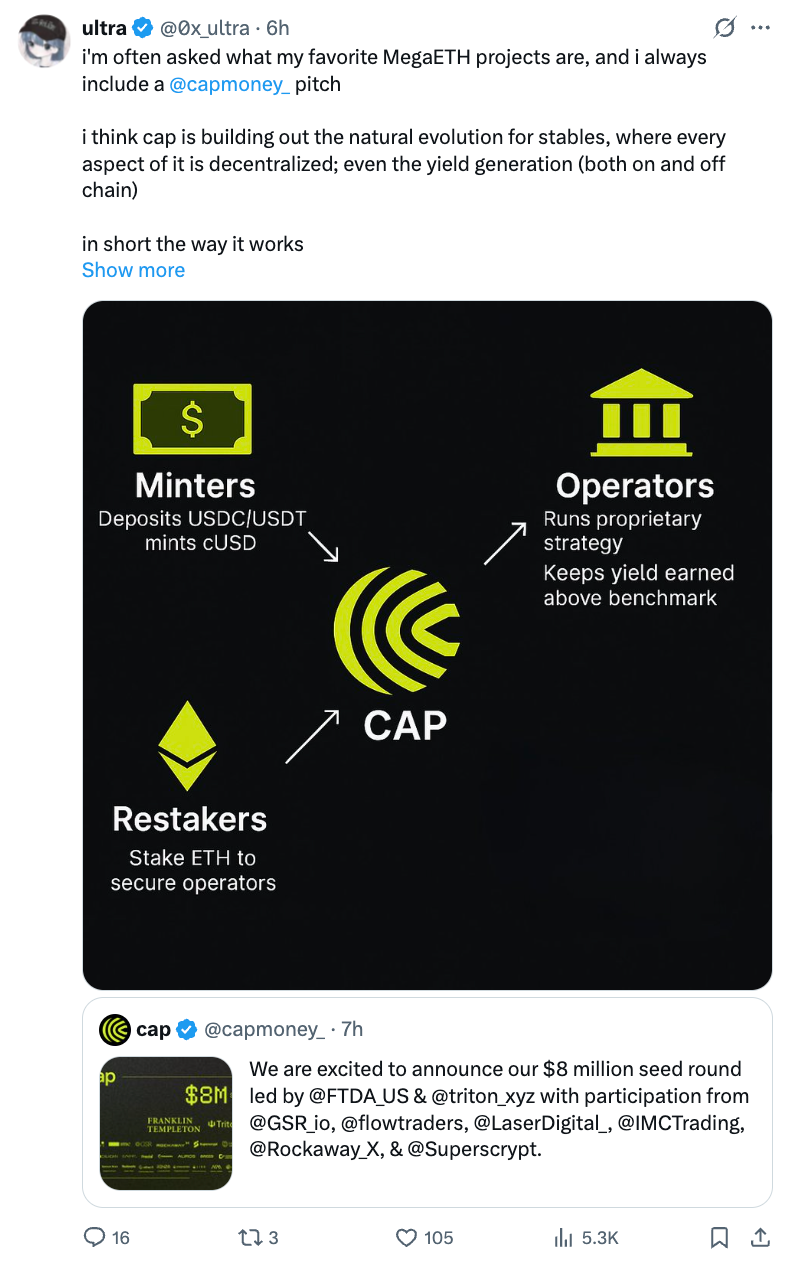
This means that users will have more guarantees over their returns and principal capital, as there are binding agreements beyond just the ‘code is law’ mantra. Users earn a base yield, the same as what could be earned on Aave, plus a premium based on utilization. The operators, which include the firms borrowing this capital, must pay out a minimum hurdle rate. These firms engage with this offer, knowing that they can ideally significantly exceed this hurdle rate with the capital given to them.
On the infrastructure side, cap is built on MegaETH. However, both EigenLayer and Symbiotic are leveraged to fit restaking into cap’s offerings. Operators can have funds, which consist or user deposits, slashed. Collateral types include stablecoins, $ETH and $ETH derivatives, and various forms of $BTC.
Shared security helps to add onchain guarantees, while real-life contracts are also signed to provide offchain guarantees. Overall, cap uses the current tech and regulatory options available in 2025 to craft a framework that maximizes the guarantee of capital for users.