The Web3 neobank narrative has captured the attention of the crypto-native audience and institutional allocators. Projects like Plasma introduced Plasma One, touting stablecoin‑native banks offering 4% cashback debit cards and >10% APY on balances.
However, the problem still exists where existing neobanks are essentially UX layers vici is positioning itself as a distributed internet bank that keeps users in control of their funds while bridging the fiat–crypto gap on top of legacy rails and cannot issue large credit lines or mortgages. Its roadmap combines self‑custodial smart‑wallets, stablecoin Visa debit cards, virtual USD/EUR accounts and a Trust Score for undercollateralized lending.
In this edition, we’ll look into Avici’s architecture and vision, the broader Web3 neobank context, how Avici’s products work, and how it impacts market participants in general, web3 and web2.
Stay informed in the markets ⬇️

Introduction to Avici
Avici’s goal is to make stablecoins spendable worldwide and then build credit and mortgage markets on top. This is done via their partnership with Rain to issue Visa cards, providing every user with a virtual card within minutes and they can then place an order for a physical card to be delivered to their door.
Spending money using the card is done using an escrow method. Users first deposit USDC which creates the USD credit balance. Spending reduces the credit balance and the backend contract liquidates an equivalent USDC balance.
Avici cards also come in 2 forms - Visa Platinum and Signature, with platinum being the basic cards offered to users. Visa Signature cards on the other hand, offer special Visa benefits like airport perks, travel insurance, or day-to-day rewards

In addition to credit cards, Avici has Avici Wallet which is a smart‑contract account built with Zerodev. It uses social logins and passkeys for authentication and supports multiple EVM networks + Solana. Avici sponsors gas for most networks and offers 10 free transactions per day on Solana.
Users can also open virtual USD and EUR checking accounts where any incoming fiat is auto‑converted to USDC and credited to the wallet. This turns any traditional wire, SEPA or ACH payment into crypto. Beta metrics reportedly show >US$1 million in card spends, ~35% month‑on‑month growth and >70% retention among active users.

How Avici Stands Out
Avici plans to build a private credit model that rewards cash‑flow and wealth using zero‑knowledge proofs. A global trust score means immigrants won’t have to start at zero credit when moving to a new country, and borrowers can secure mortgages against on‑chain and off‑chain assets.
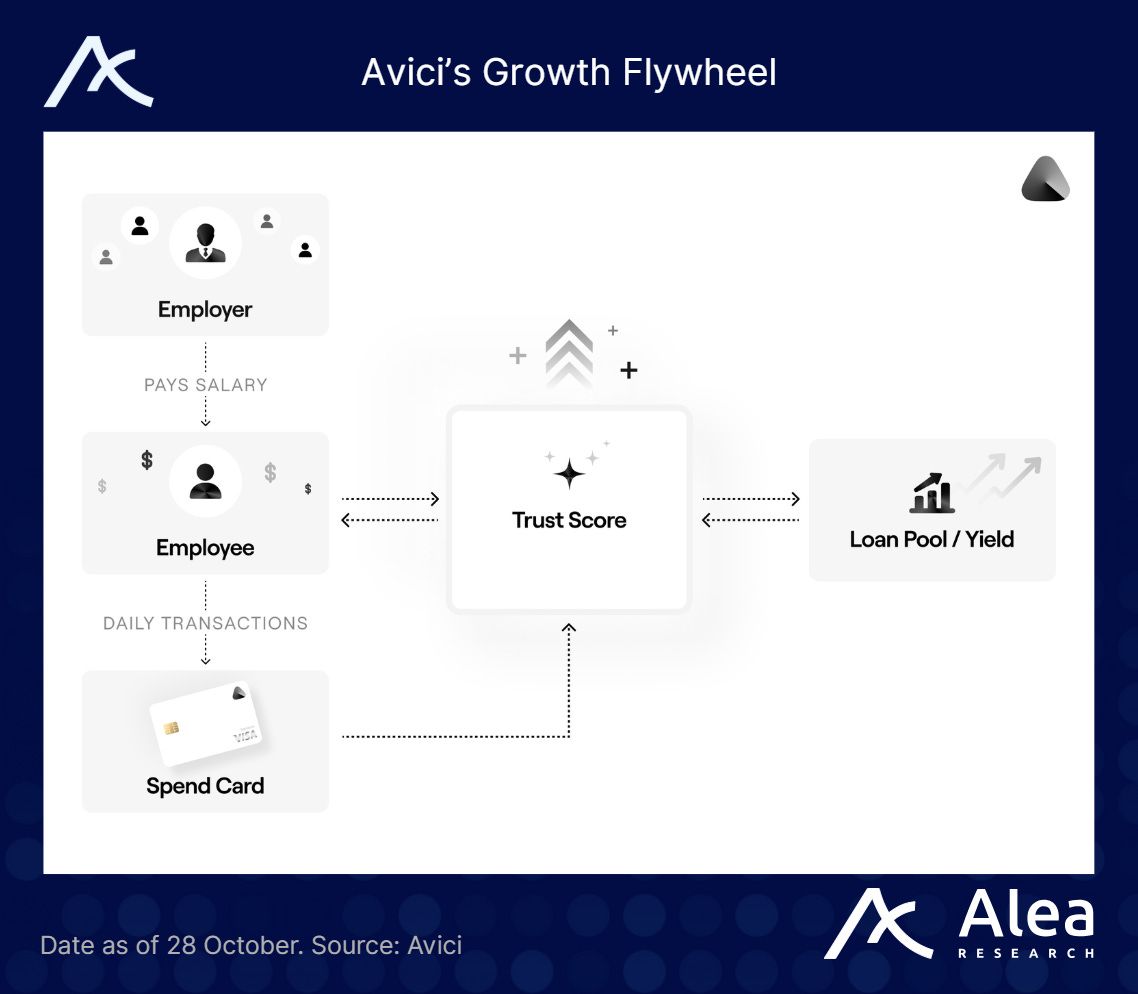
Avici’s strategy emphasizes a growth flywheel. Users join for the immediate utility of a spend card and payroll account → their transactions generate zk‑data that improve trust scoring and yield models → attract more employers and employees.
The Web3 Neobank Opportunity
Neobanks started as digital‑only banks such as Revolut and Chime, but they still rely on old banking infrastructure. The narrative gained momentum thanks to regulatory clarity around stablecoins and improved chain interoperability.
Web3 neobanks go a step further by using stablecoins and smart contracts to provide self‑custodial spending, cross‑chain swaps and DeFi yields. Stablecoins underpin this entire meta by allowing low‑cost, near‑instant cross‑border payments.
Plasma One’s launch in September 2025 is an example. Plasma One offered 4% cashback cards, >10% APY on stablecoin deposits and zero‑fee USDT transfers.

Market surveys project the neobank sector reaching $3.4 trillion by 2032, while millions of underbanked users in Latin America, Africa and Asia are gaining first‑time access through digital‑only accounts.
Yet challenges remain: compliance (KYC/AML), stablecoin de‑pegs and competition from traditional banks digitizing their offerings
Progress & Roadmap
Since launching its beta in 2025, Avici has:
processed over US$1 million in card spends
35% average month‑on‑month growth in spending
>70 % retention among active users
Created over 5k cards
Signed up over 9k users
Current revenue comes from card sales and interchange fees (1.5–2 % depending on spend category) and on‑/off‑ramp fees.
Future revenue streams include business accounts, wallet swap fees, private transaction fees, metal card sales, a share of APY from savings and mortgages, and licensing of the Trust Score SDK.
Other notable upcoming developments in their masterplan roadmap include the launch of independent trust scores to replace FICO, trust-score-powered mortgages and loans, and a Futarchy-governed world reserve stablecoin. These are among their grand visions while they continue to expand their reach into traditional fiat markets.
